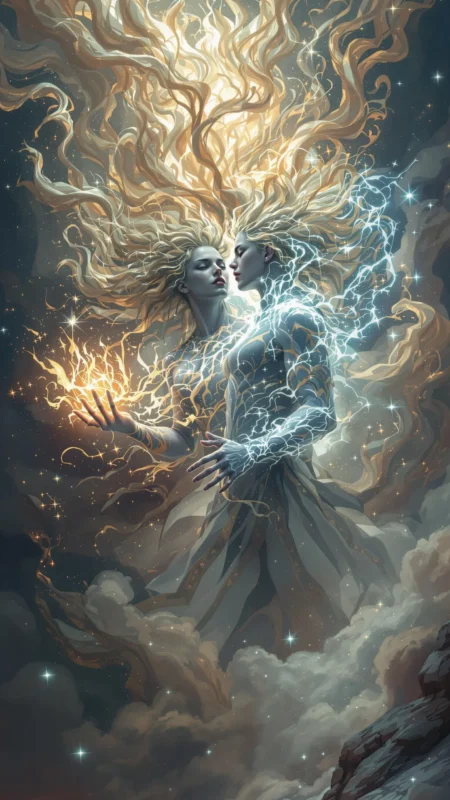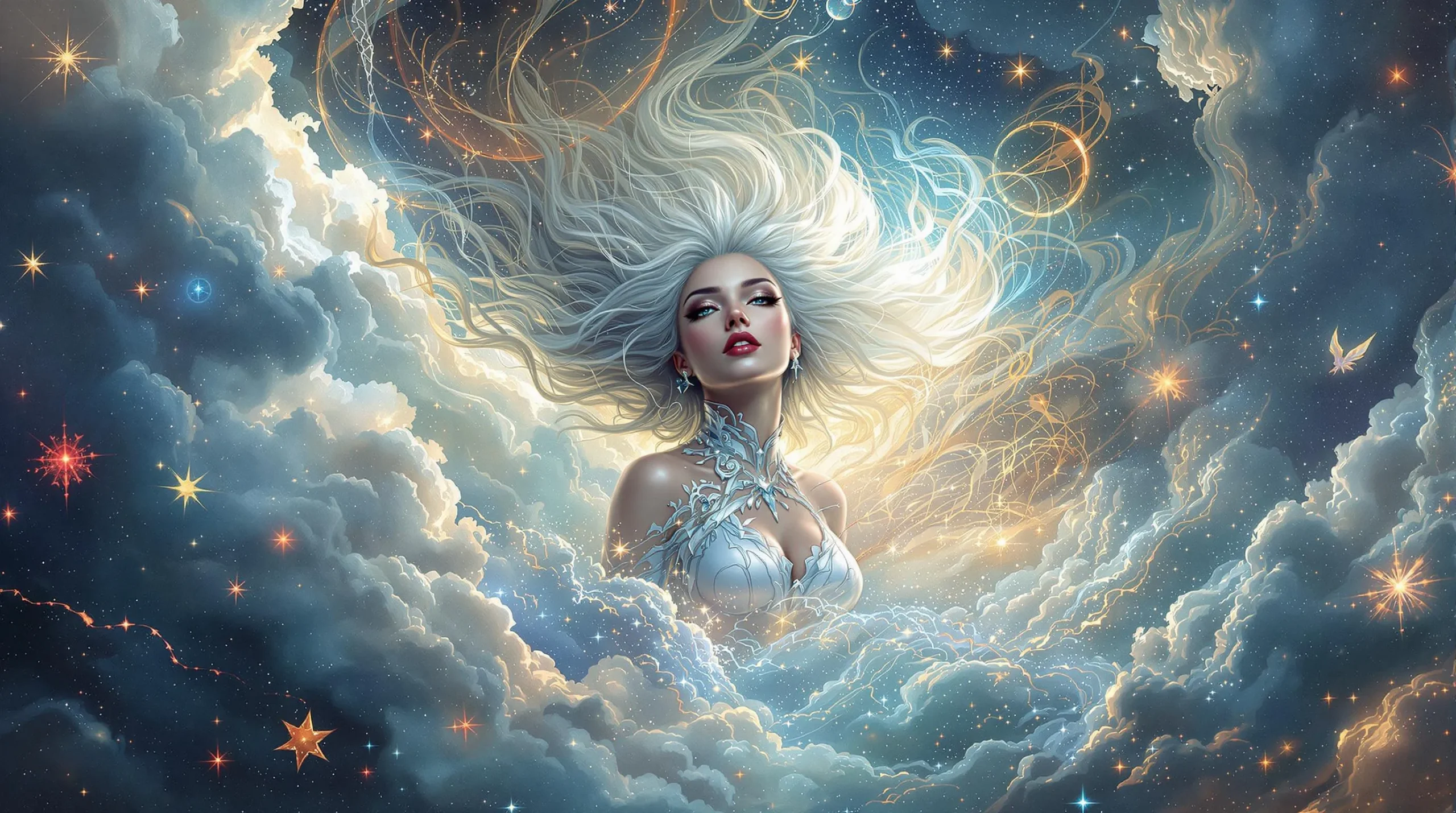


Storm

Archetype Meaning & Symbolism

Elemental, regal, volatile, nurturing, claustrophobic, precise, atmospheric, sovereign, tempestuous, serene

  • I am a woman, a mutant, a thief, an X-Man, a lover, a wife, a queen. I am all these things. I am Storm, and for me, there are no such things as limits.

If Storm is part of your personal mythology, you may...

Believe

  • You may believe that true power is not domination, but the ability to create conditions for life to flourish.
  • You may believe that every person contains an entire climate of emotions, and that emotional intelligence is a form of weather forecasting.
  • You may believe that freedom is an elemental need, as essential as air and open sky.

Fear

  • You may fear your own untamed emotions, seeing them as a destructive hurricane that could harm the people and things you love most.
  • You may have a deep, perhaps primal, fear of confinement, whether physical, emotional, or intellectual, seeing it as a kind of living death.
  • You may fear that your strength and self-sufficiency make you unlovable or inaccessible, destined to be admired from a distance but never truly known.

Strength

  • Your ability to remain calm and decisive in the center of a crisis, becoming the eye of the storm for everyone around you.
  • Your profound sense of responsibility and your instinct to use your strength, whatever its form, to protect and nurture others.
  • Your emotional depth and sensitivity, which, when mastered, allow for an almost psychic understanding of the dynamics in any group or relationship.

Weakness

  • A tendency towards emotional suppression, where you present a front of serene calm while a tempest rages within, leading to eventual, explosive outbursts.
  • A regal aloofness that can keep others at a distance, making it difficult to form connections of true intimacy and mutuality.
  • A crippling sense of responsibility that can lead to burnout, and a belief that you alone must manage the emotional climate of every situation you are in.

The Symbolism & Meaning of Storm

To have the Storm archetype as a lodestar in your personal mythology is to be in constant conversation with power. Not the brute force of a hammer, but the pervasive, life-giving, and world-altering power of the atmosphere itself. This archetype symbolizes the confluence of immense capability and profound control. It is the wisdom to know that a hurricane and a gentle breeze are made of the same substance, their difference lying only in intent and application. The modern meaning could be a metaphor for emotional intelligence: the ability to feel a tempest of rage or sorrow rise within, yet choose to manifest it as a focused, cleansing rain rather than a destructive deluge. You may feel a connection to the elements, a sense that your moods have a weight, a pressure, a temperature that others can feel.

The Storm archetype is also about a unique form of sovereignty. Like Ororo Munroe, who has been a goddess, a queen, and a leader, you may carry a story of innate nobility, not of birth but of bearing. It is the quiet authority that comes from mastering a great internal force. This archetype could speak to a personal history of being seen as ‘other’ or ‘too much,’ only to discover that this very quality, when honed, is your greatest gift. It’s the journey from being a weather event that happens to people, to being the conscious, living climate that nurtures and protects a community. Your personal mythology might be one of wrestling with this power, a narrative arc that moves from instinct to intellect, from raw energy to refined grace.

Ultimately, this archetype grapples with the paradox of freedom and confinement. Storm, the character, is famously claustrophobic, a fear born from being buried alive. This translates into a profound psychological need for open spaces, for freedom of thought and action. In your mythos, this could manifest as an allergy to restrictive relationships, dogmatic thinking, or soul-crushing routines. You may require a life with a high ceiling and a wide horizon. The symbolism is potent: one who commands the open sky cannot bear to be in a cage. This informs a life path dedicated to breaking down enclosures, both for yourself and for others, seeking a state of being that is as unbound and as vital as the air itself.


Storm Relationships With Other Archetypes

The Lighthouse

The relationship between the Storm and the Lighthouse is perhaps one of antagonistic admiration, a dialogue between chaos and constancy. The Storm may hurl itself against the Lighthouse's stoic form not merely to extinguish its light, but to test its own limits against something that refuses to yield. It is the primal scream against the silent, unblinking eye of reason or faith. The Lighthouse, in turn, does not fight back, but simply endures, its beam cutting through the maelstrom not as a weapon, but as a persistent truth. Theirs could be a symbiotic dance across the edge of the world; the Lighthouse gives the Storm a focal point for its fury, a witness to its terrible beauty, while the Storm provides the very reason for the Lighthouse’s existence, the darkness that proves the necessity of a single, unwavering light.

The Ship at Sea

To the Ship at Sea, the Storm is not an external phenomenon but an intimate, existential crucible. The Ship, a vessel of human ambition and endeavor, finds itself suddenly in a conversation with a power far beyond its own making. The Storm could be seen as a violent sculptor, seeking to find the true shape of the Ship by stripping away all that is superfluous—the vanity, the false confidence, the poorly laid plans. Each wave that crashes over the deck may be a question, each gust of wind a challenge to its integrity. For the Ship, the Storm is a moment of terrible clarity, where the creaking of timbers becomes a prayer and survival itself, a form of rebirth. A vessel that weathers the Storm is never the same; it returns to port with the scars of wisdom, its journey forever redefined by the awesome, transformative power it was forced to navigate.

The Calm After

The Calm After is the Storm’s quiet shadow, its inevitable exhale. This archetype may represent the profound silence that follows a great expenditure of passion or grief, the stillness in which the consequences of the tempest are finally understood. The relationship is not one of opposition, but of resolution. The Calm does not erase the Storm's work but rather curates it, holding the wreckage and the rain-washed landscape in a new, contemplative light. It is a space for integration, where the lessons of the chaos can finally settle into the soul. Perhaps the Calm is the Storm’s own moment of reflection, a necessary peace born from its own exhaustion. In this quiet, the air, scrubbed clean of its fury, carries a new potential—the scent of wet earth, the promise of renewal, the gentle proof that even the most violent outburst must eventually give way to peace.

Using Storm in Every Day Life

Navigating Emotional Overwhelm:

When emotions feel like a gathering squall, you might channel the Storm archetype not to suppress the feeling, but to command it. This could mean finding a precise outlet: a focused, intense workout, a piece of music that matches the internal rhythm, or a direct but controlled conversation. It is the practice of becoming the eye of your own hurricane, acknowledging the power of the winds around you while maintaining a center of profound calm and intention. You are not the chaos; you are the force that directs it.

Leading a Team or Family:

In a position of leadership, this archetype informs a style that is both protective and powerful. You may find yourself creating a climate where others can thrive, providing the gentle rain of encouragement or the bright sun of recognition. When crisis hits, you are the one who can call the lightning: making a swift, decisive, and impactful decision. Your presence could be a form of atmospheric pressure, subtly guiding the group dynamic toward harmony or necessary confrontation, always with a sense of responsibility for the ecosystem you govern.

Reclaiming Personal Power:

For those who have felt powerless or silenced, the Storm mythos is a path to reclamation. It may begin with small acts of atmospheric change: altering the emotional temperature of a room by speaking a difficult truth, or refusing to participate in a dynamic that feels stagnant and oppressive. It is the realization that your internal state has an external effect. Embracing this archetype is to accept your own weather, to stop apologizing for the rain, and to learn that you have the ability to clear the skies on your own terms.

Storm is Known For

Atmospheric Control

An absolute and precise telekinetic control over all aspects of weather and the atmosphere, from summoning a typhoon to creating a single, perfect snowflake. This power is tied intimately to her emotional state.

Leadership of the X-Men:

A history of leading the mutant team, often serving as its moral compass and one of its most powerful strategic assets. Her leadership is defined by compassion, regal authority, and immense responsibility.

A Past as a Goddess:

Worshipped as a rain goddess in her youth on the Serengeti plains of Africa, a past that informs her sense of duty and her sometimes divine bearing, a mythos she had to transcend to become a hero.

How Storm Might Affect Your Personal Mythology

How Storm Might Affect Your Mythos

When the Storm archetype shapes your personal narrative, your life story may read less like a linear progression and more like a series of weather patterns. There could be seasons of profound calm and growth, followed by sudden, transformative squalls that, while turbulent, clear the air and irrigate the landscape for what comes next. Your mythos is likely not about avoiding conflict, but about mastering it. Key events in your life might be framed as storms you’ve weathered, or even summoned, to enact necessary change. You may see your story as a journey from being a victim of your own internal climate to becoming its master, learning to wield your emotional and intellectual power with the precision of a goddess tending her garden.

Your personal myth might also be a story about belonging. Much like Ororo’s journey from an isolated deity in Africa to a core member of a found family, your narrative could center on finding your ‘people’: a group that is not intimidated by your intensity but rather sees it as a source of strength and protection. The central drama of your mythos may be the tension between a regal, self-sufficient nature and a deep yearning for connection. Your life chapters could be defined by the different climates you create and inhabit: the high-pressure system of a demanding career, the warm front of a passionate romance, the gentle dew of quiet friendships. Your story is one of learning to be both the weather and the shelter.

How Storm Might Affect Your Sense of Self

Your self-perception, under the influence of the Storm archetype, could be one of immense potentiality. You may see your inner world as a vast, atmospheric system, capable of generating everything from serene sunshine to terrifying tempests. This can foster a profound sense of responsibility; a careless mood or an unchecked thought feels not just like a personal failing but like a potential natural disaster for your immediate environment. You may view your emotional sensitivity not as a weakness, but as a kind of sophisticated radar, a way of sensing the emotional pressure systems in a room or a relationship long before anyone else does. This might lead to a feeling of being a protector, a regulator, a force for balance.

Conversely, this self-concept could also be isolating. You might feel fundamentally different, a being of elemental force living among those who seem more grounded, more simple. There may be a persistent fear of losing control, of your internal weather systems becoming too powerful and hurting those you love. This could lead to a carefully constructed persona of calm and control, a serene sky that belies the cyclonic energy beneath. Your sense of self may be deeply tied to your ability to manage this power, leading to a life of intense self-discipline, but also a potential disconnect from your own raw, untamed nature. The goal becomes integrating the lightning and the gentle breeze into a single, cohesive identity.

How Storm Might Affect Your Beliefs About The World

With the Storm archetype as a guide, you might see the world not as a collection of static objects and systems, but as a dynamic, ever-shifting climate. Social movements, political shifts, and cultural trends may appear to you as weather patterns: a cold front of reactionary thought, a warm front of progressive change, the gathering storm of revolution. You could have an intuitive grasp of complex systems, seeing how a small change in pressure in one area can lead to a major event in another. This worldview is less about black-and-white morality and more about understanding dynamics, pressures, and atmospheres. Justice, for you, might not be a set of rules, but the act of restoring balance to an ecosystem.

This perspective may also engender a certain kind of fatalism, or perhaps, a deep trust in natural cycles. You might believe that periods of turmoil are inevitable and even necessary for growth, like a forest fire that clears the way for new life. You may look at societal problems and see the need not for a rigid plan, but for a change in the overall climate: a shift in collective mood and attitude. This can make you patient, but it can also make you seem detached, as if you are watching the weather report of human affairs rather than participating in it. Your worldview is likely one of macro-scale, always seeing the bigger atmospheric picture, sometimes at the expense of the details on the ground.

How Storm Might Affect Your Relationships

In relationships, you may unconsciously take on the role of the climate controller. Your presence can set the emotional tone, and you might feel a deep responsibility to maintain a pleasant atmosphere of sunny skies and gentle breezes for your loved ones. You could be a source of immense comfort and protection, a living sanctuary for those you care about. People may be drawn to your calm, commanding energy, seeing you as a port in a storm. You likely seek partners and friends who understand that your moods have weight, who can give you the space you need when you feel a squall coming on, and who are not afraid of your lightning when it flashes.

However, this dynamic can also be burdensome. The pressure to always manage the emotional weather can be exhausting, leading you to hide your own turbulent feelings to avoid ‘raining on someone’s parade.’ Intimacy might be challenging, as true closeness requires revealing the chaotic, unpredictable weather within, not just the controlled climate you present to the world. There’s a risk of relationships becoming unbalanced, with you as the perpetual protector and the other as the protected. You may inadvertently create a dynamic where your partner is afraid to upset you, walking on eggshells for fear of triggering a storm. The challenge is to foster relationships where the weather is a shared experience, not a service you provide.

How Storm Might Affect Your Role in Life

Your perceived role in life, through the lens of the Storm archetype, is often that of the Protector or the Balancer. You may feel a calling to stand for those who cannot stand for themselves, to use your strength—be it intellectual, emotional, or social—to shield others from harm. This could manifest as a career in advocacy, law, or leadership, or simply as the unspoken role you take within your family or community. You are the one who sees the storm on the horizon and gathers everyone to safety. This role provides a profound sense of purpose, tethering your immense inner power to a concrete, external good.

This sense of a grand role can also be a heavy mantle to bear. There may be a savior complex lurking in the wings, a belief that you alone are responsible for maintaining the balance. This can lead to burnout and a sense of resentment when others do not appreciate the atmospheric pressure you are constantly managing. Furthermore, you might struggle with situations where you are not in control, where you are not the leader or protector. Learning to be a follower, to trust another’s forecast, to simply be one member of the ecosystem rather than the entire weather system, may be a central and difficult lesson in your life’s journey. Your role might need to evolve from ‘goddess’ to ‘team member’ to find true fulfillment.

Dream Interpretation of Storm

When the Storm archetype appears in your dreams in a positive context, it may be a powerful affirmation of your own agency and emotional mastery. Dreaming of calmly conducting a symphony of weather—summoning a cooling rain on a parched land, or clearing foggy skies with a great, cleansing wind—could symbolize a growing confidence in your ability to navigate complex emotional or social situations. You may be integrating your power with your wisdom. Seeing Storm as a protective figure, shielding you or others with a curtain of fog or a barrier of lightning, might suggest that your subconscious recognizes your capacity to be a guardian and a safe harbor. It is a dream of alignment, where your inner power feels like a well-controlled, life-giving force.

In a negative context, dreaming of this archetype can signal a fear of your own untamed emotions or a situation that feels dangerously out of control. You might dream of being caught in a blizzard you cannot stop, or unleashing a hurricane that devastates a beloved landscape, reflecting a deep-seated anxiety about your anger or sorrow causing irreparable harm. A dream where you are trapped, claustrophobic, while a storm rages outside could be your subconscious screaming about a restrictive job, relationship, or belief system. Seeing Storm lose control of her powers in a dream is a potent symbol for your own fear of emotional dysregulation, a sign that you may feel your inner world is on the verge of a catastrophic breakdown.

How Storm Archetype Might Affect Your Needs

How Storm Might Affect Your Physiological Needs

Your physiological needs, when viewed through the Storm mythos, might feel elemental and atmospheric. You may have a palpable, physical need for open space, for fresh air, for the feeling of sun or rain on your skin. Being indoors for too long, especially in cramped or low-ceilinged spaces, might create a genuine physiological stress, a feeling of pressure building in your chest that is only relieved by stepping outside under the vast, open sky. Your body could feel like a barometer, sensitive to changes in literal air pressure, with your joints aching before a rain or your mood lifting with a clear, high-pressure system. This is not mere preference; it is a felt, bodily requirement for equilibrium.

This connection can also mean your physical health is deeply tied to your emotional state. Unexpressed anger might manifest as tension headaches that feel like thunder, while prolonged sadness could feel like a heavy, damp fog in your lungs. The need for emotional release might be a physical imperative; you may need to cry, shout, or move your body with intensity to avoid a feeling of internal stagnation. Your physiological well-being could depend on maintaining this flow, ensuring that emotional energy moves through you like weather, never becoming trapped. Health, for you, is not a static state but a dynamic, climatic balance.

How Storm Might Affect Your Ideas of Belonging

Your need for love and belonging may be shaped by a search for a 'weatherproof' tribe. You are likely not looking for fair-weather friends, but for individuals who can stand with you in the rain, who are not scared by the flash of your lightning, and who can bask in the warmth of your sunny days without taking them for granted. Belonging, for you, is being with people who see your intensity not as a flaw to be managed, but as a core part of your beauty and strength. It is the feeling you get with a chosen family like the X-Men: a group of unique individuals who find unity in their shared otherness and mutual protection.

This archetype can also complicate the search for belonging. Your regal bearing and self-sufficiency might be misinterpreted as aloofness or a lack of need for others. You may inadvertently signal that you are above connection, when in reality you crave it deeply. There could be a tendency to create belonging by becoming indispensable, by being the protector and provider for your group, which can foster dependency rather than true, mutual intimacy. The path to belongingness involves the risk of showing your own needs, of admitting that even the one who commands the sky sometimes needs shelter.

How Storm Might Affect Your Feelings of Safety

From a safety perspective, the Storm archetype could lead you to find security in self-mastery. Your greatest sense of safety may come from the knowledge that you can control the most powerful and volatile force you know: yourself. The discipline required to manage your own internal weather—your temper, your passions, your despair—becomes your fortress. This translates to the outer world as a need for competence and preparedness. You feel safest when you have a plan, when you've forecasted the possibilities and feel equipped to handle them. Safety is not the absence of threats, but the confidence in your ability to meet them with the appropriate, measured force.

The corresponding fear, then, is the loss of that control. The ultimate threat to your safety is not an external enemy, but your own power unleashed without wisdom. This can create a state of hyper-vigilance, a constant monitoring of your own internal state for fear of a destructive outburst. You might also feel that your safety depends on keeping others at a distance, lest their own chaotic energy destabilizes your carefully maintained internal climate. This can lead to a kind of splendid isolation, a fortress that is safe but also profoundly lonely. The challenge is to find safety not just in control, but in vulnerability and trust.

How Storm Might Affect Your Views of Esteem

Esteem, for one with the Storm mythos, is likely tied to the responsible stewardship of power. You don't derive self-worth from simply having strength or talent, but from using it with wisdom, compassion, and for the benefit of a larger whole. Your self-respect is built on moments of profound control: calming a volatile argument, nurturing a fledgling project to success, making a difficult but just decision. It is the esteem of the queen who serves her people, not the tyrant who rules them. Achieving something that requires both immense power and delicate precision could be a cornerstone of your self-worth.

This also means that your self-esteem can be incredibly fragile, vulnerable to any perceived loss of control. An emotional outburst, a misjudgment that hurts someone, or a failure to protect those you care about can feel like a catastrophic blow to your identity. There is a risk of perfectionism, of setting an impossibly high bar for your own conduct. You might judge yourself harshly for any display of 'bad weather,' forgetting that storms are a natural and necessary part of any climate, including one's own character. True, resilient esteem may come from learning to forgive yourself for these moments, embracing the full spectrum of your internal atmosphere.

Shadow of Storm

The shadow of the Storm archetype emerges when control becomes tyranny. When the deep-seated fear of chaos curdles into a compulsive need to manage everything and everyone, the nurturing rain-bringer becomes the oppressive, high-pressure system. In this shadow aspect, you might use your emotional intelligence not for empathy, but for manipulation, subtly altering the atmospheric pressure in a relationship or workplace to get what you want. The desire to protect others becomes a suffocating paternalism, creating a climate where no one else is allowed to make mistakes or grow. The lightning of decisive action turns into the shocking cruelty of a sudden, cold fury, used to punish and intimidate those who defy your will. This is the storm that people flee, the self-appointed god who demands worship and absolute compliance.

Conversely, the shadow can also manifest as a complete abdication of power. This is the archetype turned inward, a perpetual drought. Fearing the destructive potential of your own emotions, you might attempt to suppress them entirely, leading to a state of emotional aridity and depression. You become a gray, overcast sky with no rain, no sun, no wind. Life loses its color and vitality. Instead of commanding the weather, you are trapped by a permanent, stagnant fog. This repression can lead to a state of profound powerlessness, where the claustrophobia becomes internal. The fear of the cage leads you to build one inside yourself, cutting off your access to the very vitality and elemental force that defines you.

Pros & Cons of Storm in Your Mythology

Pros

  • You possess a natural air of authority and grace that inspires trust and allows you to lead effectively and compassionately.
  • You are deeply attuned to the emotional ecosystems around you, giving you a powerful ability to harmonize, mediate, and nurture growth in others.
  • In times of crisis, you are a source of immense strength and stability, capable of making clear, decisive actions while others are lost in the chaos.

Cons

  • The constant burden of managing your own powerful emotions and feeling responsible for the emotional climate around you can lead to chronic stress and exhaustion.
  • Your self-sufficient and powerful demeanor may intimidate others, making it difficult to foster intimate, vulnerable relationships where you can also be cared for.
  • Your fear of losing control can lead to emotional suppression or a rigid perfectionism that prevents you from embracing the messier, spontaneous, and sometimes chaotic aspects of a full life.