 Believe
 Fear
Fear Strength
 Weakness
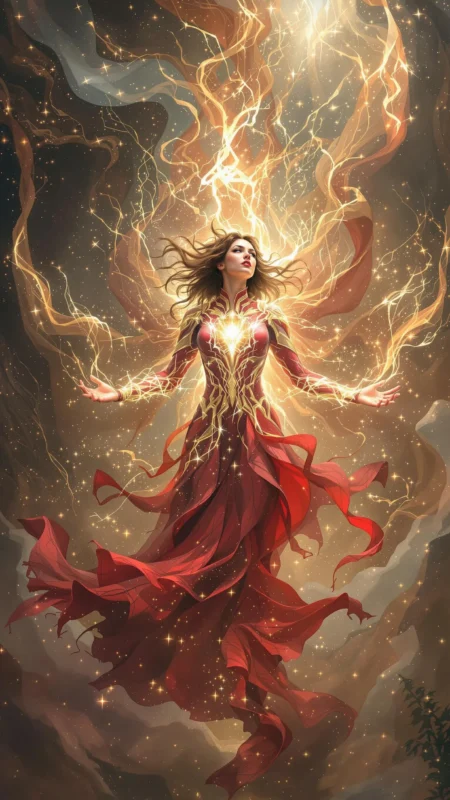
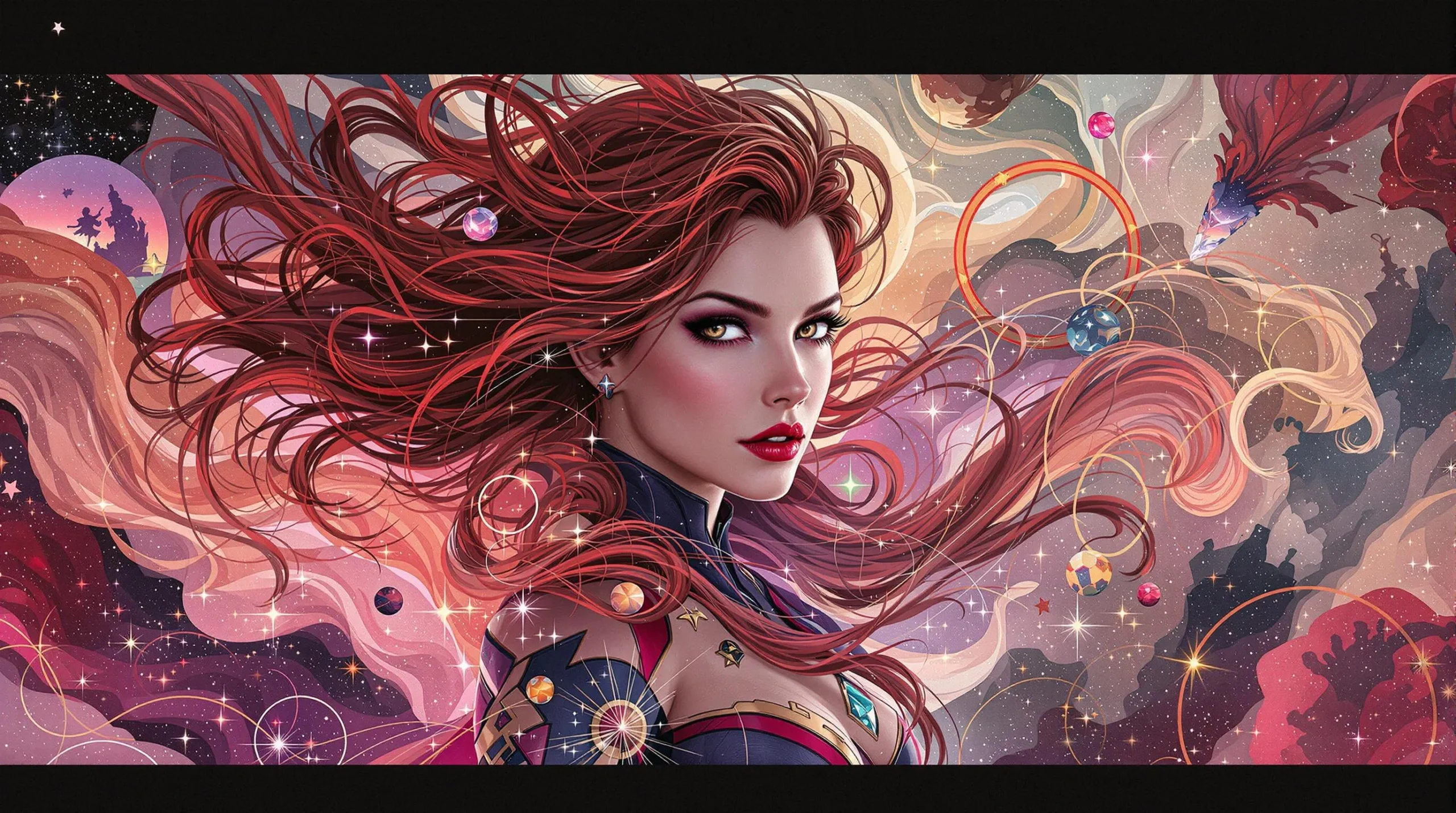
The Scarlet Witch has become a potent symbol for the creative and destructive potential of feminine grief. In a culture that often asks for grief to be quiet, private, and tidy, she represents its explosive, world-altering reality. She posits that immense pain does not simply hollow one out; it can be a generative force, capable of birthing entire worlds, albeit worlds built on a foundation of sorrow. Her story is a grand metaphor for the way we curate our lives in the wake of trauma, building our own pocket realities—a perfect home, a flawless social media feed, a carefully managed persona—to keep the unbearable truth at bay. She is the patron saint of the beautiful, fragile lie we tell ourselves to survive.
Her chaos magic is symbolic of a power that exists outside of established, patriarchal systems. It is not learned in ancient libraries or bestowed by male mentors; it is an innate, intuitive, and dangerously emotional force. This could represent the power of raw feeling, the logic of the heart, which defies rational explanation and threatens orderly structures. In your personal mythos, she may symbolize the part of you that society has deemed 'too much'—too emotional, too angry, too powerful—and the journey to reclaim that part not as a flaw, but as your most authentic and formidable magic.
Ultimately, the Scarlet Witch is an archetype of misunderstood power and weaponized pain. The world perceives a villain, a threat to be neutralized, but her internal experience is one of profound love and a desperate, human attempt to mend an unhealable wound. She embodies the tragedy of being judged for the consequences of your power while your intentions are ignored. For anyone who has felt their deepest motivations misconstrued, or whose attempts to heal have inadvertently caused more pain, her story provides a complex and resonant mirror. It suggests that the line between hero and villain is sometimes just the boundary of another person's understanding.