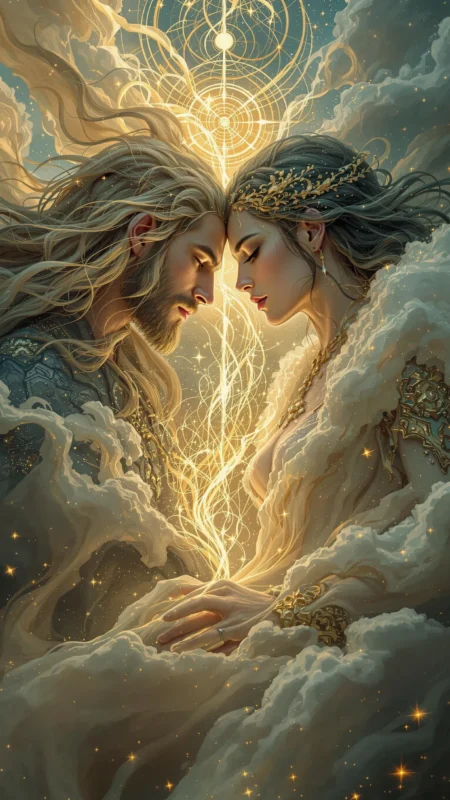
Aragorn

Archetype Meaning & Symbolism

Reluctant, kingly, weary, resolute, ranger, healer, humble, burdened, decisive, loyal

  • A day may come when the courage of Men fails, when we forsake our friends and break all bonds of fellowship, but it is not this day.

If Aragorn is part of your personal mythology, you may...

Believe

  • True authority is not taken, but given, and it is earned through service, wisdom, and sacrifice.
  • A person's worth is defined by their choices, not by their lineage or their past failures.
  • Hope is not the absence of despair; it is the decision to act in the service of good even when the outcome is uncertain.

Fear

  • That the weakness and moral failures of your ancestors lie dormant within you, waiting for a moment of testing to emerge.
  • Failing to protect those who have placed their trust in you, that your strength or courage will not be enough when it matters most.
  • The corrupting influence of power, and that in accepting a position of authority, you will inevitably become that which you fought against.

Strength

  • An almost supernatural capacity for endurance, the ability to persevere through physical hardship, emotional weariness, and prolonged uncertainty.
  • A natural gravitas and quiet integrity that inspires deep loyalty and trust in others, allowing you to unite people toward a common goal.
  • The ability to make difficult decisions with clarity and resolve, especially in moments of crisis, guided by a strong internal moral compass.

Weakness

  • A deep-seated melancholy and a tendency towards self-doubt that can lead to periods of inaction or reluctance to embrace your own potential.
  • A perpetual feeling of being an outsider, an emotional distance that makes true intimacy difficult and can foster a profound sense of loneliness.
  • The weight of responsibility can become so all-consuming that it stifles joy, spontaneity, and the ability to rest.

The Symbolism & Meaning of Aragorn

The Aragorn archetype is a tapestry woven with threads of reluctant duty and hidden nobility. He is the king in rags, a potent symbol for the potential that lies dormant within us, unrecognized by the world and perhaps even by ourselves. This archetype suggests that true worth is not a matter of outward trapping or social validation but an inner quality of character forged in hardship. To have Aragorn in your personal mythos could mean you carry a quiet certainty of a greater purpose, a destiny you may at times flee from, feeling unworthy or unprepared for its weight. He represents the journey out of the wilderness of self-doubt and into the acknowledged sovereignty of the self.

His symbolism is also one of profound weariness. This is not the archetype of the bright-eyed, eager hero. He is burdened by the knowledge of history, by the failures of his ancestors, and by the grim reality of the world. This imparts a gravitas, a sense that leadership is not a prize to be won but a heavy mantle to be shouldered. For an individual, this could translate to a worldview colored by a deep sense of responsibility, a feeling that one must stand vigilant because the forces of decay and chaos are ever-present. It is the myth of the long defeat, where victory is measured not in final triumphs but in the stubborn refusal to surrender hope.

Finally, Aragorn embodies the synthesis of the wild and the civilized. He is both a ranger, fluent in the secret languages of the wilderness, and a king, capable of commanding armies and ruling with wisdom. This speaks to a need for integration within the self: to honor both our primal, intuitive nature and our capacity for reason, law, and community. He is the bridge between two worlds, and as a personal symbol, he may urge a life that does not choose between instinct and intellect, freedom and responsibility, but seeks to hold them in a delicate, powerful balance.


Aragorn Relationships With Other Archetypes

The Ruined Fortress

The Aragorn archetype may find its most profound and silent counterpart in the Ruined Fortress. This is not merely a backdrop of fallen stone, but perhaps the very grammar of his soul, a landscape of forgotten duties and the heavy, mineral weight of lineage. He wanders the wild, yet his path seems to be an invisible orbit around this central decay, this hollow crown of a place. The fortress could be seen as a persistent memory that has seeped into the soil, a promise he must keep not to a people, but to the very geology of his inheritance. To return is not to conquer, but to listen to the stones, to re-inhabit the silences between fallen archways, and to become the living mortar that might, at last, bind the kingdom's bones back together.

The Unruly Sword

His relationship with the Unruly Sword is one of a difficult, almost sacred apprenticeship. The blade, often broken and in need of reforging, is not a simple tool of war but a shard of destiny that must be painfully integrated. In its shattered state, it may represent a truth too sharp to be held, a birthright that cuts the hand of the unworthy or the unwilling. The Aragorn does not simply claim the sword; he must court it, prove himself to its legacy, and in doing so, perhaps reforge his own splintered identity. The gleam of the finished blade is not one of triumph, but of acceptance—a mirror in which he can finally see the king he never wished to be, its edge a terrible and necessary clarity.

The Steward

With the Steward, the Aragorn engages in a delicate, almost ghostly dialogue about the nature of power. The Steward is the custodian of an absence, a man who has kept the throne from growing cold but whose rule could be a long, sustained winter awaiting the spring of true succession. He is the shape of the void left by the missing king. The Aragorn's return, then, is not always a welcome thaw, but a seismic shift that threatens the very foundations the Steward has painstakingly maintained. Theirs could be a relationship of mirrors: one holds power by duty, the other by blood, and in their meeting, we may see the profound tension between governance as a practice and leadership as a destiny. The transference of power is rarely a simple gift; it is more likely a quiet, reluctant surrender of a burden from one weary shoulder to another.

Using Aragorn in Every Day Life

Navigating a Crisis of Faith

When professional ambition or personal passion feels like a fool's hope, the Aragorn archetype provides a map. It suggests that the value of the quest is not in the certainty of its success, but in the integrity of the journey itself. You may find yourself walking the long, dark road not because you know you will win, but because to do anything else would be a betrayal of who you are. The focus shifts from the outcome to the honor in the attempt.

Leading From the Margins

For those in positions of influence without formal authority, this archetype is a powerful guide. It embodies leadership through service, protection, and wisdom offered quietly from the sidelines. It is the practice of being the guardian who ensures the fire stays lit, the path remains clear, and the company is safe, all without needing a title or a throne. Your authority could be derived from competence and character, not a place on an organizational chart.

Reconciling a Complicated Past

When wrestling with a difficult legacy or a personal history that feels like a burden, the Aragorn mythos offers a path toward integration, not erasure. It frames the past not as a determinant but as a crucible. You might learn to carry the shards of your broken lineage, not as a source of shame, but as a reminder of frailty and the choice to forge something new, something stronger, from the pieces.

Aragorn is Known For

The Reluctant King

His slow, deliberate journey from a ranger living in the wild to accepting his destiny as the rightful heir to the throne of Gondor, a crown he never sought.

The Healer:

His innate ability to mend, most famously with the herb athelas, symbolizing a power that is restorative and gentle, a counterpoint to the violence of his world.

The Ranger of the North:

His life as Strider, a mysterious and vigilant guardian operating in the shadows, protecting the common folk from unseen evils without any expectation of recognition or reward.

How Aragorn Might Affect Your Personal Mythology

How Aragorn Might Affect Your Mythos

When the Aragorn archetype takes root in your personal mythos, your life story may cease to be a simple progression and instead become an epic of exile and return. Periods of wandering, of feeling like an outsider, are no longer seen as aimless drifting but as a necessary sojourn in the wilderness. This is your time as Strider: a period of learning, observing, and protecting from the margins, gathering the skills and the wisdom your eventual 'reign' will require. Your narrative could be framed by a central, defining purpose that you did not choose, but which has chosen you, a purpose that gives meaning to even the longest and darkest stretches of the journey.

Your personal mythology might also be deeply concerned with legacy and lineage. You may feel the weight of your family's or culture's history, its triumphs and, more pointedly, its failures. The central conflict of your mythos could be the struggle to redeem that past, to prove that you are not bound by the weaknesses of those who came before. Your story is not just your own; it is the next chapter in a longer saga. This transforms personal struggles into something of mythic importance, quests to reforge a broken sword, to heal an old wound, to finally claim a birthright of integrity and strength that was once abdicated.

How Aragorn Might Affect Your Sense of Self

To see yourself through the lens of the Aragorn archetype is perhaps to feel perpetually underestimated, even by yourself. You may harbor a secret conviction of your own deep capabilities, a kingly nature hidden beneath a weathered, unassuming exterior. This can foster a quiet self-reliance, a confidence that is not dependent on external praise. It is the assurance of the skilled ranger who knows he can survive the night. You may not feel the need to broadcast your strengths, finding a certain freedom in being overlooked, in moving through the world unburdened by the expectations that come with a crown.

Conversely, this self-perception may be shadowed by a persistent sense of unworthiness. The sheer scale of your perceived destiny can be paralyzing. The question, 'Who am I to do this?' might be a constant companion. This internal conflict between the knowledge of your potential and the fear of your own frailty is the heart of the archetype. It could lead to a state of profound melancholy or a deep-seated reluctance to take risks, to fully step into the light for fear that you are, as you secretly suspect, an heir of Isildur, doomed to fail when the moment of truth arrives.

How Aragorn Might Affect Your Beliefs About The World

With Aragorn as a guide, you may view the world as a place of immense, fading beauty, a kingdom under siege by encroaching darkness. This is not a cynical worldview, but a vigilant one. It acknowledges the reality of malice, decay, and entropy but refuses to grant them ultimate power. Instead, it posits that the world is saved not by grand, sweeping gestures, but by the courage of a few good people holding the line in forgotten places. You might see history as a long, slow tide, and believe your role is to build and protect the small islands of light and hope that can withstand it.

This perspective could also foster a deep appreciation for the unseen and the unsung. Your heroes may not be the ones in the spotlight, but the quiet protectors, the keepers of lore, the humble guardians of what is good and true. You might believe that the true strength of a community lies in its fellowships, in the bonds of loyalty forged in shared purpose, not in its institutions or its armies. The world is a place where a small, loyal company can change the course of the future, where hope is a practical tool, and where a king might be found tending to the sick in the houses of healing.

How Aragorn Might Affect Your Relationships

In the realm of relationships, the Aragorn archetype may compel you toward profound, unwavering loyalty. Friendships are not casual affairs; they are fellowships. You might form bonds that are forged in shared struggle and mutual respect, creating a small, tight-knit company to journey with through life. You are the friend who will walk into the dark with another, who sees their duty to their companions as sacred. Your love is patient and enduring, capable of waiting across long years of separation and uncertainty, a quiet flame that is never extinguished.

However, this same sense of duty and the weight of your inner world can create a certain distance. You may seem aloof or emotionally reserved, not from a lack of feeling, but from the habit of carrying your burdens alone. It can be difficult to let others in, to share the full extent of your fears and doubts. There might be a part of you that remains forever the lone ranger, even when surrounded by those you love. This can lead to a profound loneliness, the isolation of the king who must make the final decision in the solitude of his own heart, making true intimacy a rare and cherished prize.

How Aragorn Might Affect Your Role in Life

The Aragorn archetype may define your role in life as that of the reluctant guardian. You may not seek leadership, and you might even actively shy away from it, but you find yourself taking charge when no one else will. Your role is to step into the breach, to take up the sword when it is dropped, to guide others through danger not because you desire power, but because your conscience permits no other course of action. You could be the de facto leader in your family, your workplace, or your community, the one people turn to when things are at their worst, trusting in your steadiness and integrity.

This perceived role is one of service before status. You might feel your purpose is to ensure the flourishing of others, to create a space where they can be safe and free. Like Aragorn tending to the wounded after battle, your sense of fulfillment may come from healing and restoring, not from conquering and commanding. This can lead to a life of immense purpose and meaning, but it is a demanding role. It requires constant vigilance, self-sacrifice, and the strength to put the needs of the whole before the desires of the self, a path that offers little rest.

Dream Interpretation of Aragorn

In a positive dream context, encountering Aragorn, or embodying him, could signify an awakening to one's own hidden potential and readiness to accept a greater responsibility. Dreaming of being crowned by him, or of him handing you a reforged sword, may suggest that you are finally integrating a difficult part of your past and are prepared to step into a role of leadership or authenticity you have long avoided. To be guided by him through a dark forest or a dangerous path in a dream could represent your own inner wisdom leading you through a period of confusion and doubt, assuring you that you have the resilience to endure the journey ahead.

In a negative context, a dream of Aragorn could manifest as a symbol of your deepest fears about inadequacy. You might dream of him turning his back on you, representing a feeling of being rejected by your own potential or a fear that you have failed a crucial moral test. Dreaming of yourself as Aragorn, but lost, wounded, or unable to draw your sword, might point to a profound sense of being overwhelmed by your responsibilities, paralyzed by self-doubt. To see the White Tree withered and dead in a dream could symbolize a fear that your efforts are futile, that you are fighting for a lost cause, and that your hope is merely a delusion.

How Aragorn Archetype Might Affect Your Needs

How Aragorn Might Affect Your Physiological Needs

When Aragorn informs your mythos, your relationship with your body's basic needs may become one of disciplined minimalism. The body is not a temple for pleasure but a vessel for purpose, a tool to be maintained for the long journey. You might find a quiet satisfaction in simple fare, in the ability to endure discomfort, to sleep on hard ground. There could be a belief that attunement to the body's cries for comfort is a form of weakness, a distraction from the vigilance required. Sustenance is about function: what fuel is required to take the next step, to last until the dawn.

This can cultivate incredible physical and mental endurance, a resilience that allows you to push through hardship that would stop others. However, it can also border on self-neglect. The needs of the body for rest, for true nourishment, for softness, may be perpetually deferred in the service of the quest. This constant state of low-level deprivation, romanticized as the ranger's life, could lead to burnout or a disconnection from the simple, grounding pleasures of physical existence. It is the belief that rest is a luxury to be earned, and the work is never, ever done.

How Aragorn Might Affect Your Ideas of Belonging

Belonging, for one with Aragorn in their heart, is found not in a homeland or a social class, but in a fellowship. It is the profound bond forged between disparate individuals united by a shared, perilous purpose. You may feel most at home on the road with a small band of trusted companions, where loyalty is the highest currency and love is demonstrated through acts of mutual protection and sacrifice. This creates an intense, almost sacred, form of intimacy, a sense of being truly seen and known by those who have shared the journey with you.

This can, however, make it difficult to feel a sense of belonging in ordinary, peaceful society. The quiet rhythms of daily life may feel alienating, the concerns of others trivial compared to the great struggles you perceive. You might feel like an exile even when you are home, a wanderer at the feast. The intensity of the fellowship is a difficult bond to replicate, and you may find yourself perpetually seeking that same level of commitment and meaning in your relationships, a search that can lead to disappointment and a feeling of being eternally out of place.

How Aragorn Might Affect Your Feelings of Safety

Your need for safety, under the influence of the Aragorn archetype, may be redefined not as the search for a fortress but as the cultivation of competence. Safety is not a place; it is a set of skills. It is knowing how to read the terrain, how to find the path, how to make a fire in the rain, and how to face a threat head-on. Security comes from self-reliance and awareness, from being able to operate effectively within the wild, dangerous world, not from trying to wall it out. This perspective fosters courage and a proactive stance toward risk.

This can also lead to a state of hyper-vigilance. The belief that danger is always lurking just beyond the firelight can make true relaxation impossible. Every shadow may hold a threat, every stranger's face a potential betrayal. This isn't paranoia in a clinical sense, but a mythic worldview where the forces of darkness are an active, present reality. The need for safety is met by becoming a perpetual sentry, a role that is both empowering and profoundly exhausting, as the watch never truly ends.

How Aragorn Might Affect Your Views of Esteem

Esteem, in the Aragorn mythos, is divorced from public acclaim or status. It is a private, internal affair, a quiet knowledge of one's own integrity. Your self-worth may be derived from fulfilling your duty, from keeping your word, from acting with honor even when no one is watching. It is the esteem of the ranger who protects the village that fears him, the esteem of the healer who asks for no thanks, the esteem of the king who would rather serve than be served. This builds a foundation of self-respect that is remarkably stable and resistant to external opinion.

Yet, this can be a double-edged sword. Because esteem is so tied to the successful performance of your duty, any perceived failure can be catastrophic to your sense of self. A single mistake, a moment of weakness, a failure to protect someone, might erase all past successes in your own mind. You could hold yourself to an impossibly high standard, becoming your own harshest critic. The burden of this self-imposed code of honor can be immense, and the fear of failing to live up to it can be a constant source of anxiety, undermining the very self-worth you seek to build through noble action.

Shadow of Aragorn

The shadow of the Aragorn archetype is a fearsome thing. When embraced without humility, the reluctant king becomes the tyrant who believes his destiny is a divine right. He sees his 'burden' as a justification for unilateral action, for dismissing the counsel of others, for making sacrifices of other people's lives in the name of the 'greater good.' His weariness curdles into cynicism, his vigilance into paranoia. He is the guardian who, in his zeal to protect his people from the darkness, casts the longest shadow of all, demanding absolute loyalty and crushing dissent as a threat to the sacred quest. He is the king who breaks his fellowship because he alone knows the true path.

Conversely, the shadow can manifest as a complete abdication of responsibility. This is the Aragorn who never returns from the wilderness. He becomes so enamored with his identity as the outsider, so fearful of the corrupting influence of the crown, that he refuses the call entirely. He remains Strider forever, a ghost haunting the edges of the story, watching as the world burns because he is unwilling to risk failure or sully his hands. His humility sours into a kind of moral cowardice, a self-pitying narrative of being too burdened or too tainted to lead. He lets his potential die in the wild, leaving those he was meant to protect to face the darkness alone.

Pros & Cons of Aragorn in Your Mythology

Pros

  • You possess a profound sense of duty and an unshakable moral core that guides you through life's most difficult choices.
  • You have the capacity to inspire great loyalty and courage in others, forming deep, meaningful relationships built on mutual trust and shared purpose.
  • Your resilience is extraordinary, allowing you to endure hardship and maintain hope in situations where others would despair.

Cons

  • You may carry a heavy burden of responsibility, leading to chronic stress, melancholy, and a feeling of isolation.
  • Your reluctance to embrace your own power and authority can lead to missed opportunities or delays in taking necessary action.
  • Your serious, duty-bound nature can make it difficult to experience simple joy, spontaneity, or to feel a sense of belonging in ordinary life.