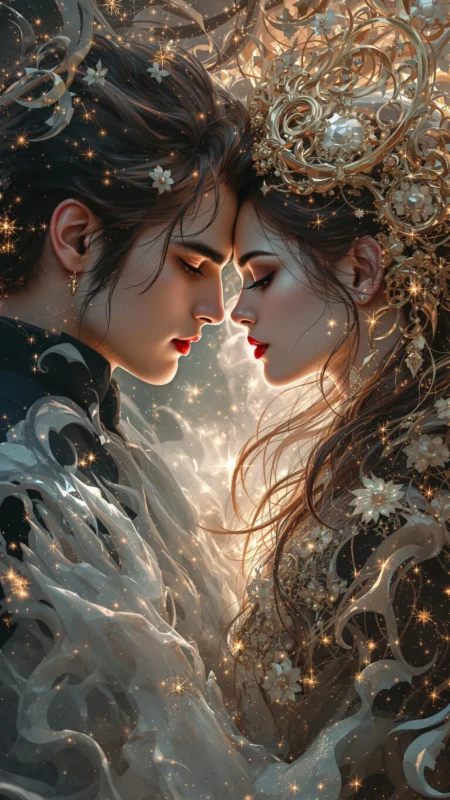
Edward Cullen

Archetype Meaning & Symbolism

Protective, brooding, devoted, self-sacrificing, tormented, ancient, restrained, obsessive, chivalrous, dangerous

  • Before you, Bella, my life was like a moonless night. Very dark, but there were stars, points of light and reason... And then you shot across my sky like a meteor. Suddenly everything was on fire; there was brilliancy, there was beauty.

If Edward Cullen is part of your personal mythology, you may...

Believe

  • You may believe that love is the most powerful force in the universe, capable of conquering fundamental divides like those between predator and prey, life and death.
  • You may believe that true strength is not the exercise of power, but its careful and conscious restraint for a moral purpose.
  • You may believe that your life is destined for something more than the mundane, that a hidden world of magic and epic romance is waiting to be discovered.

Fear

  • You may fear that your own inner 'monster,' your passions or flaws, could inadvertently harm the people you love most.
  • You may fear that without an all-consuming, world-altering love, your life is a desolate, meaningless 'moonless night.'
  • You may fear that you are fundamentally too ordinary to be worthy of an extraordinary destiny or an epic love story.

Strength

  • You may possess an immense capacity for loyalty and devotion, able to commit to people and ideals with unwavering conviction.
  • You may have a highly developed sense of moral discipline and self-control, holding yourself to a strict personal code of ethics.
  • You may have a talent for seeing the beauty and potential in things that others overlook or deem dangerous and unconventional.

Weakness

  • You may have a tendency toward idealizing romantic partners, placing them on pedestals that no real person can occupy.
  • You may be inclined to define your self-worth primarily through your relationships, feeling adrift or invaluable when you are single.
  • You may romanticize suffering and self-denial, believing that love is more authentic when it is painful or requires immense sacrifice.

The Symbolism & Meaning of Edward Cullen

He is perhaps the quintessential twenty-first-century gothic hero: a dangerous predator meticulously repackaged for romantic consumption. The archetype represents a sanitized monstrosity, a lethal force made safe through the power of chivalrous love. He is the lion who not only lies with the lamb but dedicates his immortal existence to protecting it from all other lions. This symbolism speaks to a deep-seated desire for power to be harnessed in one's service, for the most dangerous thing in the forest to choose to be your guardian. His existence is a paradox: ancient wisdom trapped in a youthful form, immense power paired with profound self-loathing, a killer's instinct sublimated into obsessive devotion.

Within a personal mythology, he could symbolize the taming of one's own 'inner monster.' He is the embodiment of immense potential, for good or for ill, and the narrative hinges entirely on his choice. This makes him a potent symbol for anyone wrestling with their own capacities, their own appetites and angers. His story suggests that the most dangerous parts of oneself do not need to be exorcised, but can instead be understood, disciplined, and even transformed into a source of profound strength and loyalty. He is a walking testament to the idea that our nature is not our destiny.

The archetype also carries the weight of eternal adolescence. Frozen at seventeen, he embodies a romantic ideal unburdened by the practicalities of aging, mortgages, or decay. This timelessness could represent a longing for a love that never fades, a passion that remains at its peak forever. It is a fantasy of permanence in a world of fleeting connections. He is a marble statue of devotion, perfect and unchanging, offering a love story that transcends the very boundaries of life and death, making all worldly concerns seem trivial by comparison.


Edward Cullen Relationships With Other Archetypes

The Moth

The relationship between this archetype and the Moth is perhaps the most immediate, a fable spun from light and dust. The Edward Cullen figure is a kind of cold and eternal flame, a beacon whose brilliance is not born of heat but of some crystalline, mineral perfection. He may see in the moth’s frantic, paper-thin beauty a flicker of life so potent and ephemeral it borders on the divine—a life he can witness but never possess. The moth, in turn, seems to be drawn not merely to the light but to the sublime danger it represents, a chance to brush against eternity. Theirs could be a waltz on the very edge of immolation, a shared fascination with the boundary between existence and oblivion, where the greatest act of love might be to resist the very nature that pulls them, irrevocably, together.

The Ancient Redwood

One could say that this archetype finds a silent communion with the Ancient Redwood. Both are figures of immense stillness, repositories of years that have weathered them into a state of profound, statuesque solitude. The redwood's rings are a physical ledger of silent witness—droughts, fires, the rise and fall of civilizations just beyond the forest’s edge—much like the vampire’s memory is a vast, quiet library of bygone eras. There may be a shared understanding in their longevity, a loneliness that comes not from being alone, but from outlasting everything. This relationship is not one of action, but of deep, subterranean presence; a mutual acknowledgment of the immense gravity of time, and the quiet burden of being a landmark while the world flows, like a river of fallen leaves, around their feet.

The Unplayed Grand Piano

This archetype may also be understood as an Unplayed Grand Piano, sitting for an age in a sealed, velvet-draped room. It is an instrument of immense potential, capable of both thundering passion and the most delicate of nocturnes, yet it remains silent, its keys gathering a fine, silver layer of dust. The strings are held at a perfect, excruciating tension—a metaphor, perhaps, for the constant, agonizing self-control that defines its existence. A true connection, then, could be the arrival of the one musician who dares to lift the fallboard. The first touch might be tentative, awakening a resonance that has been dormant for centuries, and the fear is ever-present: a passionate crescendo could snap the old wires; a careless hand could mar the polished finish. This relationship is about the terrifying, sublime risk of finally making music again after an eternity of silence.

Using Edward Cullen in Every Day Life

Navigating Intense Devotion:

When grappling with feelings of overwhelming love or protectiveness, this archetype offers a map. It provides a narrative for channeling immense passion not into destructive obsession, but into a form of chivalrous, albeit intense, guardianship. One might ask: how can this powerful emotion be refined into a source of strength for another, rather than a cage?

Practicing Self-Restraint:

In moments where personal impulses, be they anger, desire, or ambition, feel monstrous and overwhelming, the Edward Cullen mythos serves as a model for radical self-control. It frames restraint not as weakness, but as the highest form of moral strength. It's a reminder that one's power is most profoundly expressed in the choice not to use it, especially for the sake of love.

Re-contextualizing Loneliness:

For those experiencing profound isolation, this archetype can reframe that state. His century of lonely, static existence, a 'moonless night', wasn't empty, but a long waiting. It suggests that periods of solitude are not a void but perhaps a quiet, patient prelude to a life-altering event, a time of gathering oneself before the meteor strikes.

Edward Cullen is Known For

Superhuman Restraint

His 'vegetarian' diet, a choice to subsist on animal blood instead of human, is a constant, centuries-long act of willpower. It symbolizes the eternal struggle between one's fundamental nature and one's chosen morality.

Sparkling Skin

In direct sunlight, his skin glitters as if diamond-dusted. This trait makes him both beautiful and visibly other, forcing him into the shadows. It is a metaphor for a truth that is both dazzling and dangerous, something that cannot be hidden in the light.

Selective Telepathy

He can hear the thoughts of everyone around him except for one person: Bella Swan. Her mind is a quiet sanctuary in a world of psychic noise, making her uniquely compelling and representing a place of peace that his power cannot penetrate.

How Edward Cullen Might Affect Your Personal Mythology

How Edward Cullen Might Affect Your Mythos

To incorporate the Edward Cullen archetype into one's personal mythos is to rewrite the story of love as a supernatural event, an epic destiny. Your life may cease to be a series of mundane occurrences and instead become a landscape of fated encounters and hidden magic. You are no longer just a person living a life; you may become the 'lamb' who captivates the 'lion,' the singular being who can quiet the noise in a telepath's mind. This narrative structure elevates the self to a position of mythic importance, suggesting your unique qualities have the power to attract and transform the extraordinary. The central plot of your life might revolve around a grand, all-consuming romance that defies logic and convention.

The mythos may become one of beautiful danger. It suggests that the most profound experiences lie just beyond the veil of the ordinary world, in the shadowed spaces where monsters and magic are real. Your personal story could be reframed as a gothic romance, where the central challenge is not navigating daily life, but bridging the chasm between the mortal and the immortal, the mundane and the magnificent. It posits that true love involves an element of risk, a dance with a beautiful, powerful force that could just as easily destroy you as adore you. Your biography becomes a story about being chosen, not for ordinary happiness, but for an epic, incandescent, and perilous love.

How Edward Cullen Might Affect Your Sense of Self

Adopting this archetype could radically alter one's self-perception, casting the self as uniquely special and worthy of a singular, epic devotion. You may see yourself as the quiet center in a chaotic world, the one person whose presence can bring peace to a tormented soul. This fosters a sense of being 'chosen,' a conviction that beneath a seemingly ordinary exterior lies a quality so profound it can attract and anchor a supernatural force. It can instill a deep-seated belief in one's own quiet power: not the power of physical strength, but the power to inspire redemptive love. One's identity becomes intertwined with being the object of this magnificent, dangerous affection.

Conversely, identifying with the archetype's internal struggle could lead to a highly critical self-view. One might perceive aspects of their own personality, perhaps their ambition or their temper, as 'monstrous' impulses that must be violently suppressed. This can lead to a state of constant vigilance over one's own inner world, a feeling of being perpetually at war with one's own nature. Self-worth may become conditional, dependent on the successful restraint of these perceived dark sides. This internalizes Edward's self-loathing, framing the self as inherently dangerous and in constant need of control for the safety of others.

How Edward Cullen Might Affect Your Beliefs About The World

The world, seen through this lens, may no longer appear as a solid, predictable place governed by the laws of physics and social contracts. Instead, it could become a layered reality, a place of veils. There is the mundane, visible world, and then there is the secret, vibrant, and dangerous world shimmering just beneath it. This perspective cultivates a sense of wonder and suspicion. It suggests that the most interesting things are happening in the shadows, that there are ancient secrets and powerful beings hidden in plain sight. Reality becomes a stage for a hidden supernatural drama, and one might begin looking for clues, for the tell-tale signs of the magic that others miss.

Furthermore, this archetype could instill a profoundly romantic and dualistic worldview. Life's primary conflict becomes the struggle between darkness and light, monstrosity and morality, all played out on the battleground of the heart. It elevates personal relationships to the level of mythic struggles. This worldview may diminish the importance of societal structures, careers, and conventional milestones, replacing them with a belief that the ultimate meaning of existence is found in an all-consuming, world-altering love. It is a philosophy that posits connection, not achievement, as the ultimate transcendent act.

How Edward Cullen Might Affect Your Relationships

In the realm of relationships, this archetype may install a template for an all-consuming, intoxicating, and protective love. The ideal partnership is not one of equals who complement each other, but a dynamic of cosmic significance, a fated pairing of disparate but magnetically drawn souls. This can create a longing for an intensity that few real-world relationships can sustain, leading to a feeling of disappointment with more placid, healthy partnerships. There may be a subconscious search for a partner who is 'more' than human: more passionate, more protective, more tormented, more in need of saving. The relationship becomes the entire world, rather than a part of one's world.

This framework may also romanticize a significant power imbalance. The safety and adoration offered by the powerful figure can feel intoxicating, but it often comes at the cost of one's own agency. Protection can easily bleed into control; devotion can morph into possession. The archetype could normalize behaviors like surveillance or the limiting of a partner's freedom, framing them as acts of love and concern. It fosters a dynamic where one person is the fragile object to be cherished and guarded, and the other is the powerful guardian, potentially stunting the growth and independence of the one being 'protected.'

How Edward Cullen Might Affect Your Role in Life

This archetype may cast one in the role of the 'Human Anchor' or the 'Redeemer.' Your purpose in the grand narrative is to be the stabilizing force for a brilliant but volatile partner. You are the reason the monster chooses goodness; your love is the moral compass for a soul that might otherwise be lost. This role is defined by your effect on another, your identity fused with being the catalyst for their salvation. It is a passive-seeming role that is granted immense narrative power: you may not have supernatural abilities, but you have the unique capacity to tame them, making you the story's linchpin.

Alternatively, one might identify with Edward's role as the 'Reluctant Guardian.' In this capacity, your life's purpose is to wield your own significant power, be it intellectual, financial, or emotional, with extreme care. You may see yourself as a protector of those more vulnerable than you, constantly aware of your potential to cause harm and thus practicing immense self-restraint. This role involves a kind of noble suffering, a shouldering of burdens in solitude to keep others safe. Your purpose is not to live fully for yourself, but to act as a shield, finding meaning in self-sacrifice and the quiet, vigilant protection of what you love.

Dream Interpretation of Edward Cullen

In a positive dream context, the appearance of an Edward Cullen figure could symbolize an encounter with one's own disciplined power. The dream may suggest that you are successfully integrating a powerful, perhaps once-feared, aspect of your psyche, harnessing its strength without letting it run wild. He might represent a burgeoning romance that feels both incredibly intense and fundamentally safe, a sign that you are ready for a deep, transformative connection. His presence could be your subconscious telling you that you are worthy of a love that feels epic and that you possess a quiet strength capable of attracting it.

In a negative context, dreaming of this archetype could be a warning against a possessive or smothering influence in your life. He might represent a relationship that, while passionate, is stifling your independence and agency. His sparkling, cold skin could symbolize something that appears beautiful but is emotionally unavailable or even dangerous. He may also personify your own shadow: a fear of your obsessive tendencies, or a self-loathing part of you that keeps itself separate from others, believing it is too monstrous to be loved.

How Edward Cullen Archetype Might Affect Your Needs

How Edward Cullen Might Affect Your Physiological Needs

The presence of a being who does not eat, sleep, or breathe within one's personal mythos can foster a desire to transcend the body's messy, mortal demands. This archetype suggests that the highest state of being, particularly a state of being in love, is one of pure will and emotion, unencumbered by biological needs. It may cultivate a subtle disdain for the physical self, viewing hunger, fatigue, and illness not as natural processes but as weaknesses that get in the way of a more 'pure' existence. The narrative implies that what truly matters is the immortal soul and its eternal passions, reducing the body to a fragile, temporary shell.

The physiological self, in this mythos, becomes the site of the central conflict. It is the body that is fragile, the body that smells delicious to the predator, the body that will wither and die while the beloved remains unchanged. This can lead to a fixation on preserving youth and vitality, or a feeling of being trapped in a declining vessel. The ultimate fantasy, then, is not just emotional union but physiological transformation: to shed the cumbersome mortal coil and attain the same physical permanence as the beloved. It frames biology not as life itself, but as a problem that only supernatural love can solve.

How Edward Cullen Might Affect Your Ideas of Belonging

Belonging, through the Edward Cullen lens, is not about finding your place within a community; it is about being the singular, irreplaceable half of a fated dyad. It's a radical, exclusive form of intimacy. This archetype promotes the idea that true belonging is found when a powerful, discerning other chooses you, and only you, from all the world. This creates a 'we against the universe' mentality, where the bond between two people becomes its own nation, its own world, with everyone else on the outside. The need for broader social connection may diminish, as all sense of belonging is funneled into this one, all-consuming relationship.

This mythos also provides a template for belonging to an elite, secret clan: the Cullen family. They are a found family, bound not by blood but by a shared condition and a shared moral choice. For someone who has felt like an outsider, this can be a powerful fantasy. It suggests that even if you don't fit into the conventional world, there is a secret, more glamorous family of fellow misfits waiting for you. Belonging is not about being normal, but about finding the right kind of 'abnormal' to belong to.

How Edward Cullen Might Affect Your Feelings of Safety

This archetype introduces a paradoxical definition of safety. It is not found in the absence of threat, but in being loved by the greatest threat of all. Safety becomes a highly personalized, exclusive bubble, created by the devotion of a powerful protector. The world may be full of dangers, but they are irrelevant so long as your personal 'monster' is there to guard you. This can lead to a worldview where one feels both incredibly vulnerable to the world at large and simultaneously invincible within the confines of a specific relationship. It's the safety of the lamb who trusts the lion completely.

This redefinition of safety may, however, cultivate a higher tolerance for risk and a skewed perception of danger. The protector figure's own nature is the primary source of peril, a fact that is romanticized and downplayed. The mythos suggests that being the object of a dangerous being's affection is the ultimate security. This can make one blind to the inherent risks of such a dynamic, particularly the risk of control and loss of autonomy. True safety, which includes emotional and psychological freedom, may be sacrificed for the thrilling, intoxicating feeling of being protected by a beautiful danger.

How Edward Cullen Might Affect Your Views of Esteem

Esteem, in this narrative, is often externally derived: it is granted by the unwavering gaze of the mythic other. The central thought is, 'If a being this ancient, this beautiful, this powerful, sees me as the most precious thing in existence, then I must be extraordinarily special.' Self-worth is affirmed and magnified by being the chosen object of such a singular devotion. It's not about what you achieve, but about who you attract. This can provide a powerful, intoxicating boost to self-esteem, confirming a deeply held hope that one is uniquely and profoundly lovable.

Alternatively, esteem can be built upon the idea of one's own strength in 'handling' such a dangerous love. It takes a special kind of person, the mythos suggests, to not be intimidated by a vampire, to love him fearlessly. Esteem, in this case, comes from a perception of one's own courage, intuition, and emotional fortitude. You are not just a passive recipient of affection; you are the brave soul who can walk with the lion. This builds a sense of self as uniquely resilient and perceptive, capable of navigating emotional depths that would overwhelm an ordinary person.

Shadow of Edward Cullen

The shadow of the Edward Cullen archetype emerges when protection curdles into possession, when devotion becomes a beautiful cage. In its shadow form, the guardian does not simply watch over the beloved; he actively limits her freedom for the sake of 'safety.' He might disable her car, isolate her from friends he deems a bad influence, or make decisions about her life without her consent. The chivalry becomes a velvet-gloved form of control, and the romance is predicated on the diminishment of one partner's agency. It is the stalker reframed as a romantic hero, whose constant surveillance is a sign of his unending love.

When this archetype's self-loathing is projected outward, the shadow appears. Instead of seeing the monster within himself, he begins to see threats everywhere, fostering a paranoid and isolating worldview for both himself and his partner. His torment is no longer a source of tragic beauty but a justification for manipulative behavior. At its extreme, the shadow archetype cannot distinguish love from ownership. The beloved is not a partner but a precious object, a collection piece, whose purpose is to validate the monster's fragile ego and prove he is capable of possessing something pure. The love story becomes a horror story, cloaked in the language of gothic romance.

Pros & Cons of Edward Cullen in Your Mythology

Pros

  • This archetype can inspire a profound belief in the transformative power of love, providing a deep sense of meaning and purpose.
  • It offers a compelling model for self-mastery and the ethical consideration of one's own power and impulses.
  • It encourages a romantic worldview that finds beauty and worth in what is different, misunderstood, or seemingly dangerous.

Cons

  • It may create wildly unrealistic and potentially unhealthy expectations for real-world romantic partners and relationships.
  • It risks glorifying codependent dynamics where one partner's agency, growth, and freedom are sacrificed for the sake of 'protection.'
  • It can romanticize troubling traits such as brooding emotional unavailability, possessiveness, and stalking as indicators of deep love.