 Believe
 Fear
Fear Strength
 Weakness
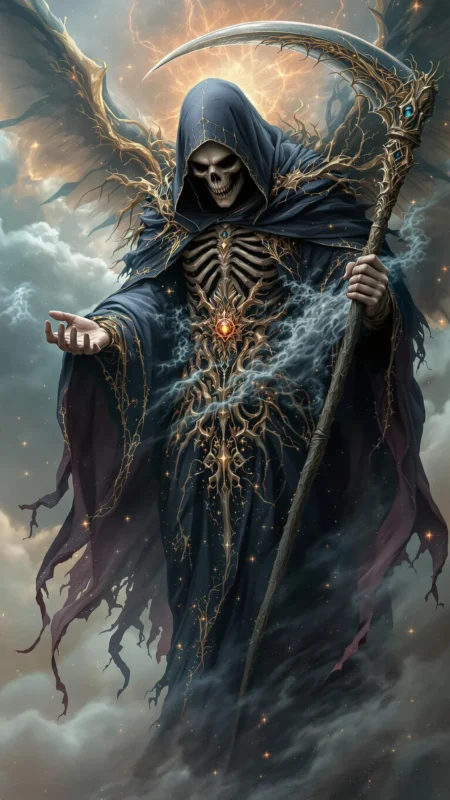
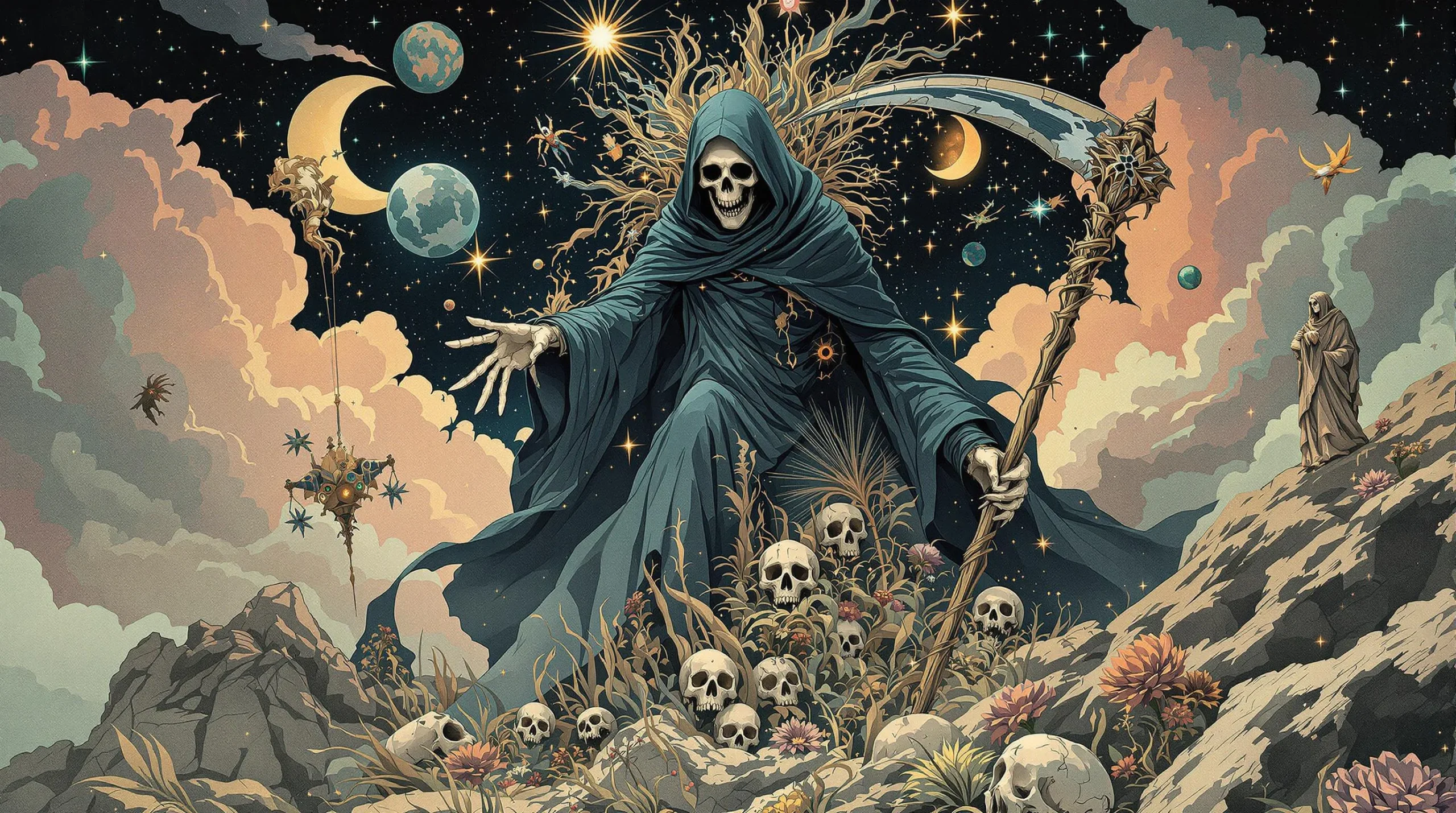
The Grim Reaper, that silent figure at the edge of the frame, is perhaps the most potent archetype for radical acceptance. In a personal mythology, its presence is not necessarily a morbid preoccupation but a philosophical anchor. It stands as the ultimate equalizer, the one entity before whom all crowns and rags are rendered meaningless. To have the Reaper as a guide is to carry a constant, quiet reminder that status, wealth, and ego are temporary constructs. Its symbolism may cut through the noise of societal expectation, urging a life built not on accumulation but on the richness of experience, the depth of connection, and the integrity of one’s character. The Reaper isn't a villain in your story; it is the unwavering, impartial chronicler of the final page, whose existence gives all the preceding pages their weight and meaning.
Furthermore, the Reaper functions as the archetype of necessary endings. In nature, death is the engine of renewal; old growth falls to make way for new light. So too in the psyche. The Reaper in your mythos may preside over the death of old habits, the conclusion of outgrown relationships, the shedding of a former self. It is the patron of the liminal space between what was and what will be. Its presence could grant you the courage to let things die, to trust in the cycle of decay and rebirth that governs all of life. This isn't about destruction for its own sake, but about the surgical, often painful, pruning required for the soul’s continued growth.
Ultimately, the Reaper's meaning in a personal mythology might crystallize into a profound appreciation for the ephemeral. Like the Japanese concept of mono no aware, it is the gentle sadness of passing things that makes them beautiful. A sunset is poignant because it cannot last. A conversation is precious because it will end. By internalizing the figure of Death, you might be transmuting the fear of ending into a catalyst for loving what is here, now, in all its fleeting, fragile glory. It is the understanding that life’s beauty is not in its permanence, but in the vibrant, unrepeatable dance it performs against the backdrop of silence.