

Angels

Archetype Meaning & Symbolism

Messenger, Guardian, Protector, Judge, Incorruptible, Radiant, Aloof, Terrifying, Benevolent, Unseen

  • Be not afraid.

If Angels is part of your personal mythology, you may...

Believe

  • There are unseen forces of grace and intelligence actively participating in my life.
  • My highest calling is to act as a messenger or agent for a purpose greater than my own personal desires.
  • My intuition, when pure, is a form of divine communication, a whisper from my guardian.

Fear

  • Disappointing the higher power or purpose I am meant to serve, thereby 'falling from grace.'
  • Being abandoned by my guiding intelligences and left to face the world utterly alone.
  • The terrifying, clarifying judgment of the divine, that I will be weighed and found wanting.

Strength

  • A profound sense of inner peace and safety, even amidst chaos.
  • A clear sense of purpose that provides direction and meaning to life's challenges.
  • Access to a deep well of intuition and creative insight that feels channeled from a higher source.

Weakness

  • A tendency towards spiritual bypassing: using faith to avoid dealing with difficult, messy human emotions and problems.
  • A potential for self-righteousness or a black-and-white moral view that lacks nuance and compassion for human frailty.
  • Difficulty forming grounded, realistic relationships, as they are often compared to an unattainable divine ideal.

The Symbolism & Meaning of Angels

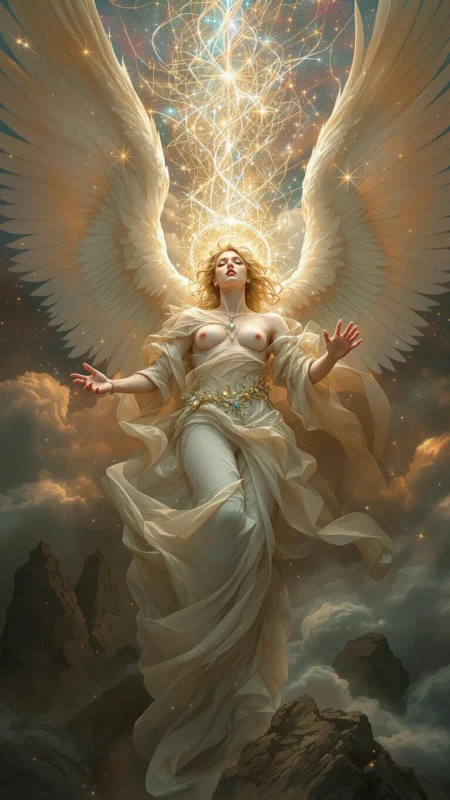
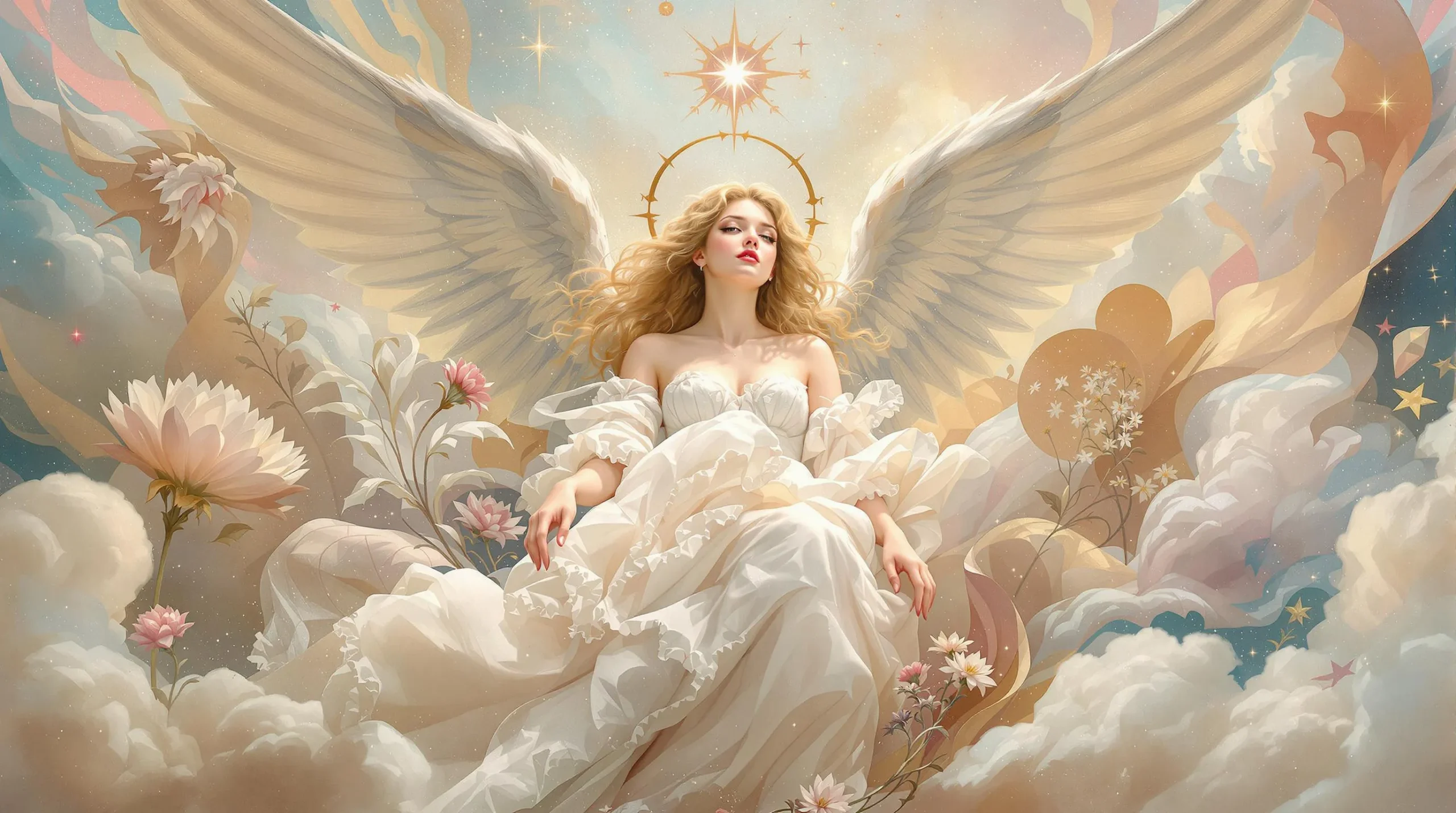
To have Angels in your personal mythology is to consent to live in an enchanted world. It is to suspect that the universe whispers, that coincidence is a poor word for the intricate calligraphy of fate, and that a layer of reality, shimmering and unseen, runs parallel to our own. The Angel is the personification of this benevolent conspiracy. It is the archetype of the helpful intervention: the sudden, intuitive swerve that avoids an accident, the chance encounter that changes a life’s trajectory, the comforting thought that arrives, unbidden, in a moment of despair. They are not necessarily beings with harps and halos, but perhaps the very mechanism of grace itself, the impossible possibility that we are cared for by something we cannot comprehend.

The Angel is also the symbol of our own higher potential, the better self we are called to become. It represents a state of being that is less entangled in the sticky webs of ego, jealousy, and fear. To connect with this archetype is to seek access to that part of oneself that is wise, compassionate, and incorruptibly pure. It is the inner voice that advocates for kindness when you want to be cruel, for courage when you want to retreat. This Angel is not an external entity to be worshipped, but an internal one to be realized: a latent capacity for a more luminous, expansive way of being in the world.

Yet, this archetype carries a profound duality. The Angel is a being of light, but light casts a shadow and can be blinding. They represent not only mercy but also uncompromising truth and, at times, judgment. Think of the angels barring the way back to Eden, sword of fire in hand. They symbolize the points of no return in our lives, the moments when a certain innocence is lost forever and we are forced onto a new, more difficult path. They are the beautiful and terrifying embodiment of cosmic law, which supports and protects but also corrects and chastises. The Angel in your mythos is a reminder that a connection to the sacred is both a comfort and a terrible responsibility.


Angels Relationships With Other Archetypes

The Child

The Angel's relationship with The Child may be that of a silent cartographer to an unmapped country. While The Child is a vessel of pure, chaotic potential, a sky full of unformed constellations, The Angel could be seen as the unseen gravity that gently organizes this nascent cosmos into a life. This is not the heavy hand of fate, but perhaps the quietest of suggestions, a breath on the back of the neck that turns a glance toward a moment of grace or away from a hidden precipice. The Angel does not live The Child’s life, but may instead hold the memory of its blueprint, serving as a spiritual custodian to an innocence it can protect but never fully re-experience, a timeless witness to a fleeting song.

The Ruin

In the presence of The Ruin, The Angel may find a strange and somber kinship. Where the broken cathedral or the fallen coliseum stands as a testament to the brittleness of human ambition and the slow grind of entropy, The Angel could be the lingering echo of the idea that first raised the stones. It is a relationship of spirit to skeleton. The Angel does not mourn the decay, for it exists outside the river of time that wears all things to dust; rather, it might be the perfect, weightless memory that haunts the space, a verse of light read against a page of profound erosion, proving that the intention, the prayer, the dream, can long outlive its material form.

The Abyss

The Angel’s relationship with The Abyss is perhaps one of definition by opposition, like that of a single candle to an infinite cavern. The Abyss is not an entity to be fought but a presence to be withstood—a metaphysical gravity, a ceaseless, pulling void that questions the very substance of light. An Angel’s wings, in this context, may not be instruments of flight toward a higher plane, but anchors of celestial defiance, beating not to ascend but to simply hold their ground. The Angel could be the final shoreline before an ocean of non-being, its existence a quiet, persistent, and perhaps terrifyingly lonely assertion against the immense, silent argument of nothingness.

Using Angels in Every Day Life

Navigating Moral Quandaries

When faced with a decision that pulls you between convenience and integrity, the Angel in your personal mythos may not offer a simple answer but rather a clarifying light. You might pause and ask not what an angel would do, but what message this moment is trying to deliver. The archetype encourages a listening posture, a tuning of the inner ear to the frequency of your highest principles. The choice becomes less about a binary of right and wrong and more about aligning with an incorruptible truth that resides within, a truth the Angel merely illuminates.

Channeling Creative Insight

For the artist, writer, or innovator stuck in the doldrums of a creative block, the Angel archetype reframes the drought. It suggests that inspiration is not something to be wrestled from the ether, but a message to be received. You could adopt a ritual of receptivity: quieting the mind, preparing the workspace as a sanctuary, and inviting the ‘muse’ as one would a celestial visitor. This transforms the creative act from one of egoic striving into one of sacred transcription, where you are the humble messenger for a beauty or idea that seeks expression through you.

Finding Solace in Crisis

In moments of profound loss or fear, when the scaffolding of your life seems to crumble, the Angel archetype offers a narrative of unseen support. It is the felt sense of a presence in an empty room, the inexplicable peace that descends in the midst of chaos. This is not about denying the pain but about holding it within a larger context of benevolent mystery. You may find yourself speaking to this guardian presence, not in prayer, but in conversation, externalizing the fear and thereby allowing a more resilient, protected part of yourself to come forward.

Angels is Known For

Divine Messengers

As intermediaries between the divine and the mortal, angels are fundamentally known for bearing messages, revelations, and warnings. They bridge worlds, making the will of the cosmos intelligible to the human heart.

Guardians and Protectors

The concept of the guardian angel is perhaps the most personal aspect of the archetype. They are seen as celestial bodyguards, assigned to watch over individuals, offering protection from physical harm and spiritual despair.

Executors of Divine Will

Beyond gentle guidance, angels are also known as agents of a higher power’s authority. They can be awesome and terrifying, meting out judgment or enacting grand, world-altering events, embodying the impersonal, inexorable force of cosmic law.

How Angels Might Affect Your Personal Mythology

How Angels Might Affect Your Mythos

When the Angel archetype enters your personal mythos, your life story may cease to be a mere sequence of events and become, instead, a guided narrative. Mundane occurrences are candidates for divine orchestration. A missed train isn't a frustration; it’s a potential intervention, a subtle rerouting by an unseen hand. Your autobiography is no longer a solo performance but a duet with the numinous. The plot is driven by calls and responses: a moment of crisis is met with a whisper of intuition, a period of aimlessness is concluded by a 'chance' meeting that provides a new map. Your story gains a silent co-author, one whose motives are mysterious but ultimately benevolent.

This reframes your role from a wanderer to a pilgrim, or perhaps a messenger. Your personal struggles and triumphs might be perceived as chapters in a larger, sacred story. The central theme of your mythos may shift toward purpose and mission. You might interpret your unique talents not as personal assets for acquiring wealth or status, but as tools given to you for a specific task. Your life story becomes an answer to a question you believe the universe is asking of you. The narrative arc bends toward a destiny, not one that is rigidly predetermined, but one that you co-create with the guidance of these luminous, silent partners.

How Angels Might Affect Your Sense of Self

Incorporating the Angel archetype could fundamentally alter your perception of self, infusing it with a sense of inherent worth and sacredness. You may begin to see yourself not as a flawed, isolated ego, but as a being connected to, and cherished by, a vast, intelligent universe. This can cultivate a quiet confidence that is not dependent on external validation. It’s the belief that, at your core, you are unconditionally loved and guided. This may lead to a greater sense of self-compassion, as you view your mistakes less as character flaws and more as part of a learning process overseen by a patient, guardian presence.

This archetypal influence might also create a dynamic of a dual self: the everyday, temporal self and the eternal, ‘angelic’ Self. You may feel a persistent, gentle pull to align with the latter. This creates an internal compass oriented toward your highest ideals: integrity, compassion, and truth. Life becomes a practice of closing the gap between who you are in any given moment and the luminous potential you feel within. This could foster a powerful motivation for self-improvement, not out of self-loathing, but out of a desire to more purely express the sublime nature you believe is your birthright.

How Angels Might Affect Your Beliefs About The World

To view the world through the lens of the Angel archetype is to see it as a place of profound and layered mystery. The material world, with its predictable physics and observable phenomena, is just the topsoil of a much deeper reality. It suggests that behind the curtain of the mundane, a grander, more meaningful drama is unfolding. This worldview fosters a sense of wonder and attentiveness. One might start looking for the 'messages' in the patterns of migrating birds, the 'signs' in repeated numbers, or the 'guidance' in the lyrics of a song that comes on the radio at the perfect moment. It is a perspective that replaces cynicism with curiosity.

The world is no longer a random collection of competing forces, but a coherent, if complex, system governed by a benevolent intelligence. This might instill a deep-seated optimism, a belief that even in the face of suffering and chaos, there is an underlying order and purpose. History is not just a catalogue of human folly, but a long story of divine-human interaction, with progress measured in moments of grace and enlightenment. It’s a worldview that allows for miracles, not as violations of natural law, but as expressions of a higher law we have yet to fully comprehend.

How Angels Might Affect Your Relationships

In the realm of relationships, the Angel archetype may lead you to view connections through a sacred lens. You might see certain people as having been 'sent' to you: as teachers, catalysts for growth, or partners in a shared spiritual journey. This can imbue your relationships with a profound sense of meaning and destiny. It encourages you to look past superficial annoyances and see the 'angelic' or higher purpose of each connection. You may also feel a powerful calling to act as a guardian or protector for those you love, offering not just practical support but a kind of spiritual oversight, holding them in a space of benevolent intention.

However, this perspective can also create challenges. Human relationships are inherently messy, imperfect, and fraught with ego. Comparing them to a divine, angelic ideal can lead to disappointment and impatience. You might struggle with the very human flaws of your partners, friends, and family, holding them to a standard of purity they cannot possibly meet. There could be a tendency toward a certain aloofness, a preference for the clean, uncomplicated connection with the divine over the difficult, tangled work of earthly love. You may feel a particular pain when relationships end, viewing it not just as a loss, but as a kind of fall from grace.

How Angels Might Affect Your Role in Life

The Angel archetype can powerfully shape your sense of role in the world, shifting it from a career to a calling. You may feel that your life is not your own to do with as you please, but rather a mission you have been entrusted with. This could manifest in many forms: the healer who sees their work as a channeling of divine energy, the activist who feels called to fight for justice as an agent of a higher moral order, or the parent who views their role as the sacred guardianship of a soul. The animating force is not personal ambition, but a sense of service to something greater than the self.

This sense of mission could imbue your work with incredible passion and resilience. Setbacks are not failures but tests of faith; obstacles are not stop signs but opportunities to rely on unseen help. You may feel you are a 'messenger,' tasked with delivering a particular gift, insight, or creation to the world. This provides a powerful 'why' that can sustain you through periods of difficulty and doubt. Your role is less about what you do for a living and more about what you are living to do, defined by a sacred contract you feel you have with the universe.

Dream Interpretation of Angels

To dream of an Angel in a positive context is often a profound experience of reassurance and guidance from the deep psyche. The Angel may appear in a moment of crisis within the dream, offering protection, delivering a specific message, or simply radiating a palpable sense of peace. This could be the subconscious mind’s way of communicating a solution to a waking-life problem, or affirming that you have the inner resources to navigate a difficult situation. The message might not be literal words, but a feeling of being on the right path, a sudden insight, or a reminder of your own highest potential. It is an encounter with the pure, wise, and incorruptible part of yourself, assuring you that you are not alone.

Conversely, a dream of a frightening, judgmental, or wounded Angel can be deeply unsettling. A terrifying, wrathful angel may symbolize an overwhelming sense of guilt or the tyranny of a harsh inner critic or superego. It might suggest you feel you have transgressed your own moral code and fear punishment. A fallen, broken, or weeping angel could represent a crisis of faith, a loss of hope, or a deep disillusionment. It may indicate that the ideals you once held have been shattered, or that you feel disconnected from your purpose and your own inner goodness. This dream is a call to examine your beliefs, your relationship with perfectionism, and the sources of your despair.

How Angels Archetype Might Affect Your Needs

How Angels Might Affect Your Physiological Needs

While the Angel archetype does not provide food or shelter, its influence on your mythos could have tangible physiological effects. A deep, abiding belief in a guardian presence may serve as a powerful antidote to chronic stress. By externalizing existential anxiety onto a capable, celestial other, the body’s fight-or-flight system might be soothed. This could potentially lead to lower cortisol levels, improved sleep, and a stronger immune response. The body is no longer in a constant state of high alert, because the psyche believes it is being perpetually watched over. You may feel a sense of lightness, as if a physical burden has been lifted, allowing the body's natural state of equilibrium to reassert itself.

Conversely, the archetype’s mission-oriented aspect could lead to a neglect of physiological needs. If you believe you are an instrument of divine will, the body’s demands for rest, food, or comfort can seem like trivial, worldly distractions from a sacred task. This 'spiritual' drive might push you to burn out, to ignore signals of exhaustion or illness in the service of your perceived calling. The body becomes a mere vehicle, something to be disciplined and pushed beyond its limits rather than nurtured. This shadow expression turns the angelic ideal of incorruptibility into a harsh asceticism, mistaking physical depletion for spiritual devotion.

How Angels Might Affect Your Ideas of Belonging

For one who holds the Angel archetype, the need for belonging may be met in a unique way. The primary sense of community might not be with a group of people, but with a celestial or spiritual hierarchy. You may feel you belong to a 'family of light,' a cosmic order, or a divine plan. This can provide a deep and unwavering sense of place in the universe that transcends social acceptance or rejection. The feeling of being 'seen' and 'known' by a benevolent divine presence can fulfill the need for connection in a way that human relationships sometimes cannot. This is the solace of the mystic, the comfort of knowing you are part of something vast, ancient, and purposeful.

This can, however, complicate earthly relationships and a sense of belonging among peers. You may feel a subtle but persistent sense of being different, an outsider to mundane concerns. Friendships and romantic partnerships might be held to a celestial standard, seeking a 'soul connection' or 'divine union' that makes ordinary companionship feel lacking. This can lead to a profound loneliness, an isolation within a crowd, as you struggle to find others who share your specific channel of connection. The love you seek is not just human affection, but a reflection of the unconditional, divine love you believe in, a standard that mortals can rarely, if ever, meet.

How Angels Might Affect Your Feelings of Safety

The Angel archetype speaks directly to the fundamental human need for safety. Its most potent manifestation is the Guardian Angel, a personal, invisible protector ensuring your ultimate well-being. To internalize this aspect of the mythos is to possess a profound psychological safety net. You may move through the world with a baseline of trust, feeling shielded from the worst of life’s randomness and malice. This could translate into a greater willingness to take healthy risks, to travel, or to speak your truth, because you believe that you are fundamentally safe on a cosmic level, even if you face temporal dangers. This feeling of being protected can be an immense comfort in a world that often feels threatening and unpredictable.

This sense of safety, however, can curdle into naivete or a sense of exceptionalism. You might underestimate real-world risks, believing your divine protection makes you invulnerable. This is the shadow side of faith: a passive reliance on an external savior that absolves you of personal responsibility for your own safety and security. Furthermore, the need to protect the 'sacred' space within could manifest as hyper-vigilance or paranoia. You might become overly concerned with spiritual or psychic 'purity,' fearing contamination from negative people or environments, creating a different kind of safety concern based not on physical threats, but on perceived spiritual ones.

How Angels Might Affect Your Views of Esteem

Esteem, when filtered through the Angel archetype, may become rooted in the divine rather than in social or professional achievement. Your self-worth is not derived from what you do, but from what you are: a cherished part of a divine creation. It is the belief that you are loved and valued unconditionally by a higher power, a status that no worldly failure can diminish. This can create a remarkably stable and resilient form of self-esteem, one that is not buffeted by criticism or dependent on praise. You may feel a sense of innate dignity, a quiet confidence that comes from a perceived connection to the sacred.

This can also shift the locus of esteem needs. The desire for respect from others may be replaced by a powerful need to be in 'right alignment' with your own higher, angelic self. You seek not the approval of the crowd, but the approval of your conscience, your soul, or your God. Esteem is earned by acting with integrity, kindness, and courage, in accordance with your highest principles. The danger here is a potential slide into self-righteousness. If your esteem is based on your 'special' connection to the divine, it can foster a sense of superiority over those who are perceived as less 'spiritual' or 'enlightened.'

Shadow of Angels

The shadow of the Angel is the Luciferian complex: the fall into hubris. When the sense of being 'special' or 'chosen' curdles into a belief that you are above the rules that govern mere mortals, the Angel has fallen. This shadow manifests as a subtle (or overt) spiritual arrogance. One might use their perceived connection to the divine as a justification for selfish or manipulative behavior, believing they are acting on behalf of a higher good that others simply cannot comprehend. The messenger becomes convinced they are the message. This leads to a profound isolation, a gilded cage of self-regard that cuts one off from authentic human connection and the humility necessary for true wisdom.

Another shadow is the Angel as a merciless tyrant of perfection. Here, the archetype becomes an inner critic of terrifying proportions, a celestial judge who constantly finds you wanting. Every mistake is a moral failure, every flaw a sign of impurity. This can lead to crippling perfectionism, anxiety, and a relentless, joyless striving for an unattainable state of grace. This punishing Angel projects outwards as well: it creates a harsh judgment of others, a complete lack of tolerance for the beautiful, necessary mess of being human. The light of the Angel, in its shadow form, is not illuminating but interrogating, a spotlight that seeks only to expose flaws.

Pros & Cons of Angels in Your Mythology

Pros

  • It provides a powerful narrative of meaning, purpose, and hope, framing life as a sacred journey rather than a random series of events.
  • It can be a profound source of comfort and psychological resilience, fostering a sense of being protected and guided through life's difficulties.
  • It encourages alignment with one's highest ideals, promoting integrity, compassion, and a focus on serving a greater good.

Cons

  • It can lead to a detachment from reality, fostering passivity or naivete in the face of real-world dangers and responsibilities.
  • It may cultivate a sense of spiritual superiority or self-righteousness, creating judgment toward self and others who do not meet its high ideals.
  • It can inhibit authentic human connection by holding relationships to an impossibly perfect, divine standard, leading to disappointment and isolation.