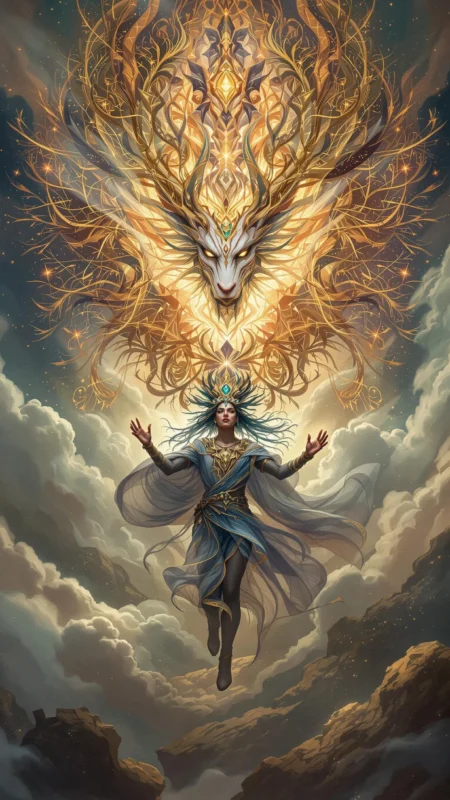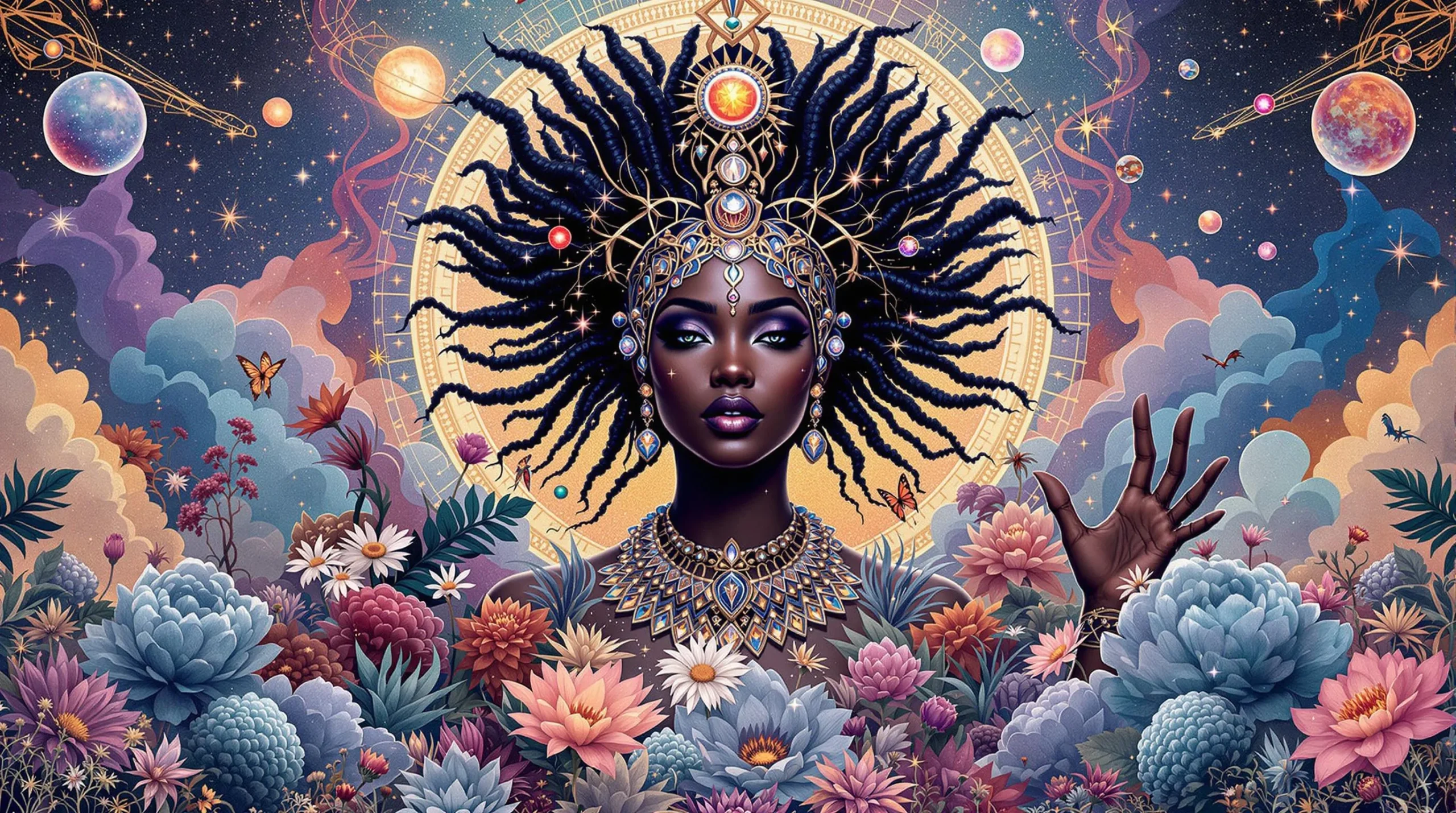


Orishas

Archetype Meaning & Symbolism

elemental, ancestral, passionate, communal, rhythmic, volatile, creative, resilient, divine, human

  • The river that forgets its source will dry up.

If Orishas is part of your personal mythology, you may...

Believe

  • You may believe that divinity is not an abstract concept but a tangible force, present in nature, in community, and within your own personality.
  • You may believe that your life is inextricably linked to your ancestors, and that you have a responsibility to honor their legacy and carry their wisdom forward.
  • You may believe that every aspect of life, from love and conflict to work and rest, is a sacred arena for spiritual growth and expression.

Fear

  • You may fear becoming disconnected from your spiritual source, your community, and your ancestors, which would be a kind of living death.
  • You may fear offending the Orishas through neglect or disrespect, leading to imbalance and hardship in your life.
  • You may fear that your own powerful emotions and ambitions, the very reflection of the Orishas within you, could become destructive if not properly balanced and channeled.

Strength

  • You may possess a deep and abiding resilience, rooted in the knowledge that you are supported by powerful, ancient forces.
  • You may have a profound capacity for creativity, passion, and joy, seeing life as a sacred dance to be celebrated.
  • You may have an innate ability to build and sustain strong communities, recognizing that individual strength is magnified through collective connection.

Weakness

  • You may have a tendency toward fatalism, sometimes attributing personal responsibility to the will of the gods, which can lead to passivity.
  • You may be prone to emotional volatility, as your own feelings can feel as large and overwhelming as the mythic forces they mirror.
  • You may struggle to operate in purely secular, bureaucratic environments that seem devoid of spirit, magic, and meaning.

The Symbolism & Meaning of Orishas

The Orishas are less a pantheon to be passively worshipped and more a living system of archetypes to be embodied. They represent the radical idea that divinity is not separate from the world, but is the world. Each Orisha is a particular flavor of Ashe, the life force that animates all things. Oshun is the sensuous, creative flow of the river. Yemaya is the vast, nurturing, and formidable depth of the ocean. Shango is the explosive, charismatic crackle of lightning. To find the Orishas in your personal mythology is to recognize these forces within yourself and the world around you. Your ambition might have the metallic glint of Ogun; your wisdom could possess the elder-coolness of Obatala. These are not just metaphors, but frameworks for understanding the different energies you are called to steward.

Furthermore, the Orishas symbolize a worldview where there is no hard line between the human and the divine, the ancestor and the descendant. They are profoundly relational. Their stories are filled with collaborations, rivalries, love affairs, and family squabbles that mirror our own. This introduces a profound sense of cosmic community into one’s life story. Your personal struggles are not yours alone; they may echo a patakí, a sacred story that offers a map, a warning, or a key. This mythology suggests that you are a vessel, a unique crossroads where these ancient energies meet. Your personality is not a fixed state but a dynamic dance of these archetypal forces.

This archetype also stands for resilience and adaptation. Born in West Africa, the Orishas crossed the Atlantic in the hearts and minds of the enslaved, where they syncretized and survived, masking themselves as Catholic saints and taking root in new soil. This very history provides a powerful symbol for personal transformation. The Orishas teach that one's essential spirit can survive unimaginable hardship, that it can wear masks when necessary, and that it can re-emerge, vibrant and powerful, in a new context. To have them in your mythos is to carry the knowledge that your core self is unbreakable and endlessly creative in its quest for expression and survival.


Orishas Relationships With Other Archetypes

The Crossroads

The Orishas may have their most profound and unsettling dialogue with the archetype of The Crossroads. This is not merely a location of choice, a simple fork in the road, but perhaps the very architecture of possibility itself, where the straight line of human intention is fractured by divine intervention. Eshu, the trickster and messenger, is said to be its master, yet all the Orishas could be seen as the intersecting paths themselves. To stand at a crossroads is to feel the pull of their distinct gravities: the thunderous road of Shango, the deep, flowing path of Yemayá, the iron trail of Ogun. The relationship, then, is not one of meeting a god, but of becoming, for a moment, the epicenter of their competing truths. The crossroads is a sacred pause in the syntax of fate, a space where one’s life may be subject to a sudden and cosmic re-editing by forces that are at once immanent and utterly other.

The Drum

With The Drum, the Orishas seem to engage in a conversation that transcends language, entering the realm of pure rhythm and sympathetic vibration. The drum is not just a call to worship; it could be viewed as a spiritual heart, its beat the systole and diastole that circulates divine energy, or *ashé*, between the material and ethereal worlds. Each Orisha may have its own signature rhythm, a specific percussive sequence that acts as a key, unlocking a portal for their consciousness to descend. This relationship is one of invocation and embodiment. The Orisha, a vast and formless consciousness, is perhaps drawn to the hypnotic pulse, finding in the tension of the drum skin a membrane through which it can pass, and in the body of the dancer, a temporary home. The drum, in this sense, is a translator, converting the raw data of human devotion into a signal the gods can not only hear, but inhabit.

The River

The River presents itself as a liquid metaphor for the nature of the Orishas' existence—a constant, flowing narrative of power, nourishment, and change. While Oshun is its most famous patron, the river could be seen as the medium that connects them all. It is the sweet water that flows into Yemayá's vast salt ocean; it is the current over which Oya's winds blow; its banks provide the earth from which Oko’s bounty springs. One might imagine the Orishas not as figures standing beside the river, but as its very qualities: its deceptive calm, its sudden, violent currents, its life-giving properties, and its murky, unknowable depths. To engage with the Orishas may be like dipping one's hand into this stream, feeling the cool touch of ancestral memory and the inexorable pull of destiny. The River, then, is perhaps the tangible expression of *ashé* itself, a circulatory system for the divine, proving that even the most disparate powers must ultimately mingle in the same eternal flow.

Using Orishas in Every Day Life

Navigating a Creative Block

When inspiration feels like a dry well, you might invoke the archetype of Oshun, the Orisha of rivers, beauty, and art. This is not about prayer in a conventional sense, but about embodiment. You may find yourself drawn to water: sitting by a creek, taking a long bath, listening to the sound of rain. You could adorn yourself in her colors, yellow and gold, or engage in acts of sensual self-care, perhaps indulging in honey or sweet perfumes. The idea is to align your personal energy with her flowing, creative, and generative essence, allowing her current to unblock your own.

Resolving Fierce Conflict

In the heat of a righteous but potentially destructive argument, the mythos of Shango, the king and Orisha of thunder and fire, could offer a map. To feel Shango's energy is to recognize the power of your own fury, its capacity for both justice and devastation. Instead of letting the fire rage unchecked, you may consciously channel it. This could mean choosing your words with the precision of a lightning strike, not a wildfire. It might mean performing a physical act to discharge the energy: a powerful workout, drumming, or a passionate dance. You learn to wield your power with the authority of a king, not the chaos of a storm.

Facing an Unforgiving Task

When confronted with a monumental, grinding task that requires relentless effort and innovation, the spirit of Ogun offers a blueprint. As the Orisha of iron, technology, and civilization-building, he represents the will to clear a path where none exists. Embodying Ogun is to find a sacred rhythm in the work itself. You might create a ritual around your tools, whether a laptop or a hammer. You may push through obstacles not with brute force alone, but with a hunter's strategic mind, seeing the path through the wilderness. The exhaustion becomes a holy sacrifice, the progress a testament to the divine spark of invention that drives humanity forward.

Orishas is Known For

Connection to Nature

The Orishas are not distant sky gods but are immanent deities, the living consciousness of rivers, forests, lightning, oceans, and minerals. They are the personification of natural forces, known as Ashe.

Human-like Complexity

Unlike infallible deities, the Orishas are known for having deeply human personalities. They love, they get jealous, they make mistakes, they are vain, they are generous. Their stories, or patakís, are rich with very relatable drama and wisdom.

Intermediaries and Ancestors

They serve as intermediaries between the supreme creator, Olodumare, and humanity. They are also seen as deified ancestors who once walked the Earth, creating a powerful, unbroken link between the living, the dead, and the divine.

How Orishas Might Affect Your Personal Mythology

How Orishas Might Affect Your Mythos

When the Orishas enter your personal mythos, your life story may cease to be a linear progression and could become a rhythmic cycle. The narrative shifts from a solitary hero’s journey to a communal dance. You are no longer just the protagonist; you are the drummer, the dancer, the chorus, and the sacred space itself, all at once. Your biography is no longer a sequence of events but a collection of sacred stories, or patakís, each illustrating a particular facet of your relationship with the divine. A period of profound loss might be re-contextualized as Oya, the storm goddess, clearing the way for new growth. A sudden success could be seen as a blessing from Shango, a reward for bold action. Your personal mythos becomes less about what you achieve and more about how well you channel the energies that flow through you.

Your story also gains a profound depth of field, stretching back into ancestral time. You may see yourself not as a self-made individual but as the current expression of a long lineage, a conduit for the strengths, burdens, and wisdom of those who came before. Your talents could be perceived as inherited gifts from a specific ancestor, stewarded by a patron Orisha. This reframes personal history as a sacred trust. The plot of your life is no longer solely your own creation; it is a collaborative work co-authored by your ancestors, your spiritual guides, and the choices you make in the present moment. The central conflict of your mythos may become the quest for balance: honoring all the divine forces within without letting any one of them run rampant.

How Orishas Might Affect Your Sense of Self

With the Orishas as a lens, the self may no longer be viewed as a singular, static entity. Instead, it becomes a vibrant, bustling crossroads, a meeting place for diverse and sometimes contradictory divine energies. You are not just you; you are a vessel containing the patient creativity of Obatala, the fierce ambition of Ogun, the deep intuition of Yemaya, and the mercurial wit of Elegua. This could foster a profound sense of self-acceptance. Flaws are not failures but the shadow side of a divine attribute: your stubbornness is the other side of Ogun’s resilience; your vanity is a whisper of Oshun’s command of beauty. The goal ceases to be perfection and becomes integration, a skillful management of your inner pantheon.

This perspective may also dissolve the illusion of the isolated self. Your identity becomes inherently relational, defined by its connection to community, nature, and the spirit world. You might understand your moods and energies as tides, influenced by forces far greater than your immediate circumstances. This can be incredibly liberating. A bout of melancholy is not a personal pathology but perhaps the oceanic pull of Yemaya asking for reflection. A surge of social energy is Elegua opening the roads for connection. Self-knowledge is not an act of navel-gazing but an act of listening to the world and discerning which of its many voices is singing through you at any given moment.

How Orishas Might Affect Your Beliefs About The World

To see the world through the mythos of the Orishas is to live in an enchanted reality. The rigid Western split between the sacred and the profane dissolves into meaninglessness. A thunderstorm is not just a meteorological event; it is Shango dancing. A river is not just a body of water; it is Oshun flowing with blessings and desires. The very ground you walk on is a sacred body. This perspective imbues the mundane with a constant potential for magic and communication. The world is not an inert object to be studied and exploited, but a living, breathing subject with which one is in constant dialogue. Every element, every encounter, holds the possibility of being a message, a lesson, or an omen.

This could cultivate a profound ecological consciousness, one rooted not in abstract scientific data but in tangible, personal relationship. You do not protect the Earth because of climate change statistics; you protect it because the forest is the home of Osain, the master of herbs and magic, and to harm it is to offend a powerful intelligence. This worldview fosters a sense of participation rather than observation. History is not a dead subject but a living force, as the spirits of ancestors and the ancient energies of the Orishas continue to influence the present. Justice, community, and respect become the foundational principles for navigating a world that is alive, intelligent, and sacred in every particle.

How Orishas Might Affect Your Relationships

In the light of the Orishas, relationships may transform from social contracts into elemental encounters. Each person you connect with is also a vessel of Ashe, a carrier of their own unique mix of divine energies. A partnership could be seen as a meeting of two rivers, or a river and a storm. This adds a layer of mythic weight and understanding to interpersonal dynamics. A passionate, volatile argument with a loved one might be understood as your inner Shango clashing with theirs. A deeply nurturing friendship could be a reflection of the bond between Yemaya and Oshun. This allows for a certain grace, a way of seeing the archetypal pattern beneath the personal offense.

This framework may also place a supreme value on community and spiritual kinship. Relationships are not just for personal fulfillment; they are the very fabric of society and spiritual life. You might find yourself drawn to building your 'egbe,' or spiritual community, a chosen family bound by shared destiny and mutual support. The health of your relationships becomes a barometer for your own spiritual well-being. A breakdown in connection is not just a social problem, but a spiritual one, perhaps indicating a path has been closed by Elegua. Love itself is a divine force, an attribute of Oshun, and to engage with it is to engage with a powerful, and sometimes demanding, deity.

How Orishas Might Affect Your Role in Life

Adopting the Orisha archetype may redefine your perceived role in life from a career path to a sacred destiny. Your purpose is not something you invent, but something you discover and align with. You may feel that you were born to carry the energy of a particular Orisha, and your work in the world is to express that energy for the benefit of the community. A software engineer might see their work as a modern expression of Ogun, forging the tools that build civilization. A therapist or a poet might recognize the influence of Oshun, using words and empathy to heal and beautify. A community organizer could be walking the path of Elegua, opening roads and facilitating communication between people.

This perception of one's role instills a deep sense of responsibility. Your work is not just a job; it is a divine assignment. The challenges you face are not just professional hurdles; they are tests of your character and your commitment to your path. This can make your role feel intensely meaningful, as if your daily actions are part of a cosmic drama. You are not just making a living; you are helping to maintain the balance of the world. Your position in a family, a company, or a community is seen as a specific node in a vast, interconnected web, and your primary role is to be a good steward of the energy and responsibilities that have been placed there.

Dream Interpretation of Orishas

In a positive context, an Orisha appearing in a dream is a profound blessing and a direct communication from the archetypal realm. Dreaming of Yemaya, perhaps seeing the vast, calm ocean or being given cowrie shells, could signify a call to nurture yourself, to embrace your maternal instincts, or to tap into deep, ancient wisdom. A dream of Shango, with thunder and controlled fire, might be a sign to act decisively and with courage, a confirmation that you have the power to overcome a current obstacle. These dreams may feel vivid, numinous, and deeply personal, leaving you with a sense of clarity, empowerment, and of being seen by the divine forces that shape your mythos. They are often affirmations that you are on the right path or invitations to step more fully into a particular aspect of your potential.

Conversely, an Orisha in a dream can serve as a potent warning of imbalance. The dream context will feel chaotic, threatening, or unsettling. Dreaming of Oshun in the form of a polluted, stagnant river could indicate that your creativity is being poisoned by bitterness or that you are engaging in manipulative, rather than authentic, expressions of love and beauty. A dream of an enraged Ogun, a vision of twisted metal and destructive industry, may be a warning that your ambition has become ruthless, that you are working yourself to the point of collapse, or that you have become disconnected from the natural world. These dreams are not punishments, but rather urgent calls from your own psyche to pay attention, to correct your course, and to restore balance to the divine energies you carry.

How Orishas Archetype Might Affect Your Needs

How Orishas Might Affect Your Physiological Needs

When the Orishas inform your mythos, the body is no longer a mere biological machine but a sacred vessel, the primary altar for spiritual experience. Your physiological needs for food, water, sleep, and breath become ritual acts. Eating is not just consumption; it is an offering to the body that houses your spirit, an act of communion with the earth that provides the nourishment. You may find yourself drawn to preparing food with intention, considering the energies of the ingredients. Thirst is the body calling for the life-giving essence of Oshun or Yemaya, and quenching it is a form of prayer. To deny the body its fundamental needs is not just unhealthy; it is a form of spiritual neglect, a failure to honor the temple.

This perspective fosters a deep, intuitive connection to the body's rhythms and signals. Fatigue is not a weakness to be overridden with caffeine, but a sacred call for rest, a time to withdraw and recharge your Ashe. Breath is the spirit moving through you, a constant reminder of the life force gifted by Olorun. Physical activity, especially dance, becomes a primary form of worship and expression, a way to embody the rhythmic energy of the Orishas like Shango or Elegua. Health is not the absence of disease, but a state of harmonious flow, where the body is properly honored, cared for, and celebrated as the locus of divine immanence.

How Orishas Might Affect Your Ideas of Belonging

The need for belongingness, seen through the Orisha archetype, is fulfilled on a cosmic scale. You may belong not just to a family or a group of friends, but to an 'egbe,' a spiritual family that transcends blood ties and even lifetimes. This is a deep, resonant belonging to a community of souls who share a similar destiny and are guided by similar divine forces. The bonds of love and friendship become sacred pacts, relationships recognized as essential to your spiritual journey. Isolation, then, is not just loneliness; it is a form of spiritual disconnection, a straying from the communal web that gives life meaning.

Furthermore, this mythos fosters a profound sense of belonging to the earth itself and to a lineage stretching back to time immemorial. You are a child of the ocean (Yemaya), a spark from the thunder (Shango), a part of the forest (Osain). This is belongingness written into the very fabric of creation. You belong to your ancestors, who are not gone but are present, watching, and guiding. Love, in this context, is the force that binds all these relationships together: the love for your egbe, your ancestors, and the Orishas themselves. It is the flowing, generative power of Oshun, the foundational matrix of existence.

How Orishas Might Affect Your Feelings of Safety

From the perspective of an Orisha mythos, safety transcends physical security and becomes a matter of spiritual alignment and protection. A sense of safety may come from knowing you are walking in harmony with your destiny and under the watchful eye of your patron Orisha and ancestors. This is not a passive state, but an active one. You might create safety through ritual: cleansing your home with specific herbs to clear negative energy, wearing beaded ilekes in the colors of your guiding Orishas as a shield of spiritual force, or making offerings to Elegua to keep the paths of your life clear of unseen obstacles.

This worldview could mean that threats are perceived on multiple levels. A physical danger is just one aspect; there is also the danger of spiritual misalignment, of losing your path, or of attracting negative energetic influences. Therefore, creating safety involves not just locking your doors at night, but also maintaining your spiritual integrity. It means being mindful of the company you keep, the words you speak, and the thoughts you entertain. True security is a state of inner and outer balance, a confidence that comes from living a 'right' life, one that is in tune with the cosmic order and protected by the powerful forces you serve and honor.

How Orishas Might Affect Your Views of Esteem

Esteem, within the framework of the Orishas, is not derived from external validation or individualistic achievement, but from 'Iwa-pele': good and gentle character. Your self-worth comes from how well you fulfill your destiny and embody the positive aspects of the Ashe you carry. Esteem is built by living in alignment with your guiding Orisha, by contributing your unique gifts to the well-being of your community, and by showing respect to the divine forces, your elders, and your ancestors. It is a quiet, solid confidence that comes from knowing your place in the cosmic order and playing your part well.

This shifts the focus from 'what I have' to 'who I am' and 'how I serve.' You may gain respect and self-respect not by accumulating wealth or status for its own sake, but by demonstrating wisdom, generosity, courage, and integrity. Your greatest accomplishments are not trophies on a shelf, but the positive impact you have on your egbe and the grace with which you navigate your challenges. Esteem is the natural result of being a good conduit for divine energy, of living a life that is a beautiful and powerful offering. It is the recognition, from yourself and others, that you are walking in your truth.

Shadow of Orishas

The shadow of the Orisha archetype emerges when the vibrant energies become imbalanced, misinterpreted, or twisted. It can manifest as a form of spiritual bypassing, where the belief in destiny and divine will becomes an excuse for inaction or avoiding personal accountability. Instead of seeing a challenge as a test to be met with courage (Shango), one might passively declare it 'fate' and do nothing. The complex, human-like nature of the Orishas can also be used to justify one's own worst behaviors. A fit of rage is not a personal failing but 'channeling Shango'; manipulative behavior is not a flaw but an expression of 'Oshun's power.' This is a profound corruption, using the sacred to enable the profane.

Another shadow aspect is spiritual arrogance. A person who feels a strong connection to a particular Orisha might begin to see themselves as superior, as a chosen one who is above the rules that govern others. They may become dogmatic, believing their interpretation is the only correct one, wielding their spiritual knowledge as a weapon of control or judgment within a community. The power of Ogun becomes tyranny; the beauty of Oshun becomes toxic narcissism; the wisdom of Obatala becomes rigid judgment. The living, breathing system of archetypes calcifies into a hierarchy of ego, and the path to connection becomes a road to isolation.

Pros & Cons of Orishas in Your Mythology

Pros

  • Living with this archetype fosters a world of profound meaning, where every natural event and human interaction is layered with sacred significance.
  • It provides a deep well of resilience, offering frameworks, stories, and a sense of divine backing to help navigate life's most difficult challenges.
  • It cultivates a powerful sense of community and belonging, connecting you not only to a living social web but to your ancestors and the very earth itself.

Cons

  • The world can feel overwhelmingly complex, where it becomes difficult to distinguish between mundane occurrences and divine signs, leading to potential anxiety or superstition.
  • There is a risk of emotional and psychological overwhelm, as identifying with such powerful, volatile, and passionate archetypes can amplify one's own internal struggles.
  • It can create conflict with dominant, secular worldviews, leading to feelings of alienation or the difficulty of translating your deeply held beliefs to others who do not share the same enchanted perspective.