 Believe
 Fear
Fear Strength
 Weakness
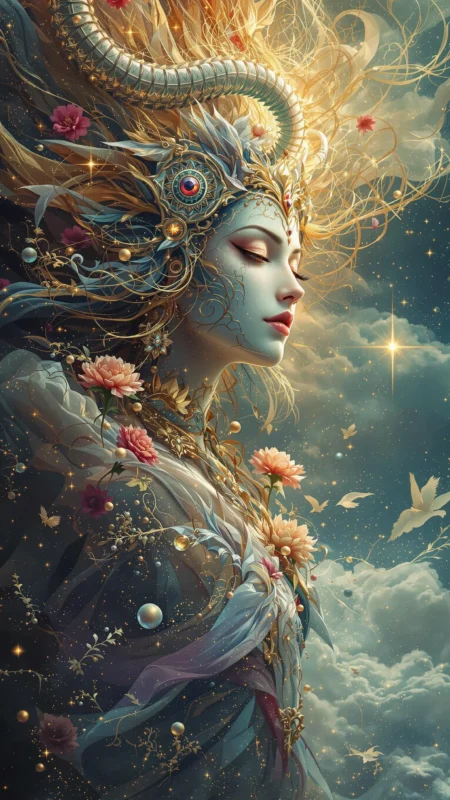
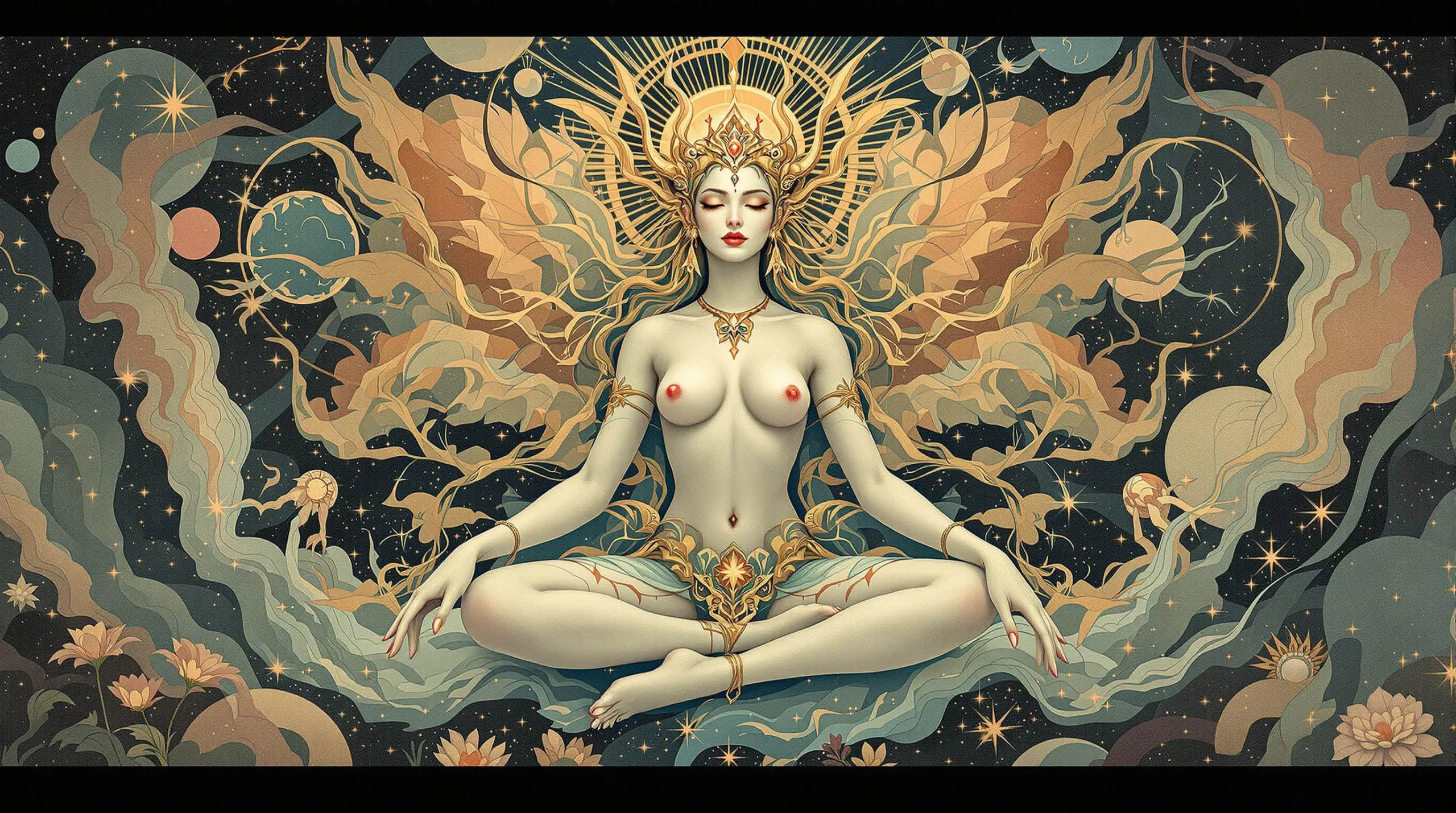
To have the Devas as a pillar of your personal mythology is to feel the presence of a luminous upper story in the house of your life. They are the archetypes of our highest aspirations: the part of us that yearns for beauty, for harmony, for a reality shimmering with meaning beyond mere survival. They are not distant, static gods on marble thrones; they are dynamic, energetic forces, the patrons of poets, the guardians of natural law, the celestial board members presiding over the unfolding of the cosmos. Their presence in one's mythos suggests a life oriented toward the light, a belief that even in darkness, a benevolent, ordering principle is at work. They represent the potential for grace, for inspiration to strike like a bolt of Indra's lightning, and for life to be lived as a form of art.
The Devas are complex, however, a pantheon of radiant beings who are also famously prone to vanity, jealousy, and indulgence. This duality is their most profound teaching. To welcome them is to acknowledge that our own 'divine' qualities—our creativity, our sense of justice, our capacity for joy—are often entangled with our 'all-too-human' flaws like pride and a need for adoration. They symbolize that spiritual life is not an escape from this messy human condition, but a full engagement with it. The Deva archetype is a mirror showing that our brightest light and our most subtle shadow may spring from the very same source.
Ultimately, the Devas may represent a re-enchantment of the world. In an era that often feels disenchanted and mechanistic, they are a call to see the divine intelligence in a sunrise, the cosmic drama in a thunderstorm, the flow of Ṛta in the turning of a season. They are the personification of 'higher consciousness,' not as an abstract goal, but as a lived reality. They remind you that you are a participant in a grand, cosmic liturgy, and that your role, however small it may seem, is to tend to the fire of your own inner divinity and let its light illuminate your corner of the world.