

Titans

Archetype Meaning & Symbolism

Primal, Foundational, Unruly, Ambitious, Cyclopean, Defiant, Creative, Destructive, Uncouth, Enduring

  • I knew what I was doing. I will not deny it. I helped mortals, and I earned my torment.

If Titans is part of your personal mythology, you may...

Believe

  • You may believe that all established orders, no matter how benevolent they seem, are ultimately prisons for the human spirit and are destined to be challenged.
  • You may believe that your truest self is a force of nature, and that to be civilized is to be tragically diminished.
  • You may believe that your potential for creation is matched only by your potential for destruction, and that this duality is the source of your power.

Fear

  • You may fear that you will be overthrown by those you empower, that your own creations will rise up to bind you, repeating the myth of Cronus and Zeus.
  • You may fear that your inner chaos is so vast that if you ever let it loose, it will destroy not only your enemies but everything you love.
  • You may fear a life of utter insignificance more than death itself: a terror of being buried alive under the weight of a small, unexamined existence.

Strength

  • Your capacity for endurance is legendary. You can bear burdens, hold tensions, and withstand pressures that would shatter a more delicate structure.
  • You possess a colossal creative force. When you commit to a vision, you have the foundational power to bring entirely new worlds into being.
  • You are unafraid of necessary conflict. You have the courage to challenge foundational wrongs and fight for a new order, even at great personal cost.

Weakness

  • You may suffer from a lack of foresight, your immense power coupled with a primal impulsiveness that ignores long-term consequences.
  • Your sheer scale can make you clumsy in the delicate ecologies of human relationships, causing unintentional harm through intensity or neglect.
  • You may possess a titanic pride that makes it impossible to admit defeat, learn from mistakes, or accept help, preferring to be broken rather than to bend.

The Symbolism & Meaning of Titans

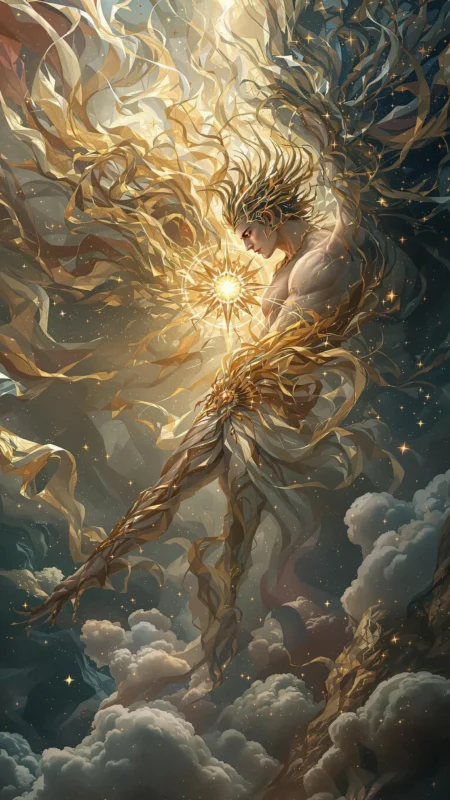
The Titans are not merely ancient gods of brute force: they are the archeology of the psyche. They symbolize the foundational layers of our being, the pre-civilized, untamed energies that heave and shift beneath the manicured gardens of our conscious personality. They are the raw material of creation itself, the colossal, unformed ambitions and the seismic passions that precede refined thought and moral calculus. In a personal mythology, the Titan is the part of you that remembers a time before rules, a self that was pure potential, as vast and untamed as the earth before it was mapped. To connect with this archetype is to touch the magma core of your own being, the power that can both create continents and destroy them.

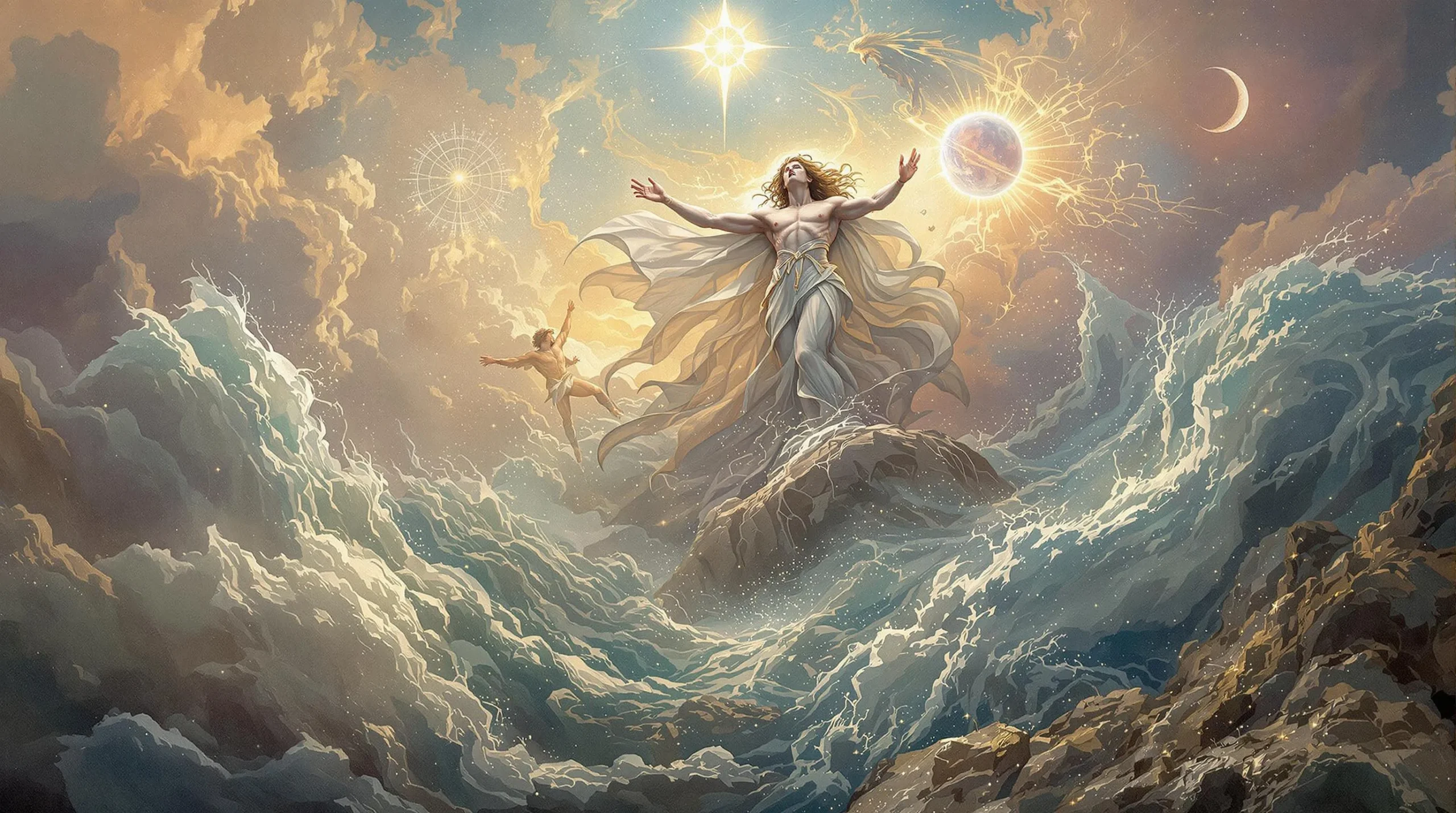
They represent the necessary and often violent transition between one order and the next. The Titanomachy, their war with the Olympians, is the perennial story of the old guard being overthrown by the new. Within your own mythos, this may manifest as the struggle against parental expectations, the rebellion against a constricting career, or the internal war to dethrone a tyrannical inner critic. The Titans remind us that progress is not always a gentle ascent; sometimes it is a cataclysm, a breaking of cosmic chains. They are the patrons of the revolutionary, the iconoclast, the artist whose vision is so large it threatens to shatter the existing frames of reference.

Furthermore, the Titan archetype speaks to a profound and sometimes painful endurance. Think of Atlas, holding the heavens on his shoulders, or Prometheus, chained to the rock. Their fate is often one of profound, lonely burdens. This could symbolize the weight of a secret, the responsibility of a great talent, or the lonely path of a visionary. It is a strength born not of agility but of sheer mass and persistence. The Titan in your personal story may be the part of you that can withstand immense pressure, that can hold up your world when all else fails, even if the cost is a kind of eternal, static suffering.


Titans Relationships With Other Archetypes

The Mountain

The Titan may not so much have a relationship with the Mountain as it is one and the same, a consubstantiality of stone and soul. To be a Titan is perhaps to experience consciousness on a geological time scale, where a thought is a slow tectonic shift and a sigh is the weathering of a cliff face over millennia. The fleeting dramas of lesser beings might appear as little more than lichen blooming and fading on its granite skin. This relationship is not one of action but of being—a profound, dormant power that exists as a fact of the landscape, a silent testament that the greatest forces are not those that move, but those that, in their unassailable stillness, force the rest of the world to move around them.

The Olympian Gods

In the Olympian Gods, the Titan finds its antithesis, its progeny, and perhaps its tragic successor. Where the Titan’s power is a dull, seismic rumble from the earth’s core, the Olympian’s is the sharp, articulate crack of lightning from the heavens. This is the timeless confrontation between raw, chaotic potential and a new, refined order. The Olympians could be seen as the very principles of narrative and law, come to chisel meaning from the Titan’s vast, pre-linguistic formlessness. Their relationship is one of cosmic patricide, yet it may be a necessary one; for a world to be built, the unhewn stone of creation must be quarried, and the foundation, once laid, must be buried beneath the polished floors of the palace.

The Unruly River

The relationship with the Unruly River is one of a slow, inexorable argument across eons. The Titan represents an immense, static power, a bulwark against change. The River, however, embodies a different kind of strength: fluid, persistent, and adaptive. It does not challenge the Titan with a show of force but with the patient, relentless caress of erosion, carving its will into the Titan’s very being over generations. This dynamic may suggest that no power, no matter how foundational, is immune to the subtle, continuous pressure of time and life. The River is a liquid whisper, a reminder that even that which seems eternal can be shaped, worn down, and ultimately redefined by a force it might not even perceive as a threat.

Using Titans in Every Day Life

Breaking Foundational Vows

When a core belief about yourself, one sworn in the naivete of youth, no longer serves, the Titan archetype provides the brute force needed for its dissolution. This isn't a gentle revision: it is the tectonic upheaval of a foundational promise. It is the energy required to say, 'That which I built my world upon is now a prison, and I will tear it down,' accepting the chaotic landscape that will emerge in its place. This is the power that breaks generational curses not by healing them, but by shattering the chain.

Launching a Monumental Endeavor

To start something truly new—a daring business, a sprawling artistic epic, a new family lineage—is to draw upon Titan strength. The Olympians refine and rule what exists; the Titans birth the existence itself from chaos. This archetype fuels the initial, gargantuan push. It is the capacity to work without immediate reward, to pour raw, unformed energy into a project that has no precedent, to hold the entire weight of a new creation upon your shoulders before it can stand on its own.

Embracing a Necessary Rebellion

There are moments when the established order, be it in a family, a career, or a society, becomes an instrument of suppression. The Titan archetype represents the necessary, albeit dangerous, rebellion. It is the courage to challenge the ruling 'gods' of your personal life. This isn't a polite disagreement. It is a declaration of a new age, a defiant stand that may very well result in being cast into a personal Tartarus: a period of isolation or failure. Yet, it's a necessary act for the evolution of your soul's story.

Titans is Known For

The Titanomachy

A decade-long war against their offspring, the Olympians, for control of the cosmos. A cataclysmic conflict that established the rule of Zeus and a new, more refined cosmic order.

Primordial Deities

As the children of Uranus (Sky) and Gaia (Earth), they represent the first generation of gods

raw, elemental forces that preceded the more anthropomorphic Olympians. They are the powers of memory (Mnemosyne), the sun (Hyperion), and the untamed oceans (Oceanus).

Imprisonment in Tartarus

Upon their defeat, most Titans were bound in chains and cast into Tartarus, a deep abyss in the underworld. This symbolizes the suppression of these raw, chaotic forces beneath the foundations of the civilized world, a constant, rumbling threat below.

How Titans Might Affect Your Personal Mythology

How Titans Might Affect Your Mythos

When the Titan archetype enters your personal mythos, your life story ceases to be a simple narrative of growth and becomes an epic of geology. Your past is no longer a collection of memories but a series of primordial layers, each with its own seismic shifts and buried powers. Major life events may be re-contextualized not as 'mistakes' or 'successes' but as cataclysms: the 'Great Flood' of a first heartbreak, the 'Titanomachy' of leaving home, the 'Forging' of a new identity from raw, emotional chaos. The narrative arc of your life might be seen as the struggle to build a stable 'Olympus' of consciousness and order upon the rumbling, unpredictable 'Tartarus' of your own untamed nature.

Your personal mythos might become a story of rebellion and its consequences. You could see yourself as a Prometheus, stealing fire from the 'gods' of convention—knowledge, passion, a new way of life—and knowingly paying the price in struggle or alienation. Your story is not about fitting in but about making space. It's the tale of a being who feels fundamentally 'too big' for the roles offered, and so must either shrink to fit or shatter the container. This narrative is defined by grand gestures, epic struggles against perceived authority, and a constant awareness of the immense, untamed power chained within.

How Titans Might Affect Your Sense of Self

To see the Titan in oneself is to acknowledge a scale of being that defies polite society. You may feel a sense of primordial power, a wellspring of creativity or rage so profound it feels ancient, almost impersonal. This can be empowering: a conviction that you possess the raw strength to move mountains in your own life. You might recognize in yourself an unshakeable endurance, a capacity to bear burdens that would crush others. This self-concept is not built on achievements, which are Olympian games, but on raw, intrinsic capacity. It is the quiet, tectonic certainty of your own substance.

Conversely, this self-perception could be deeply isolating. You may feel like a creature from another, larger era, clumsy and out of place in a world of delicate machinery and nuanced social codes. There might be a fear of your own emotional magnitude, a worry that your love, your anger, or your ambition is simply too much for others to handle. This can lead to a state of self-imposed exile, a feeling of being a walking cataclysm that must be carefully managed lest it cause unintentional destruction. The self becomes a landscape to be navigated, with rumbling volcanoes and silent, vast plains.

How Titans Might Affect Your Beliefs About The World

With a Titan-inflected worldview, the world may appear less a society of laws and more a battleground of elemental forces. You might see history not as a rational progression but as a series of violent, chaotic births where new orders tear themselves from the flesh of the old. Power, in this view, is the ultimate reality: not the negotiated power of politics, but the raw, undeniable power of a hurricane, a revolution, or a groundbreaking idea. Institutions and traditions might seem like flimsy Olympian temples, destined to be shaken by the deeper, chthonic forces they try to suppress.

This perspective could foster a deep appreciation for the wild, untamed aspects of reality. You might find more truth in a storm than in a sermon, more wisdom in the geology of a canyon than in a library of statutes. There may be a belief that civilization is a thin, fragile crust over a core of magnificent chaos. This can lead to a certain cynicism about human endeavors, seeing them as temporary constructs on a fundamentally untamable planet. But it can also lead to a profound sense of awe and a recognition that the most powerful forces are those that are primal, foundational, and eternal.

How Titans Might Affect Your Relationships

In relationships, the Titan archetype may manifest as an all-or-nothing intensity. Love and loyalty might be forged with the weight and permanence of continental plates locking together: a bond that is absolute, unshakeable, and capable of weathering seismic shocks. You might seek partners who also possess a certain gravity and substance, other 'Titans' with whom you can share a world. The connection is less about shared hobbies and more about a shared scale of being, a mutual recognition of the primordial depths in each other.

However, this same scale can create immense challenges. The Titan-influenced soul may struggle with the delicate dance of compromise, seeing it as a diminishment of their essential nature. Power dynamics can become a central, often unspoken, theme. There could be a tendency toward possessiveness, a la Cronus fearing his children, or a fierce rebellion against any perceived attempt at control. Relationships can become their own Titanomachy, a battle of wills for dominance. There is a risk of being the loving giant who, with a careless gesture, accidentally crushes the very thing they are trying to protect.

How Titans Might Affect Your Role in Life

Your perceived role in the world may be one of a founder or a destroyer, but rarely a manager. You are not here to polish the statues on Olympus but to quarry the mountain from which they are carved. You might feel a calling to be a revolutionary figure, to challenge the foundational assumptions of your field, your family, or your culture. This is the role of the person who asks the terrifyingly simple, earth-shaking questions. It is a role that often courts opposition and misunderstanding, as you are operating on a timescale and with a set of priorities that can seem alien to the prevailing order.

Alternatively, you may feel your role is to be a silent, enduring pillar. Like Atlas, you might find yourself supporting a family, an organization, or an ideal, your strength being the unseen foundation upon which others build their lives. This is a lonely, often thankless role, defined by immense responsibility and quiet persistence. You are the anchor in the storm, the bedrock beneath the city. Your purpose is not found in action but in being: a fixed point of stability in a world of flux, aware that if you shrug, the heavens may fall.

Dream Interpretation of Titans

To dream of Titans in a positive light is to connect with a source of immense, untapped potential within yourself. The dream may be a summons from your subconscious to embrace a grander vision for your life, to start the monumental project you’ve been fearing, or to access a deeper well of creative energy. Seeing yourself as a Titan, shaping landscapes or battling gods, could be an invitation to claim your own formidable power and challenge the limiting structures in your waking life. It can symbolize the emergence of a foundational new part of your personality, one with the strength to redefine your entire inner world.

A menacing Titan in a dream, however, often represents an overwhelming and uncontrolled force. It could be the embodiment of your own repressed rage, a colossal, destructive power threatening to erupt and shatter the order you've carefully built. It might also symbolize an external force—a crushing job, an oppressive relationship, societal pressure—that feels like a giant pinning you down. Being chased or crushed by a Titan could be a warning from your psyche about unchecked ambition, the danger of hubris, or the fear of being overthrown by forces you yourself have set in motion.

How Titans Archetype Might Affect Your Needs

How Titans Might Affect Your Physiological Needs

From the lens of personal mythology, the Titan archetype connects you to the primal, often ignored, truths of the body. Physiological needs are not seen as mundane requirements but as profound, elemental hungers. Thirst is the thirst of a parched earth; hunger is the ravenous need of a force that expends colossal energy. This archetype may foster a relationship with the body as a source of raw power, a vessel of chthonic strength. You might feel most alive when pushing your physical limits, experiencing the body not as a delicate machine but as a resilient, primordial beast.

This can also lead to a dangerous disregard for the body's boundaries. A Titan-influenced individual might see sleep, rest, and even pain as weaknesses to be overcome by sheer force of will. This can create a cycle of pushing the body to its absolute breaking point, followed by a cataclysmic collapse: a burnout so profound it feels like being cast into Tartarus. The lesson of this archetype on a physiological level is often learning to respect that even giants have limits, and that true strength includes the wisdom of strategic rest, the cyclical nature of power, and not just its explosive expression.

How Titans Might Affect Your Ideas of Belonging

Belonging, for the soul in which a Titan stirs, is a complicated geography. Conventional social groups may feel like dollhouses: constricting, fragile, and built on a scale that cannot contain your emotional or ambitious magnitude. You might feel a profound sense of being an outsider, not due to rejection, but due to a fundamental difference in size and substance. The search for belonging is not for a comfortable herd, but for a pantheon. You may only feel at home in the company of other 'Titans': individuals of similar intensity, vision, and raw power.

Failing to find such company, you might find belongingness in the non-human world. A kinship may be felt with the great, silent things: mountains, oceans, ancient forests, the vastness of the night sky. These become your family, your peers. This is the belonging of the geological, not the social. It can be a profound and deeply spiritual connection, but it can also be a lonely one, substituting the raw companionship of the elements for the warmth of human community. The challenge is to find a way to share your immense world with others without demanding they live on the same epic scale.

How Titans Might Affect Your Feelings of Safety

The Titan archetype reshapes the need for safety from a desire for walls and locks to a quest for intrinsic, unassailable power. Safety is not found in a well-built fortress (an Olympian construct) but in being the mountain itself. You may seek security by becoming so powerful, so essential, or so immovable that nothing can threaten you. This could manifest as a drive for financial immensity, unshakable professional authority, or a sheer physical presence that deters conflict. The goal is to achieve a state of being where you are the source of your own security, independent of any external system.

However, the core myth of the Titans is one of downfall and imprisonment. This introduces a profound anxiety into the need for safety: the fear of being overthrown. You may harbor a deep-seated terror of being rendered powerless, of being 'chained in Tartarus' by circumstance, betrayal, or your own miscalculation. This could lead to a constant, vigilant paranoia, a need to control your environment and eliminate all potential threats. The pursuit of absolute safety through absolute power can ironically create a world teeming with perceived enemies, where every rising star looks like a future Zeus.

How Titans Might Affect Your Views of Esteem

Esteem, when filtered through the Titan archetype, is not derived from the applause of the crowd or the medals bestowed by authority. It is a tectonic sense of self-worth, grounded in your intrinsic being and raw capability. Your esteem might be built on your resilience, your capacity to endure what others cannot, and your power to create or destroy. It is the self-respect of the mountain, which does not need the valley's approval to know its own height. This can grant you a powerful immunity to criticism and a deep, unshakable confidence that is not easily swayed by external validation.

This foundation for esteem, however, is brittle in its own way. If your worth is tied to your sheer power, what happens when you are defeated? The Titan's fall is not a simple setback; it is a plunge from cosmic heights into the abyss of Tartarus. A major failure in work or love can trigger a catastrophic loss of self-esteem, a feeling of being not just wrong, but fundamentally powerless and worthless. The challenge is to build a sense of self that can survive the Titanomachy, to find worth not just in being the unshakeable force, but also in the character that endures after the fall.

Shadow of Titans

The shadow of the Titan emerges as tyranny. It is ambition untethered from conscience, power wielded for its own sake. This is Cronus devouring his children, the primal fear of being replaced that leads to the destruction of all potential rivals. In your own life, this shadow might manifest as a ruthless need to be dominant in relationships, a crushing of colleagues' ambitions to secure your own position, or a refusal to cede the stage long after your time has passed. It is the creator who becomes a despot, hoarding the 'fire' of inspiration and punishing any who would seek to steal it for themselves. It is the brute force that tears down not just what is rotten, but also what is good, in a blind, chaotic rage.

The other face of the Titan's shadow is a crushing impotence. It is the giant who believes himself to be a flea. When the Titan's power is denied, repressed, or defeated, it can curdle into a state of profound, depressive inertia. This is the feeling of being buried alive in Tartarus, a state of complete powerlessness where your immense potential feels like a cruel joke. Instead of shaping the world, you feel crushed by it. This shadow aspect manifests as a total abdication of personal power, a victimhood of cosmic proportions, and a bitter resentment toward the 'Olympians' who dance freely in the sun while you languish in the dark, convinced of your own eternal confinement.

Pros & Cons of Titans in Your Mythology

Pros

  • You possess the foundational strength and vision to build something entirely new and lasting, whether it's a company, a work of art, or a family culture.
  • Your unshakeable resilience makes you a pillar of strength for others in times of crisis, an anchor in the storm.
  • You are a powerful catalyst for change, unafraid to dismantle outdated and oppressive systems to make way for a new era.

Cons

  • Your actions can be disproportionately destructive, causing collateral damage to relationships and projects through sheer, uncalibrated force.
  • You may be perceived as a threat or a monster by established systems, inviting constant conflict and struggles for power.
  • Your feeling of being on a different scale from others can lead to profound loneliness and a difficulty in finding a sense of true belonging.