 Believe
 Fear
Fear Strength
 Weakness
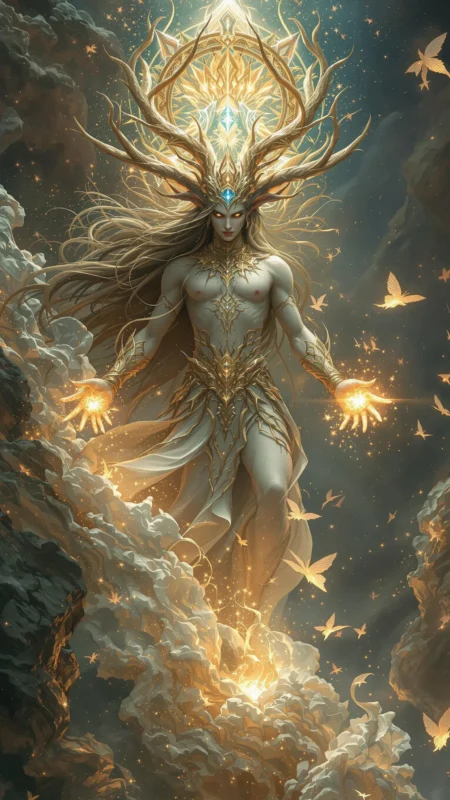
The Tuatha Dé Danann represent a form of idealized sovereignty, one rooted not in brute force but in superlative skill. They are the archetypal artisans, poets, and magicians, a reminder that true power resides in mastery over the self and the elements of creation. To have them in your personal mythology is to feel a calling towards a holistic excellence, a refusal to be defined by a single title or trade. They embody the aspiration of the polymath: the belief that one can be both a warrior and a healer, a strategist and a poet. Their presence suggests a life path dedicated to honing one's innate gifts to a brilliant, almost supernatural, degree, viewing personal talents as sacred trusts.
They also symbolize the magic of the threshold, the liminal space between worlds. Arriving on clouds and departing into hills, their very existence is a testament to the porousness of reality. They are the patrons of 'thin places,' both in the landscape and in the psyche. For a personal mythos, this means cultivating an awareness of the unseen, a sensitivity to synchronicity, intuition, and the sudden flashes of inspiration that feel sourced from beyond the rational mind. They represent the beautiful, fleeting nature of genius and the sorrowful awareness that the most magical parts of life are often the most fragile, things to be cherished precisely because they cannot be permanently grasped or contained.
Finally, the arc of the Tuatha Dé is a profound lesson in adaptation and the nature of legacy. Their story is not a simple tragedy of defeat, but a sophisticated narrative of transformation. By retreating into the Sidhe, they exchanged overt political power for a more enduring, subtle influence over the land's imagination and spirit. In personal terms, this symbolizes the wisdom of knowing when to fight and when to fade, when to cede the field to preserve the soul. It suggests that one's greatest impact may not come from being in the spotlight, but from becoming a source of hidden wisdom and inspiration, a quiet but potent presence whose influence is felt long after they have left the stage.