 Believe
 Fear
Fear Strength
 Weakness
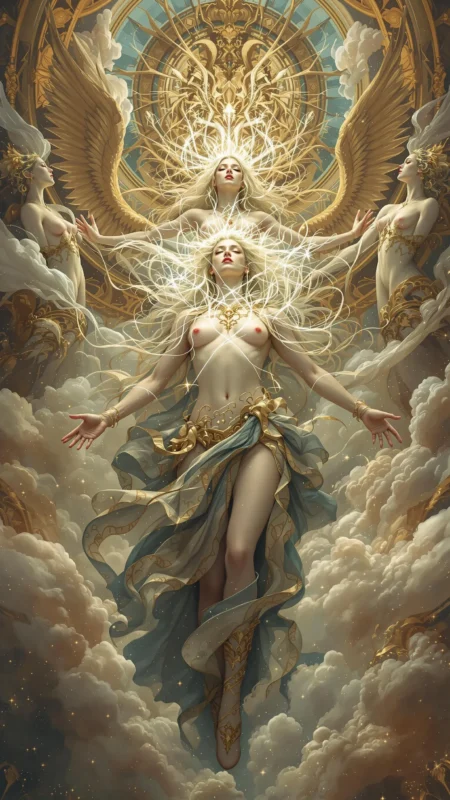
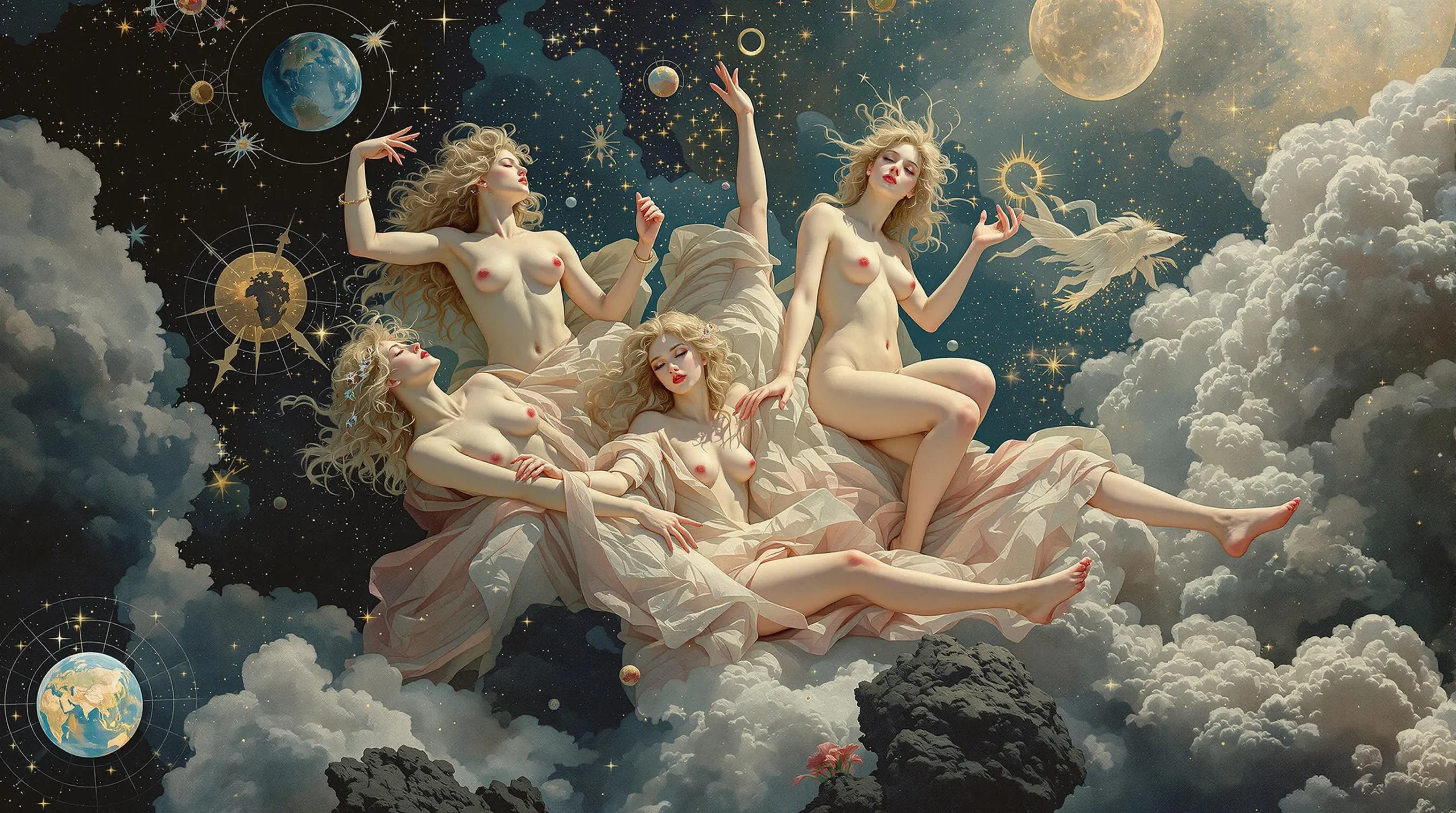
The Fates are not gods of whim or passion: they are cosmic accountants, weavers of a fabric so vast that even Zeus was said to be subject to their design. In your personal mythology, they may represent the humbling recognition of an order that precedes your own consciousness. They are the architecture of reality, the unwritten laws of cause and effect, the silent rhythm of birth, life, and death. To welcome them is to acknowledge that your life is a single thread, miraculously unique yet part of a universal weave. It is to find the sacred in the structure of things, in the elegant, and sometimes cruel, geometry of what must be.
Their symbolism is potent. The thread is your timeline, your very life force. The spindle is the turning world, pulling you into being. The shears are the stark, non-negotiable fact of mortality. In a modern context, where the self is often seen as a project of infinite reinvention, the Fates offer a counter-narrative. They suggest that freedom is not found in limitless choice, but in the masterful navigation of your given circumstances. Your mythos may become less about forging a path out of nothing and more about discovering the beauty and meaning of the path laid for you, learning to dance to a music whose composition you had no hand in.
Engaging with the Fates could mean seeing patterns where others see chaos. A chance encounter, a sudden obstacle, a surprising gift: these may no longer feel random. They could be interpreted as the work of Lachesis, carefully measuring and allotting the next twist in your story. This perspective doesn't demand passivity. It instead invites a deep, attentive presence. It asks you to feel the texture of your thread, to notice how it intertwines with others, to appreciate the strength it possesses, not in spite of its limits, but because of them.