 Believe
 Fear
Fear Strength
 Weakness
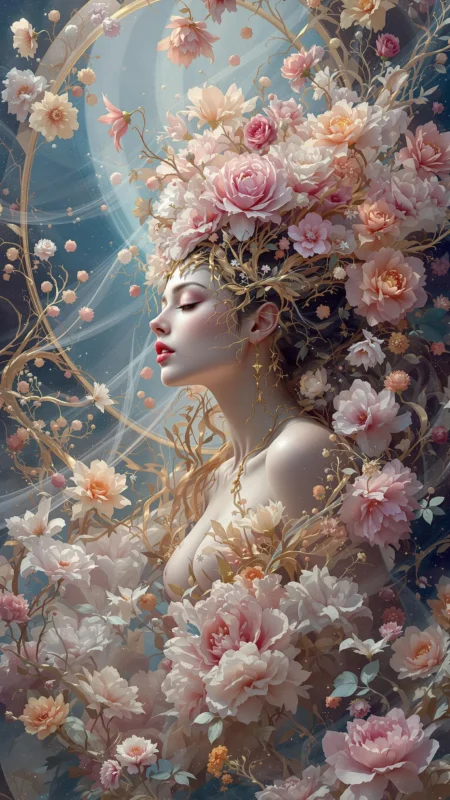
To invite Flora into your personal mythology is to court the profound permission she grants: the permission to be beautiful for its own sake. In a world obsessed with utility and productivity, Flora stands for the unapologetic splendor of the poppy in the field, a slash of red with no purpose other than to be itself. This archetype suggests that your own flourishing—your joy, your creativity, your unique expression—needs no justification. It is not a means to an end; it is the point. Personal growth, then, is not about self-optimization. It is about cultivation, allowing the seeds within you to blossom in their own time, trusting the strange and wonderful shape they may take.
Flora also navigates the tension between the wild meadow and the cultivated garden. Her spirit resides in both the curated perfection of a rose bed and the chaotic, resilient dandelion cracking through the pavement. Within a personal mythos, this duality may speak to the relationship between your authentic, untamed self and the persona you present to the world. Are you a manicured lawn, beautiful but uniform and inhospitable to pollinators? Or are you a wildflower prairie, a bit messy but teeming with life and diversity? Flora suggests that health lies in the balance: in having a structure that supports life but allowing for wild, spontaneous growth to emerge.
The archetype is forever tethered to the ephemeral. A flower's beauty is potent because it is fleeting. To embody Flora is to learn the art of embracing the peak moment without desperately clinging to it. It is the wisdom of the cherry blossom: to be fully present in the brief, breathtaking bloom, and to have the grace to let the petals fall when the wind comes. This symbolism teaches a profound lesson about life itself, encouraging an appreciation for the transient nature of youth, success, and moments of perfect happiness. It fosters a perspective that does not fear endings, seeing them instead as a necessary part of the cycle that makes the next bloom possible.