Believe
 Fear
Fear Strength
 Weakness
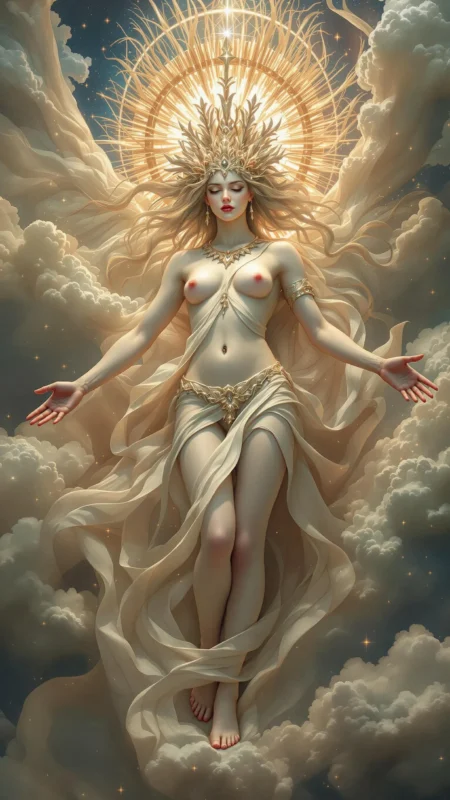
To invite Venus into one’s personal mythology is to court the universe’s fundamental principle of attraction. She is more than the goddess of hearts and flowers; she is the gravitational force of the soul, the power that draws people, ideas, and opportunities together. Her domain is the logic of aesthetics, the silent, intuitive understanding that a certain color combination is correct, that a specific sequence of notes is beautiful, that a particular person belongs in your life. She represents the value of things: not their utility, but their intrinsic worth, their capacity to delight, to charm, to inspire love. In a modern context, her presence suggests a life oriented around the creation and appreciation of beauty in all its forms: art, relationships, nature, and the self.
Her symbolism also speaks to the profound power of receptivity. Unlike the spear-wielding Athena or the thunderbolt-throwing Zeus, Venus’s power often lies in her ability to attract rather than to conquer. She is the open flower, the waiting shore, the mirror that reflects the world’s beauty back to itself. This could manifest as a personal mythology where success is achieved not through striving and effort, but through becoming a vessel for inspiration, a magnet for connection. It is the wisdom of knowing that sometimes, the most powerful action is to make oneself beautiful, still, and open, allowing the world to come to you. Her mirror is a key symbol: a tool for self-adornment, yes, but also for self-knowledge, for understanding that how we see ourselves determines what we can attract.
Ultimately, Venus governs the realm of the heart’s intelligence. She presides over the choices made not from reason or duty, but from desire and deep, resonant feeling. To walk her path is to trust the body’s wisdom, the heart’s compass, the soul’s aesthetic preferences. It is to believe that what you are drawn to is a clue to your own destiny, and that what is truly beautiful is also what is truly true. This archetype shapes a personal narrative where the central quest is not for power or for knowledge, but for love, for connection, and for the creation of a life that is, in itself, a work of art.