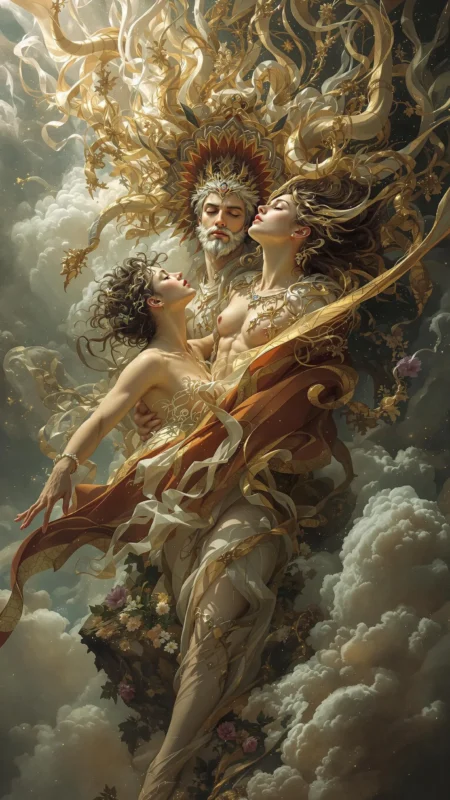
Bacchus

Archetype Meaning & Symbolism

Ecstatic, wild, liberating, fertile, irrational, disruptive, intoxicating, creative, chaotic, joyous

  • What is wisdom? Or what is the finest of all gifts from the gods to men? To hold your hand in victory over the head of your enemy. Whatever is fine is dear forever.

If Bacchus is part of your personal mythology, you may...

Believe

  • The most profound truths are found by temporarily dismantling the rational mind and surrendering to instinct.
  • A life lived without moments of ecstatic, ego-dissolving release is a life that has not been fully claimed.
  • The body itself is a sacred vessel of wisdom, and its urges for dance, song, and wildness are divine callings.

Fear

  • A life of quiet desperation, trapped in a cage of beige predictability and sterile routine.
  • That in surrendering to the chaos, you will lose yourself completely, unable to find your way back to a functional life.
  • That your intensity and your need for authentic expression will inevitably push away those who prize stability and peace.

Strength

  • A potent and irrepressible creative force, and the ability to generate ideas that shatter existing paradigms.
  • A profound capacity for joy, presence, and the ability to find the sacred in the most unexpected places.
  • The charisma to act as a catalyst, liberating others from their own inhibitions and sparking collective effervescence.

Weakness

  • A dangerous attraction to excess, with a vulnerability to addiction, burnout, and self-destructive patterns.
  • An inherent difficulty with the mundane necessities of life, such as routine, long-term planning, and stable commitments.
  • A deep impatience with emotional restraint in others, which can be perceived as judgmental and can lead to social friction.

The Symbolism & Meaning of Bacchus

To find Bacchus in one’s personal mythology is to court the god of the threshold, the one who dissolves the boundaries we so carefully erect: between sanity and madness, civilization and the wild, the self and the other. He is the divine justification for the irrational, the patron saint of the necessary rupture. His arrival in the personal narrative is rarely quiet. It is the sudden urge to quit the sensible job, the inexplicable pull toward a chaotic new art form, the moment you look in the mirror and no longer recognize the carefully constructed person staring back. His symbolism is not about simple hedonism, but about the crushing of the grape to make wine: a transformation through pressure and destruction that yields an intoxicating, divine spirit. He reminds us that some truths are not accessible through reason, but must be danced, sung, or wept into being.

He is the god who comes from the East, the eternal outsider who challenges the established order. In a personal myth, his presence may signal a period where the familiar structures of life have become a prison, where routine has calcified into spiritual death. Bacchus represents the vital, chaotic energy required for new growth. He is the earthquake that topples the brittle tower, revealing the hidden spring beneath. He embodies the uncomfortable wisdom that a clearing must be made, often violently, before anything new can be planted. His meaning is found in the paradox of freedom through surrender, of clarity through intoxication, and of wholeness through the temporary, ecstatic loss of self.

The symbols associated with Bacchus: the ivy, the serpent, the phallus, the big cat: all speak to a vitality that is untamed, cyclical, and unashamedly alive. The vine grows where it will, a metaphor for a life force that defies rigid planning. In a personal myth, this may translate to a life path that feels more like a meandering vine than a straight road. It is a path that embraces contradiction, that finds the sacred in the body, and that understands that the liberation of the spirit is not a silent, meditative affair, but a noisy, messy, and deeply communal dance.


Bacchus Relationships With Other Archetypes

The Apollo

The relationship between Bacchus and Apollo may be less an opposition and more of a tense, necessary harmony, like the resonant silence between two notes of a celestial chord. Apollo could be seen as the luminous, rational architecture of the sunlit temple, all clean lines and golden ratios, while Bacchus is the untamable ivy that finds the cracks, the wildness that proves the stone is not immortal. One is the carefully plotted meter of the epic poem; the other is the ecstatic cry that breaks the rhythm, revealing a deeper, more frightening truth. They are not, perhaps, enemies, but the twin poles of a single axis of being. Bacchus could be the chaotic, star-filled night that gives the Apollonian dawn its meaning, a reminder that the most profound clarity may only be found on the other side of dissolution.

The Vineyard

The Vineyard might be understood as the patient, terrestrial body from which the Bacchic spirit springs. It is the slow, silent work of seasons, the gnarled and quiet alchemy that transmutes sun and soil into the possibility of frenzy. Bacchus, then, is not merely the final, intoxicating pour, but also the promise sleeping in the cluster, the potential energy gathering in the root. This relationship is not one of master and material, but of a deep, cyclical pact. The Vineyard offers its fruit, a humble and earthly sacrifice, and in return, Bacchus grants it a form of immortality, elevating the simple grape into a vessel for the divine. It is, perhaps, the anchor of memory and place that grounds the wild, placeless nature of the revelry itself.

The Mask

As the patron of the theater, Bacchus shares an intimate, paradoxical relationship with the Mask. The Mask is not a tool of deception, but a conduit for a more profound honesty. It is the sacred artifice that permits the wearer to shed the carefully constructed persona of civic life and commune with something older and more instinctual. In its hollow eyes and frozen expression, a strange liberation may be found; it is a face that grants one permission to become faceless, to join the collective and dissolve the individual ego into the thrumming energy of the chorus. The Mask could be the fragile membrane between the mundane and the mythic, a ritual object that allows the mortal to borrow a divine—or demonic—countenance, and in doing so, speak truths the naked face would never dare.

Using Bacchus in Every Day Life

Navigating Creative Stagnation

When the well of inspiration runs dry and the page remains stubbornly blank, the Bacchic archetype suggests the solution is not more discipline, but less. It whispers for a walk in the woods without a path, for listening to music that dismantles language, for dancing in the living room until the self-conscious narrator in your head finally gives up and goes quiet. It is the ritual permission to become disorganized, to follow a nonsensical impulse, to allow the rational mind to step aside so that a more primal, pattern-making force can emerge from the undergrowth.

Breaking Free from Social Armor

In social situations that feel like a performance, governed by unspoken rules of decorum and brittle pleasantries, the Bacchic mythos offers an alternative. It is the courage to ask a strange question, to laugh a little too loudly, to share a moment of genuine, uncurated emotion. It is not about being obnoxious, but about puncturing the collective tension with an offering of authenticity. It is the choice to connect through shared humanity rather than through the careful maintenance of facades, finding communion in the spontaneous and the real.

Countering Existential Burnout

When life becomes a relentless checklist of obligations and optimized routines, the soul may begin to feel parched. The Bacchic response is not a scheduled yoga class or a mindful minute, but a plunge into unstructured, ecstatic release. It could be a night with friends where conversation flows into song, a moment of surrendering to the overwhelming power of a storm, or the simple, profound act of reclaiming play for its own sake. It is the understanding that the psyche sometimes requires a fever to break a fever, a dose of sacred madness to restore a vital sanity.

Bacchus is Known For

Wine and Divine Intoxication

Bacchus is inseparable from wine, the substance that loosens the tongue, dissolves inhibitions, and alters perception. This represents not mere drunkenness, but a metaphorical key to unlocking hidden parts of the psyche and accessing states of consciousness where the divine feels immanent and tangible.

The Maenads and the Thiasos

He is known for his entourage of wild, ecstatic followers, primarily women, known as Maenads or Bacchae. They left their homes to dance in the mountains, embodying a state of divine frenzy. This symbolizes the power of the collective, the liberation found in shedding individual identity for a shared, rhythmic experience.

Theater and the Mask

As a patron of the theater, Bacchus presides over the art of transformation. The mask allows an actor to become someone else, to explore another reality. This symbolizes the fluid nature of identity and the profound truth that can be revealed through performance, illusion, and the temporary abandonment of the self.

How Bacchus Might Affect Your Personal Mythology

How Bacchus Might Affect Your Mythos

When Bacchus enters your personal mythos, the narrative structure of your life may begin to fray. The story ceases to be a linear progression toward a defined goal, a classic hero's journey with clear stakes and a triumphant return. Instead, it may become episodic, rhythmic, a series of ecstatic peaks and bewildering valleys. The plot is no longer driven by rational ambition but by sudden, intuitive compulsions: for music, for movement, for a radical shift in scenery. The climax of your story might not be a victory over an external dragon, but a moment of ego-dissolution in the middle of a crowded dance floor, a realization that the point was never to build a kingdom but to join the festival.

Your life's narrative may also become a story of reintegrating the exile. Bacchus was an outsider god, often rejected by the cities he visited. His presence in your mythos could cast you in a similar role, or more profoundly, it could compel you to seek out the parts of yourself that you have cast out as too loud, too emotional, too strange. The central conflict of your myth becomes internal: a struggle between the Apollonian desire for order, clarity, and control, and the Dionysian pull toward chaos, mystery, and surrender. The arc is not about one vanquishing the other, but about building a psyche strong and flexible enough to host their eternal, life-giving dance.

How Bacchus Might Affect Your Sense of Self

The presence of Bacchus may corrode the foundations of a fixed, stable self. The persona you present to the world, your curated identity, can begin to feel less like a home and more like a cage. A deep impatience with your own performance may arise, a yearning to live from a place of raw, unmediated impulse, even if it appears contradictory or unseemly to others. You might find yourself saying things that feel truer than what you ‘should’ say, a servant to the honesty of the moment rather than the consistency of character. This is the beginning of the Bacchic initiation: the shattering of the flattering mirror.

This dissolution could lead to the discovery that the ‘self’ is not a monolith but a multiplicity, a chorus. You are not one voice, but many. This realization can be terrifying at first, a seeming loss of control. But it may resolve into a profound liberation from the tyranny of having to be just one thing. You can contain contradictions: the hermit and the reveler, the creator and the destroyer, the sage and the fool. Your sense of self becomes more like a resilient ecosystem than a rigid fortress, capable of absorbing shocks and transforming decay into new life.

How Bacchus Might Affect Your Beliefs About The World

The world, seen through a Bacchic lens, may cease to be a project to be managed or a text to be rationally deciphered. It reveals itself as a great, breathing, and often dangerous mystery. The impulse to categorize, control, and exploit nature may be replaced by a desire to merge with it, to feel its rhythms in your own body. The sacred is no longer confined to pristine, silent temples; it is found in the cacophony of a city street, the gut-punch of a bass drum, the shared delirium of a festival. It is the understanding that God might be found not in the heavens, but in the wine, in the blood, in the earth.

A worldview informed by Bacchus is one where sharp dichotomies blur. The lines between male and female, human and animal, sacred and profane become porous and permeable. You may lose faith in narratives of linear progress, seeing life instead as cyclical, seasonal, and eternally recurring. This view does not shy away from the darker aspects of existence: the decay, the violence, the madness. It accepts them as part of the whole, necessary elements in the divine and terrifying dance of creation and destruction.

How Bacchus Might Affect Your Relationships

Relationships may be sought not for stability or social validation, but as arenas for mutual transformation. The Bacchic impulse desires a connection that transcends the ego, a communion where two selves can momentarily dissolve into a shared third entity: a dance, a creative project, a fit of laughter, a shared moment of ecstatic truth. These bonds can be incredibly potent, forged in a crucible of intensity and raw honesty. The ideal is not a peaceful coexistence, but a dynamic, energetic exchange that keeps both individuals vibrantly, sometimes uncomfortably, alive.

This can, however, introduce a current of instability. You may grow impatient with relationships that feel emotionally staid or overly polite, mistaking quiet contentment for stagnation. There could be a temptation to provoke drama simply to feel something, to test the container of the relationship to see if it can hold the wildness you bring. The Bacchic archetype values the visceral truth of the present moment above all else, which can make it difficult to honor long-term commitments or navigate the necessary compromises of a lasting partnership. It privileges the fever over the bond.

How Bacchus Might Affect Your Role in Life

You may find yourself unable or unwilling to fit neatly into predefined societal roles. The script of the dutiful employee, the predictable partner, or the conforming citizen feels alien. Your perceived role may shift from being a functional cog in a machine to being a catalyst for change, a necessary agent of disruption. You might be the one in the meeting who asks the question everyone is thinking but is too afraid to voice, the one who organizes the spontaneous trip, the one who reminds the group of its forgotten, joyful, animal nature. Your function is to puncture artifice and invite chaos.

This can lead to a life on the margins, but not necessarily as an outcast. You might occupy the position of the sacred artist, the holy fool, or the ritual-maker, roles that society often misunderstands but deeply needs. Your purpose is not to build institutions, but to periodically shake their foundations to ensure they don't become tombs. You hold space for what the dominant culture represses: the irrational, the communal, the ecstatic, and the right to lose control in a world that is obsessed with maintaining it at all costs.

Dream Interpretation of Bacchus

In a positive context, to dream of Bacchus is to receive an invitation from the deep psyche. Dreaming of a joyous Bacchic procession, of drinking wine that brings euphoria and insight, or of dancing with wild abandon among his followers, may signal a vital need for release and creative expression. It suggests the soul is calling for an integration of its more instinctual, spontaneous, and joyful aspects. The dream could be a permission slip to let go of suffocating self-control, to embrace the body's wisdom, and to connect with a part of your being that has been starved for life. It is a sign that you are ready to welcome the god.

In a negative light, Bacchus can appear in dreams as a figure of terror. To be chased by a frenzied mob of Maenads, to be intoxicated to the point of sickness or violence, or to witness the god in his dismembering, wrathful aspect, often points to a profound fear of one's own repressed energies. It suggests that the Bacchic impulse, denied a conscious and sacred outlet, is festering in the unconscious and threatening to erupt destructively. This nightmare is a warning: the pressure of conformity has become too great. It is a psychic emergency call to find a controlled way to honor this energy before it bursts forth in a manner that harms the self or others.

How Bacchus Archetype Might Affect Your Needs

How Bacchus Might Affect Your Physiological Needs

The Bacchic archetype insists that physiological needs extend beyond mere sustenance and rest. It posits a biological imperative for ecstatic release, for states that temporarily obliterate the hyper-vigilant prefrontal cortex. This could manifest as a felt need for dance that leads to breathless trance, for singing that comes from the diaphragm and not the throat, for laughter that is convulsive and uncontrollable. The body is not just a vehicle for the brain; it is an instrument of wisdom, and its deepest knowledge may be accessed only through rhythm, exertion, and the sweat of joyful surrender.

From this perspective, a life lacking these outlets may lead to a kind of physiological malaise. The body can feel like a cage, beset by an unnamed tension, a stiffness in the joints and a dullness in the senses. The Bacchic mythos suggests that denying the body its periodic excursions into frenzy is a form of slow suffocation. It can result in a psychosomatic deadness, where vitality is choked by an excess of control and the life force, with nowhere to go, simply stagnates. The need for release is as fundamental as the need for food or water.

How Bacchus Might Affect Your Ideas of Belonging

The need for belonging may shift from a desire to fit in with a group to a yearning to merge with one. Belonging is not found in shared opinions or social status, but in a shared rhythm, a collective effervescence. You may seek out your own *thiasos*, a tribe united not by blood or belief, but by a common willingness to be vulnerable, wild, and ecstatically present. This is the belongingness of the festival, the mosh pit, the revolutionary cell: a powerful, transient, and utterly profound sense of unity where 'I' temporarily gives way to 'We'.

Consequently, it may be difficult to feel a true sense of belonging in more conventional settings. Corporate cultures, formal social clubs, and even families that prioritize decorum over emotional honesty can feel alienating. You may find yourself playing the role of the outsider, not out of arrogance, but out of a deep discomfort with the polite fictions that hold such groups together. There is a loneliness in this: the loneliness of seeing the psychic cage that others call home and being unable to unsee it.

How Bacchus Might Affect Your Feelings of Safety

If Bacchus is a prominent figure in your personal mythos, the very definition of safety may be inverted. Security is not found in walls, routines, and predictable outcomes, but in fluidity and resilience. True safety might be located in the trust that you can navigate chaos, that you can lose your footing and still land on your feet, dancing. The ultimate security is not in preventing the storm, but in knowing you have the capacity to become one with its energy. It is the safety of the expert surfer, not the lighthouse keeper.

This redefinition naturally cultivates a higher tolerance for risk, both emotional and physical. The quest for authentic, ecstatic experience might lead to the fringes of society, to altered states, and to the dismantling of traditional support systems. There is a profound danger here, one Bacchus himself embodies. In tearing down the walls of the psychic prison, one also tears down the shelter. The challenge is to court the god of dissolution without being utterly dissolved, to dance on the precipice without falling into the abyss of self-destruction.

How Bacchus Might Affect Your Views of Esteem

Self-esteem, when viewed through the Bacchic mythos, might become untethered from external accolades or the successful completion of goals. Its source may be a deeply internal, almost physical, sense of one’s own vitality. Esteem is generated in moments of uninhibited authenticity, of being unapologetically, gloriously alive. You may value yourself most not for what you have achieved, but for the times you had the courage to be fully present, to express a raw emotion, or to surrender to a creative impulse without knowing the outcome.

Esteem could also be derived from a kind of spiritual courage: the willingness to embrace what others fear. You might find pride in your ability to sit with ambiguity, to channel intense emotional states, and to trust the chaotic process of creation. This is an esteem built not on the finished product, but on the capacity to be a vessel for the divine madness of life itself. It is the self-worth of the dancer, not the architect; it is measured in motion, not monuments.

Shadow of Bacchus

The shadow of Bacchus is not the quiet sobriety of Apollo; it is the grotesque parody of Bacchic joy. It is the ecstatic impulse curdled into mindless compulsion and destructive rage. This is the god of the brutal mob, where the dissolution of self leads not to divine communion but to a loss of all humanity, a frenzy that turns on and dismembers anything that stands in its way. It is the desperate pursuit of intoxication not for liberation but as a frantic flight from a hollow inner world. The party that cannot end because the silence afterward is unbearable. Here, the dance is not one of life, but a dance of death, trampling creativity and connection under its feet.

When the Bacchic energy is repressed, its shadow takes on the face of Pentheus, the doomed king of Thebes. This is the shadow of rigid, fearful puritanism that is secretly obsessed with the very thing it condemns. A person living in this shadow may become a staunch moralist, harshly judging the joy and freedom of others, enforcing a sterile order on their environment. All the while, the repressed energy builds pressure within, manifesting as secret compulsions, ugly hypocrisy, and a prurient fascination with others' 'sins.' Denied a sacred outlet, the god's energy does not vanish; it turns septic, poisoning the soul and eventually erupting in an act of self-destruction that mirrors the very chaos it sought to deny.

Pros & Cons of Bacchus in Your Mythology

Pros

  • You may gain access to a wellspring of creativity and a profound capacity for joyful, embodied presence in the moment.
  • You may experience the liberation of living an authentic life, free from the constraints of suffocating social expectations and self-consciousness.
  • You possess the ability to form intensely deep bonds with others, connections forged in the fire of shared ecstatic experience and radical honesty.

Cons

  • Your life path may lack stability and conventional security, marked by sudden changes and a resistance to long-term planning.
  • You may be perpetually vulnerable to the allure of excess, walking a fine line between ecstatic release and self-destructive indulgence.
  • You may experience a chronic sense of alienation from mainstream society and struggle to fulfill the mundane responsibilities of everyday life.