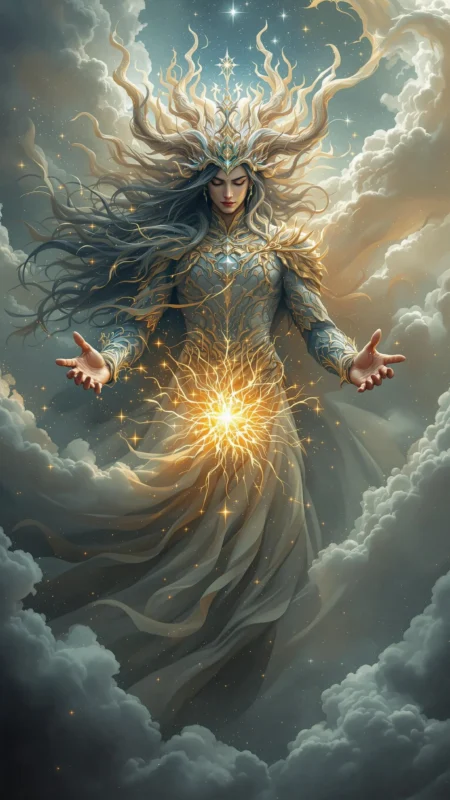
Hussain

Archetype Meaning & Symbolism

Principled, Sacrificial, Resilient, Just, Martyr, Steadfast, Mourned, Vindicated, Noble, Tragic

  • To me, death is nothing but happiness, and living under tyrants nothing but living in a hell.

If Hussain is part of your personal mythology, you may...

Believe

  • You may believe that a single act of moral courage can ripple through centuries, shaping history in ways the powerful can never control.
  • You may believe that true loyalty is not blind obedience, but allegiance to a shared principle, even if it means standing against a friend or family member.
  • You may believe that grief, when consciously borne and shared, can be a revolutionary force, transforming victims into witnesses and loss into legacy.

Fear

  • You may fear a 'death of the soul' far more than physical death: a long, comfortable life achieved through a series of small, soul-crushing compromises.
  • You may fear that your sacrifice will be in vain, that the principle for which you fight will be forgotten, or worse, co-opted and twisted by the very forces you opposed.
  • You may fear betrayal by your innermost circle, the devastating discovery that those you trusted most do not share your conviction when the ultimate test arrives.

Strength

  • An almost supernatural moral courage. The ability to stand firm and speak truth when surrounded and vastly outnumbered, drawing strength from the rightness of your cause.
  • The capacity to inspire profound, enduring loyalty in others. People are not drawn to your power, but to your integrity, and will follow you through immense hardship.
  • A gift for finding deep meaning in suffering. You are able to frame personal and collective tragedy not as a defeat, but as a crucible that forges purpose and resolve.

Weakness

  • A tendency towards moral rigidity. You may see the world in binary terms of good and evil, making it difficult to find common ground or engage in necessary compromise.
  • A predisposition to melancholy or a tragic outlook. You may be so focused on the world's injustice and the necessity of sacrifice that you struggle to embrace joy, levity, or peace.
  • A potential for self-righteousness or a martyr complex. The nobility of your stand can curdle into a sense of superiority, or you may unconsciously seek out persecution to validate your own righteousness.

The Symbolism & Meaning of Hussain

To have Hussain as a figure in one's personal mythology is to invite the desert into the garden of the self. It is the conscious choice to value the solitary, defiant palm over the sprawling, compliant vineyard. This archetype symbolizes the terrible beauty of the unwinnable fight, the moral victory that can only be purchased with total worldly defeat. He is not a god of harvests or victories, but a testament to the idea that a person's true measure is the principle they are willing to be annihilated for. His story suggests that legacy is not written in stone monuments but in the current of memory, a river of tears that, paradoxically, can carve canyons of resolve in the hearts of future generations.

In modern personal mythology, Hussain may represent the anchor of conscience in a sea of relativism. He is the inner voice that speaks not of what is possible, but of what is right. To invoke him is to ask: what am I willing to sacrifice for? Not for a god in the sky, perhaps, but for the god within: the inviolable core of one's own integrity. He stands for the power of narrative itself, the way a single, tragic story can galvanize movements and define identities centuries later. His thirst at Karbala becomes a universal metaphor for the soul’s deep yearning for justice in a world that often provides only sand.

The archetype also speaks to a particular kind of power: the power of the vanquished. It is a profound reversal of conventional wisdom. Victory is redefined as steadfastness. Influence is redefined as inspiration. Life is redefined as the story one leaves behind. When the Hussain archetype is active, your personal myth might not be a hero’s journey of triumphant return, but a martyr’s journey where the ultimate boon is not a treasure, but the clarity of one's own epitaph. It is the recognition that some truths are so essential, they are worth the desert, the thirst, and the sword.


Hussain Relationships With Other Archetypes

The Desert

The Hussain's bond with the Desert may be that of a protagonist and their stage, but it is a stage that has become a part of the actor. The desert is not merely a backdrop of baked earth and indifferent sky; it is, perhaps, the crucible that makes the archetype’s stand legible to eternity. It is a landscape that strips away all artifice, leaving only the stark architecture of a choice. In its vast emptiness, a single voice of defiance might echo louder than in a crowded city. The thirst of the desert could be seen as a physical manifestation of a spiritual longing for justice, and its unforgiving sun, a lens that focuses the narrative down to a single, searing point of moral clarity. The Hussain does not conquer the desert; rather, he seems to enter into a solemn pact with it, allowing its silence and severity to become the unadorned frame for a story that needed no ornament.

The Unjust King

The relationship with the Unjust King is the central, grinding axis upon which The Hussain’s story turns. The King is not simply a villain but a mirror, reflecting a different kind of power—a power that is wide but shallow, built on the shifting sands of coercion and fear. The Hussain’s power, in contrast, appears to be narrow but infinitely deep, sourced from a place the King cannot access. The collision is not one of armies, but of paradigms. The King, in his gilded halls, may represent the logic of the world, a pragmatism that has lost its soul. The Hussain, isolated and facing annihilation, could be said to embody a divine logic that the world deems madness. Their dynamic is a profound paradox: the King, in securing his temporal victory, perhaps ensures his own spiritual erasure, creating in his victim a symbol of defiance that will haunt his legacy forever.

The Tear

The Tear and The Hussain are symbiotic, a river of memory born from a wound of principle. The archetype’s story is not merely recorded in ink but is seemingly written, again and again, in the salt of human grief. Each tear shed in remembrance is not an admission of defeat but could be viewed as a quiet, cellular act of rebellion. It is a liquid lens through which the past becomes searingly present, a testament that defies the tyrant’s edict to forget. The Tear may be the most persistent form of protest, a small, warm drop against the cold monolith of historical revisionism. It is, perhaps, the dew that keeps the memory of the sacrifice green in the desert of time, transforming a singular, historical sorrow into a perennial spring of empathy and resolve.

Using Hussain in Every Day Life

Navigating Moral Compromise

When your career presents a choice between a lucrative promotion and a core ethical belief, the Hussain archetype offers a map. It suggests that the territory of the soul is more valuable than any corporate ladder. You might find yourself choosing the path of lesser material reward but greater internal peace, understanding that true authority is not granted by others but is earned by remaining loyal to one's own sovereign principles.

Leading Through Crisis

For the individual leading a small team, a family, or a community against a seemingly insurmountable challenge, this archetype provides a model. Leadership becomes less about guaranteeing victory and more about embodying unwavering integrity. It is the courage to tell your small band the truth of the odds against them, inspiring them not with false hope, but with the profound dignity of their shared stand. The goal shifts from survival to the preservation of collective honor.

Processing Grief and Injustice

When confronted with profound personal loss or witnessing a terrible societal injustice, the ritualized mourning associated with Hussain can become a personal practice. It allows a space for grief not as a passive state, but as an active, defiant remembrance. Your sorrow is transformed into a testament, a story you carry that fuels a commitment to justice, ensuring that what was lost is not forgotten but instead becomes a cornerstone of your moral universe.

Hussain is Known For

The Stand at Karbala

The quintessential last stand. A small band of family and followers, knowingly facing a massive army, not for conquest, but to protest the corruption of power and uphold a principle.

Refusal of Allegiance

His adamant refusal to pledge loyalty to a ruler, Yazid I, whom he considered illegitimate and tyrannical. This act codified the archetype’s central theme: conscience over convenience.

Ashura and Ritual Mourning

The annual commemoration of his martyrdom, which has evolved into a powerful, cathartic expression of grief, identity, and spiritual devotion for millions, cementing his story in the cycle of time.

How Hussain Might Affect Your Personal Mythology

How Hussain Might Affect Your Mythos

When the Hussain archetype shapes your personal mythos, your life story may cease to be a comedy or a romance and instead become a noble tragedy. The narrative arc bends toward a defining moral confrontation rather than a happily-ever-after. Your personal history might be reinterpreted through this lens: past struggles are not seen as failures, but as rehearsals for a future, pivotal test of character. The protagonist of your mythos, you, becomes the carrier of a sacred principle, a lonely wanderer in a desert of compromise, tasked with protecting a small flame of truth against the winds of expediency. The key relationships in your story are not with lovers or mentors, but with your antagonists and, most importantly, with your own conscience.

The climax of your personal myth, then, may not be an achievement but a refusal. The moment you say “no” to a pressure that would have extinguished your inner light. The story you tell yourself is not about what you gained, but about what you refused to lose. This narrative structure provides immense meaning to sacrifice and hardship. Setbacks are not random; they are part of the terrain of Karbala you must cross. This mythos grants a profound, almost severe, sense of purpose, where your life is a testament, and your ultimate audience may not be your contemporaries, but history itself.

How Hussain Might Affect Your Sense of Self

Integrating the Hussain archetype could forge a self-concept of immense resilience and moral gravity. You may view yourself less as a collection of shifting desires and more as a custodian of a timeless ideal. This can lead to an unshakeable sense of self-worth, one that is not contingent on external approval or success. Your identity becomes anchored in the bedrock of your principles, making you less susceptible to fleeting trends or peer pressure. You may feel that you are a link in a long chain of truth-tellers, inheriting a responsibility that gives your individual existence a weight and significance beyond its brief span.

However, this self-concept may also carry a heavy burden. You might feel perpetually at odds with the world, a solitary figure defined by opposition. There can be a certain loneliness to this identity, a feeling that few can understand the stakes as you see them. The self may become severe, prioritizing duty and principle over lightness and spontaneity. There is a risk of developing a kind of spiritual austerity, where personal joy or comfort feels like a betrayal of the more serious, tragic narrative you are living. The self is noble, yes, but perhaps also isolated in its nobility.

How Hussain Might Affect Your Beliefs About The World

With Hussain as a guide, your worldview may crystallize into one of stark moral clarity. The world is not a morally ambiguous grey zone; it is a stage for the perennial conflict between justice and tyranny, truth and falsehood, compassion and cruelty. This perspective can be incredibly energizing, transforming apathy into action. You might see political and social struggles not merely as policy debates, but as echoes of the stand at Karbala. This worldview provides a powerful lens for interpreting events, imbuing them with cosmic significance and demanding a response. It is a worldview that abhors complacency.

This clarity, however, can sometimes flatten a complex world into a simple duality. It may become difficult to perceive nuance, to understand the motivations of those on the other side, or to engage in the kind of pragmatic compromise that society often requires. The world may appear as a landscape populated only by allies and enemies, the righteous and the corrupt. This can foster a sense of perpetual crisis or lead to a deep-seated cynicism about human institutions, seeing them all as inevitably compromised. It is a worldview that inspires heroic action but may struggle with the messy, imperfect business of building a lasting peace.

How Hussain Might Affect Your Relationships

In the realm of relationships, the Hussain archetype might compel you to value loyalty and shared principles above all else. Your inner circle may be small, a tight-knit band of companions bound by deep, almost familial trust. You are drawn to people of integrity and may have little patience for superficial connections. Relationships are not for convenience or pleasure alone; they are alliances in a larger moral struggle. You could become the kind of friend for whom others would go to the wall, because they know you would do the same for them, and for the principles you share.

Conversely, this approach may strain relationships with those who do not share your intensity. You might, perhaps unconsciously, test the loyalty of friends and loved ones, creating trials for them to prove their allegiance. A disagreement over a principle could feel like a profound betrayal. There may be a tendency to hold others to the same impossibly high standards to which you hold yourself, leading to disappointment and fractured connections. The archetype might make it difficult to accept the flaws and compromises inherent in others, creating a lonely citadel of moral purity where only a few are granted entry.

How Hussain Might Affect Your Role in Life

This archetype may cast you in the role of the Witness or the Moral Compass for your community. You may not seek to be a leader who wields power, but rather one who exerts influence through example. Your perceived role is to remember, to speak truth, and to embody the conscience of the group, especially when it is inconvenient. You might feel a profound responsibility to be the one who asks the hard questions, who holds the line when others are tempted to fold. This is the role of the prophet, the activist, the incorruptible artist: not to rule the world, but to articulate its soul.

This role, however, is often thankless and isolating. Society does not always celebrate its conscience; more often, it seeks to silence it. You may find yourself perpetually on the outside, a critic rather than a participant. There is a danger of becoming defined solely by what you are against, rather than what you are for. The role of the martyr, while noble, is also one of pain and sacrifice. You may feel destined for a significant struggle, which, while giving life meaning, can also preclude the possibility of a life of ease, comfort, and simple acceptance.

Dream Interpretation of Hussain

To dream of the Hussain archetype in a positive context is to receive a profound spiritual affirmation. It may signal that a difficult moral choice you are facing is the correct one, even if it leads to hardship. The dream might manifest as a feeling of resolute calm in the midst of a chaotic battle, or finding an unexpected source of water in a barren desert, symbolizing that your spiritual resources are deeper than you realize. Seeing Hussain or his companions could be an encounter with your own courage and integrity, a message from your deep psyche that you have the strength to endure the coming trial and that your stand, no matter how small, has meaning.

In a negative context, a dream of Karbala could articulate a deep-seated fear of abandonment and betrayal. You may feel outnumbered and overwhelmed in your waking life, your principles leading you to a place of utter desolation. The intense thirst of the narrative could manifest in the dream as a desperate, unquenchable yearning, pointing to a severe emotional or spiritual drought. Dreaming of being one of the aggressors or a passive bystander in the tragedy could be a powerful rebuke from your conscience, suggesting you are complicit in an injustice or have betrayed a core part of yourself through inaction or compromise.

How Hussain Archetype Might Affect Your Needs

How Hussain Might Affect Your Physiological Needs

The story of Hussain is viscerally physiological: it is a story of thirst, exhaustion, and wounds. When this archetype informs your personal mythology, you may have a complicated relationship with your body's needs. On one hand, you could be acutely aware of physical vulnerability and the preciousness of water, food, and shelter. This awareness could foster a deep empathy for those who suffer from deprivation. You might see the provision of basic physiological needs for others as a sacred duty.

On the other hand, the core lesson of the archetype is the transcendence of these needs for a higher cause. This could lead to a form of asceticism, where you push your body to its limits, viewing physical comfort as a distraction from your moral purpose. You might believe that true strength is shown by enduring hunger, thirst, or pain without complaint. The body is not a temple for pleasure, but a vessel to be spent in the service of a principle. This can forge incredible endurance but may also verge on self-neglect, as the body's signals are subordinated to the will's decree.

How Hussain Might Affect Your Ideas of Belonging

Belonging, through the lens of the Hussain archetype, is not about being liked or accepted by the majority. It is about finding your true family among a small, devoted band of fellow travelers who share your deepest commitments. This creates an incredibly powerful, intense form of belonging, a bond forged in shared struggle and mutual respect. The love here is not light or easy; it is a fierce, protective loyalty. You belong with the few who understand the cost of your convictions because they are paying it too.

This intensity, however, can create a sharp and sometimes painful divide between the 'in-group' and the rest of the world. It may be difficult to feel a sense of kinship with those who do not share your moral fervor. This can lead to a sense of alienation from your wider community, your nation, or even your family of origin if they do not understand your path. The need for belonging is met, but in a way that can heighten a sense of separation from humanity at large, creating a tribe whose identity is defined by its noble isolation.

How Hussain Might Affect Your Feelings of Safety

The Hussain archetype radically redefines the need for safety. Physical security and worldly stability may become secondary concerns. True safety is located not in a fortified home or a stable income, but in the unassailable fortress of one's own conscience. The greatest danger is not death or injury, but moral corruption. You might find that you feel safest when you are acting in perfect alignment with your principles, even if it places you in direct physical peril. This is the safety of a soul at peace with itself.

This redefinition can appear as recklessness to others. A person animated by this mythos might willingly enter zones of conflict, speak out against dangerous regimes, or sacrifice financial security for an ethical stand. There can be a sense that conventional safety is an illusion anyway, a comfortable lie that encourages moral cowardice. The pursuit of this higher safety of the soul may lead to a life of perpetual instability and risk. It requires a deep faith that moral integrity provides a form of protection that transcends the physical.

How Hussain Might Affect Your Views of Esteem

Esteem needs, in this mythological framework, are met through internal validation, not external accolades. Your self-esteem is sourced from the knowledge that you did not bow, you did not compromise, and you did not sell your soul. It is the esteem of the stoic, the martyr, the dissident: a quiet, unshakeable dignity that public opinion cannot touch. You may feel a sense of pride not in your accomplishments, but in your sacrifices. Esteem is measured by the magnitude of the pressure you withstood.

This can create a powerful, self-sufficient personality, but it can also make it difficult to accept praise or to celebrate conventional success. You might be suspicious of accolades, viewing them as a sign that you have somehow compromised or become too acceptable to the status quo. Furthermore, if your self-esteem is entirely dependent on being in a state of righteous struggle, you may unconsciously seek out conflict. You might not know who you are in times of peace, your sense of worth being so tightly woven into the fabric of noble resistance.

Shadow of Hussain

The shadow of the Hussain archetype emerges when the principle becomes a dogma, and the stand becomes a performance. It is the martyr complex, a state in which the individual does not simply endure suffering for a cause, but actively seeks it out to feel righteous and alive. This shadow self is addicted to the purity of opposition. It cannot exist in peace or harmony, for its identity is wholly dependent on having a tyrant to resist. It will manufacture enemies where none exist and mistake pragmatism for betrayal. In this dark reflection, the noble sacrifice of Hussain is twisted into a justification for fanaticism, a refusal to see the humanity in one's opponents, and a complete inability to engage in the messy, compassionate work of building a better world rather than simply dying to protest the old one.

Furthermore, the shadow can manifest as a deep and paralyzing pessimism. It is the expectation of betrayal, the certainty of defeat. This individual may sabotage potential successes or relationships because, in their mythos, all noble stories must end in tragedy. They may cloak their fear of intimacy and failure in the noble language of sacrifice, creating a self-fulfilling prophecy of isolation and loss. The tears of mourning, which in the positive archetype are a source of communal strength, become a pool of self-pity in which the shadow self drowns, forever lamenting a world that will never be pure enough for them.

Pros & Cons of Hussain in Your Mythology

Pros

  • It provides an unwavering moral compass, offering clarity and purpose in confusing times.
  • It fosters immense courage and resilience, allowing one to endure hardship with a sense of profound meaning and dignity.
  • It can inspire a powerful form of leadership based on integrity and sacrifice, capable of uniting people around a just cause.

Cons

  • It can lead to a rigid, black-and-white worldview that struggles with nuance and the necessity of compromise.
  • The focus on tragedy and sacrifice may cultivate a somber or pessimistic disposition, making it difficult to embrace joy and peace.
  • There is a significant risk of developing a martyr complex or a sense of moral superiority that alienates others.