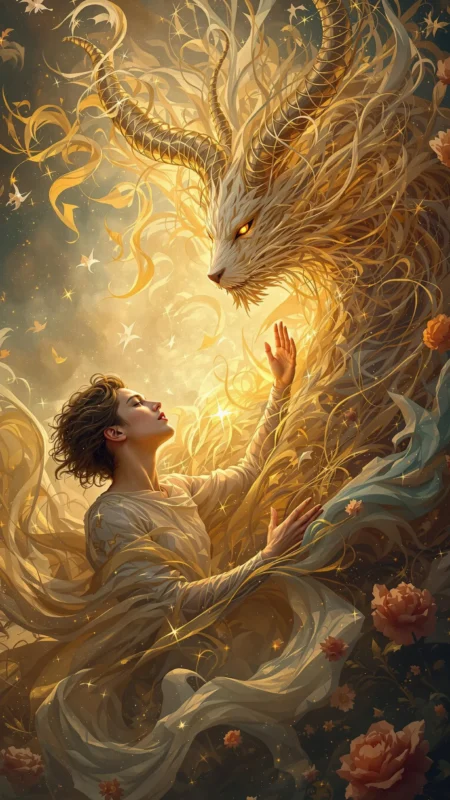


Vili

Archetype Meaning & Symbolism

ethereal, vengeful, loyal, wild, enchanting, sorrowful, graceful, fierce, prophetic, unforgiving

  • Dance with me until the dew dries, until your promises fade into the morning mist, until only the truth of your heart remains.

If Vili is part of your personal mythology, you may...

Believe

  • You may believe that emotional promises are as binding as any legal document, and their violation carries a spiritual weight.
  • You may believe that grief is not a phase to be rushed through, but a landscape to be inhabited, explored, and ultimately integrated as a source of profound wisdom.
  • You may believe that true justice operates on an intuitive, karmic level, and that the heart has its own unerring system of checks and balances.

Fear

  • You may fear betrayal above all else, seeing it not just as a hurt but as a fundamental shattering of your world.
  • You may fear your own capacity for vengeance, a worry that if pushed too far, your righteous anger could curdle into a cold, unending bitterness that consumes you.
  • You may fear becoming emotionally numb or cynical, as this would be the ultimate betrayal of the Vili's fiercely feeling spirit.

Strength

  • An almost supernatural loyalty to those who have earned your trust, making you a profoundly reliable and protective friend or partner.
  • A powerful alchemical ability to transform your deepest pain into art, wisdom, or communal strength, refusing to let sorrow be a waste.
  • A deep, intuitive connection to the truth of a situation or person, allowing you to navigate the world with an internal compass that rarely fails.

Weakness

  • A tendency toward being unforgiving, finding it difficult to let go of past hurts and allowing grudges to fester long after the event.
  • An inclination to see the world in stark black-and-white terms of loyalty and betrayal, which can make it hard to navigate the gray areas of human relationships.
  • An emotional intensity that can be overwhelming both for yourself and for others who are not equipped to meet you at that depth.

The Symbolism & Meaning of Vili

The Vili archetype is a vessel for the paradox of feminine power: its capacity for sublime creation and its potential for terrifying destruction. She is the spirit of the woman who loved too much, who was promised a garden and given a grave, and who then learned to make the graveyard bloom with poisonous, beautiful flowers. In your personal mythology, she may represent a radical acceptance of this duality. The Vili suggests that your capacity for deep love and your capacity for fierce, boundary-setting anger are not opposites. They are two faces of the same force: a profound commitment to emotional truth. She is the ghost of every promise broken, a luminous reminder that some vows are written on the soul, not on paper.

To walk with the Vili is to embrace a kind of wild spirituality, one that finds its church in the moonlit forest and its scripture in the rhythm of your own heart. She symbolizes the untamable aspect of the self, the part that resists domestication and societal pressure to be perpetually pleasant. The Vili could be the inner voice that whispers a necessary, uncomfortable truth when everyone else is content with a comfortable lie. She is the patron saint of gut feelings, of the shiver down the spine that tells you something is wrong, of the intuitive knowing that logic cannot touch. She represents a knowledge that is ancient, primal, and deeply connected to the earth.

At her core, the Vili is a keeper of accounts. She is the embodiment of a justice system that operates outside human laws, a system where emotional debts are taken as seriously as financial ones. She may symbolize your own internal arbiter of fairness in relationships, the part of you that demands reciprocity, loyalty, and sincerity. The Vili mythos suggests that to betray love is to disturb a fundamental cosmic balance. Her presence in your personal story could signify a journey toward recognizing the immense power and responsibility that comes with emotional connection, viewing love not as a game to be won, but as a sacred pact to be honored.


Vili Relationships With Other Archetypes

The Unsent Letter

The relationship between the Vili and the Unsent Letter is one of a shared, spectral purpose. The letter, sealed with wax that has cooled into a small, hard tear, is a ghost of a conversation, a physical vessel for an emotion that never reached its destination. In much the same way, each Vili is a soul caught in the amber of a final, unspoken plea or curse. Her eternal dance may be a frantic, kinetic attempt to spell out the contents of that letter into the night air—a message of fury and heartbreak articulated not with ink, but with punishing, weightless motion. Her existence, like that of the letter, is a testament not to communication but to the profound and terrible weight of what remains unsaid, a message that has turned inward to haunt its author into eternity.

The Bog

One might imagine the Vili's moonlit glade not as a forest floor, but as the surface of a bog. A bog is a landscape of perfect, chilling preservation, its acidic water holding what has fallen into it in a state of suspended decay. The Vili, too, are perfectly preserved in the moment of their betrayal. Time has stopped, and they are held fast in the peat of their own sorrow, their beauty eerily intact, their agony undecayed. To be drawn into their dance is to break the water's surface and sink into this collective memory. The dance itself could be a kind of warning, a beautiful, treacherous moss that hides the suffocating depth of grievances that do not rot, but instead wait patiently for the living to misstep.

The Marionette

The Vili's compulsive dance suggests a chilling kinship with the Marionette, raising the question of who, or what, is pulling the strings. Are they agents of their own vengeance, or are they puppets of a grief so profound it has become its own entity, animating their limbs? Perhaps their queen, Myrtha, is the puppet master, her will a set of invisible wires compelling them to perform. Or maybe the strings are tied to the memory of betrayal itself, causing them to jerk and twirl in a ballet of inherited trauma. This suggests their cruelty is not entirely their own; it could be an involuntary reflex, the terrible, graceful spasm of a body whose will has been commandeered by a wound. In this light, their vengeance is a shared, mechanical nightmare, a performance where they are both the puppets and, in forcing others to join, the unwilling puppeteers.

Using Vili in Every Day Life

Navigating Betrayal

When confronted with a broken promise, the Vili archetype offers a map beyond simple forgiveness or destructive revenge. It suggests a third path: the transformation of pain into a sacred boundary. Instead of lashing out, you may channel that fierce, sorrowful energy into building an unbreachable wall around your own well-being. This isn't about punishing the other person, but about honoring the depth of your own wound. It is the act of declaring your heart a sovereign territory, where insincerity is no longer granted a visa. The Vili dances not to destroy the man, but to reclaim the night for herself.

Reclaiming Wildness

The Vili represents the part of the psyche that refuses to be tamed, cultivated, or made polite. If you feel constrained by social expectations or the pressure to be perpetually agreeable, invoking the Vili can be a powerful act of rebellion. This could manifest as choosing solitude in nature over a social event, speaking a difficult truth in a room full of pleasantries, or creating art that is raw and unsettling rather than commercially viable. It is the permission to be feral, to trust the intuition that hums beneath the skin, to remember that your soul has a wilderness that deserves to remain untouched by pavement and platitudes.

Honoring Grief

In a culture that often treats grief as a sickness to be cured, the Vili archetype sanctifies it. It posits that sorrow is not a private failure but a communal rite. To embody the Vili is to understand that grief, especially from betrayal, can create a powerful bond with others who have known similar depths. You might find yourself creating or seeking out spaces where sorrow is not hidden but shared, honored, and transformed into a collective strength. It is the realization that the ghosts of past loves do not have to haunt us: they can become a chorus, a source of shared wisdom and fierce, protective love.

Vili is Known For

The Dance of Death

Most famously depicted in the ballet *Giselle*, the Vili are the spirits of jilted brides who rise from their graves at night to dance. They catch any man who enters their domain and force him to dance to his death by exhaustion, an act of both sorrowful beauty and terrifying vengeance.

Nature Spirits

In Slavic folklore, they are deeply connected to the natural world. They are the souls of the forest, the mist on the mountain, the current in the river. To harm their domain or break a promise made within it is to invite their wrath. They are guardians of wild, sacred places.

Avengers of Broken Vows

The core of the Vili's purpose is justice for the betrayed heart. They represent a cosmic law that holds individuals accountable for their emotional commitments. They are the embodiment of the idea that a broken heart is not a small thing, but a profound violation of a sacred trust.

How Vili Might Affect Your Personal Mythology

How Vili Might Affect Your Mythos

When the Vili archetype enters your personal mythos, your life story may transform from a narrative of victimhood into an epic of reclamation. A past heartbreak is no longer a scar you try to hide: it becomes an initiation. The moment of betrayal is recast as a consecration, the event that dissolved a weaker self and summoned a more powerful, discerning spirit. Your personal history might be re-written not as 'the time I was abandoned,' but as 'the time I learned to haunt.' This haunting is not about tormenting another, but about embodying an unforgettable presence, a standard of loyalty against which all future relationships are measured. Your mythos becomes one of fierce self-possession, where pain is the crucible for power.

The narrative arc of your life may begin to revolve around themes of vows, pacts, and the wild justice that follows their violation. You might see your life as a series of sacred contracts, both with others and with yourself. The central conflict of your story could be the struggle to remain true to these oaths in a world that encourages transience and superficiality. The allies in your mythos are those who understand this code, a chorus of kindred spirits bound by loyalty. The antagonists are not necessarily evil, but they are the faithless: those who speak without meaning, who promise without intending to deliver. Your life's purpose, in this telling, may be to guard the sanctity of the word and the heart.

How Vili Might Affect Your Sense of Self

Integrating the Vili may lead to a radical re-evaluation of your own sensitivity. What you once perceived as a vulnerability, a tendency to be 'too emotional,' could now be understood as a form of second sight. You might come to see your capacity for deep feeling not as a flaw, but as your most potent tool for navigating the world. It is the tuning fork that resonates with truth and goes silent in the presence of deceit. This allows for a self-concept rooted in profound internal integrity, where your worth is not measured by external approval but by your allegiance to your own emotional reality. You may find a quiet strength in your ability to withstand sorrow, seeing it not as a breaking point but as a deepening.

This archetype could also awaken a fiercer, more uncompromising aspect of your personality. You may feel less inclined to smooth things over, to make excuses for others, or to swallow your own discontent for the sake of peace. The Vili in you is the one who says 'no' and means it, the one who is willing to be seen as difficult in order to honor a personal truth. This can be startling at first, this emergence of a spectral, unyielding guardian within. It is the part of you that will dance a man to death with a look rather than let him tread carelessly on your soul. It is the discovery of a beautiful, cold, and necessary anger that exists to protect the soft, warm core of your being.

How Vili Might Affect Your Beliefs About The World

With the Vili as a guide, your perception of the world might acquire a new, mystical layer. You could begin to see reality as governed not just by the visible laws of physics and society, but by invisible laws of emotional karma. The world is no longer a random assortment of events, but a place where broken vows create ripples, where insincerity leaves a psychic stain. You might find yourself looking at a forest and seeing not just trees, but a silent witness. A body of water is not just H2O, but a repository of memory and sorrow. This worldview imbues the mundane with a sense of enchantment and moral weight, suggesting that our emotional lives have a tangible impact on the fabric of reality itself.

The Vili archetype could foster a deep skepticism toward superficial structures of power and a profound belief in a wilder, more ancient form of justice. You may see the world's courtrooms and contracts as pale imitations of the real tribunals of the heart. This perspective can be both liberating and isolating. It is liberating because it frees you from seeking validation from systems you deem inauthentic. It can be isolating because it sets you apart from those who operate entirely within those systems. Your worldview becomes one where the most important truths are not spoken, but felt, and the most binding contracts are those sealed not with a signature, but with a shared glance of understanding.

How Vili Might Affect Your Relationships

In relationships, the presence of the Vili archetype may demand a standard of loyalty that is both terrifying and beautiful. You might approach connections with an implicit understanding: I will give you my whole heart, but if you break it, you will have to answer to its ghost. This raises the stakes of intimacy. It filters out the casual, the noncommittal, the insincere. Relationships become profound acts of mutual trust, built on a foundation of emotional transparency. The Vili doesn't play games. She doesn't do 'maybe.' Her influence could push you toward relationships that are deeply, almost mystically, committed.

Consequently, you may cultivate a very specific kind of tribe. The Vili dance in a chorus, a sisterhood of shared experience. Your circle of belonging might shrink, but its bonds will strengthen exponentially. You may find yourself drawn to others who have also been through the fire of betrayal and emerged with a similar, sorrow-forged wisdom. This creates a powerful sense of community, a collective of guardians who fiercely protect one another's hearts. Intimacy is not just about romance: it is about finding the other spirits who are willing to dance in your moonlit forest, who understand the sacredness of the space and the gravity of the vow.

How Vili Might Affect Your Role in Life

If the Vili is a part of your personal mythology, you may feel your role in the world is to be a guardian of emotional integrity. You are the one who notices when a promise feels hollow, when a compliment is a mask. Your purpose is not to be a judge, but a truth-teller, a person whose very presence encourages others to be more authentic. In groups or workplaces, you might be the one who instinctively challenges disingenuousness or advocates for those who have been emotionally sidelined. Your role is to remind the 'civilized' world of its wild, emotional heart.

You might also feel a calling to be a keeper of stories, particularly the stories of the heartbroken. Like the Vili who preserve the memory of their betrayal through their eternal dance, you may feel compelled to create art, to write, or to simply listen with profound empathy, transforming pain into something beautiful and meaningful. Your role could be that of a psychopomp for sorrow, guiding others through the underworld of their grief and showing them that it is not an end, but a place of immense power and potential for rebirth. You hold space for the ghosts of love, honoring them rather than trying to exorcise them.

Dream Interpretation of Vili

In a positive context, to dream of the Vili, perhaps dancing with them willingly or being welcomed into their forest clearing, can symbolize a powerful integration of your own sorrow. It may suggest that you have successfully transformed a past pain into a source of strength and wisdom. The dream could be an affirmation that you have found your 'chorus'—a community of belonging where you are understood and supported. To see the Vili dancing with grace and power could be your subconscious mind celebrating your own reclaimed wildness and emotional freedom. It is a dream of belonging to yourself, first and foremost.

Conversely, to dream of being pursued by the Vili, or being forced to dance against your will, points to the archetype's shadow. This could indicate that you are being consumed by bitterness or a desire for revenge, trapped in a cycle of your own making. The dream may be a warning that your righteous anger has soured into a poison that is harming you more than anyone else. It might also represent a fear of your own untamed emotions, a sense that your grief or anger, if unleashed, would become a destructive force. It is a call to confront these feelings, to find a way to honor them without letting them dance you to death.

How Vili Archetype Might Affect Your Needs

How Vili Might Affect Your Physiological Needs

The Vili's influence on your physiological needs may manifest as a deep, instinctual craving for communion with the natural world. This is not a casual appreciation for a nice view. It is a visceral need to feel the cool earth under your bare feet, to inhale the scent of damp soil after a rain, to feel the chill of night air on your skin. Your body might feel out of sorts, almost ill, when deprived of these elemental connections for too long. Your physical well-being becomes directly tied to the health of your environment, as if your own nervous system is an extension of the forest's mycelial network.

Furthermore, this archetype can create a powerful psychosomatic link between emotional states and physical sensations. A betrayal might not just feel like sadness: it could manifest as a profound, unshakable chill in your bones, a physical exhaustion that sleep cannot fix. Conversely, moments of deep, authentic connection might feel like a literal warmth spreading through your chest. Your body becomes the ultimate arbiter of truth, a highly sensitive instrument that registers emotional sincerity or deceit as a physical reality long before your conscious mind can articulate it. Physical health, then, depends on maintaining emotional integrity.

How Vili Might Affect Your Ideas of Belonging

For one who resonates with the Vili, belonging is not a matter of fitting in, but of being chosen by a very specific tribe. It is an all-or-nothing proposition. You may feel like a perennial outsider in conventional social circles, unable or unwilling to perform the small talk and pleasantries required for entry. True belongingness is found only within the 'chorus'—a small, intense group bound together by shared experience, often of profound sorrow, and an unbreakable code of loyalty. It is the sisterhood of the jilted, the brotherhood of the deeply feeling, the collective of those who understand that a promise is a holy thing.

This need for profound connection means that you would rather be alone than be in the wrong company. The feeling of belonging is not a cozy warmth, but a fierce, protective fire. It is the knowledge that there are others who will stand with you in the dark forest, who will not flinch from your sorrow or your anger, who will dance with you until dawn. This creates an incredibly resilient, if small, social world. Belonging is not found: it is forged in the crucible of shared vulnerability and unwavering mutual defense.

How Vili Might Affect Your Feelings of Safety

When the Vili informs your sense of safety, the definition of security shifts from the physical to the emotional. A locked door or a healthy bank account may provide comfort, but true safety is found only in the fortress of unwavering trust. The greatest danger is not a thief in the night, but a liar in your heart. You may find yourself constructing your life to minimize exposure to emotional betrayal, creating fiercely protected spaces where sincerity is the non-negotiable price of entry. An environment that feels 'safe' is one where you can be emotionally naked without fear of being wounded.

This can lead to a heightened sensitivity to emotional atmospheres. You might feel a primal sense of unease or danger in environments characterized by passive aggression, corporate doublespeak, or social pretense. These places feel threatening because they are antithetical to the Vili's code of raw honesty. Safety is the forest clearing at midnight: a space that might seem dangerous to outsiders, but for the Vili and her chorus, it is the only place of true sanctuary, because everyone present is bound by the same sacred, unspoken laws.

How Vili Might Affect Your Views of Esteem

Self-esteem, through the lens of the Vili, becomes inextricably linked to personal integrity and emotional truthfulness. Your respect for yourself may not come from achievements, accolades, or the approval of others, but from your ability to stay true to your own heart's code. Esteem is earned every time you honor a gut feeling, speak a difficult truth, or refuse to betray yourself by accepting treatment that feels wrong. It is the quiet pride of the survivor, the one who has walked through the fire of grief and refused to be consumed by it.

This fosters a form of self-worth that is incredibly resilient, because it is internally sourced. You might hold yourself in high regard precisely for the things society might deem weaknesses: your sensitivity, your intensity, your unwillingness to 'just get over it.' You see these not as flaws, but as badges of honor, proof of your capacity for a love so deep it can leave a ghost. Self-esteem is the quiet hum of your own untamed spirit, a self-respect that needs no external validation because it was consecrated in the moonlight.

Shadow of Vili

The shadow of the Vili manifests when righteous grief curdles into perpetual vengeance. In this state, the individual is no longer a guardian of emotional truth, but a prisoner of her own pain. She becomes trapped in the moonlit forest of her past, compulsively re-enacting her betrayal by punishing others. The shadow Vili cannot distinguish between a grave transgression and a minor slight: all are seen as betrayals worthy of the death-dance. Her fierce loyalty becomes a possessive paranoia, her sorrow a weapon she wields against the world. She drives away potential allies because no one can ever meet her impossible standard of purity, leaving her utterly alone with the ghosts she refuses to release.

Another shadow aspect is the total withdrawal into a cold, impenetrable fortress of self-protection. Fearing another wound, she pre-emptively severs all connections. The wildness that was once a source of freedom becomes a cage. She becomes a ghost in her own life, emotionally translucent, observing but never participating. Her heart, once a source of immense feeling, becomes a shard of ice. This is the Vili who has stopped dancing altogether, frozen in a state of perpetual, silent grief. She has saved herself from being hurt again, but at the cost of her own vitality, embodying a living death that is perhaps more tragic than the one she once dealt to the faithless.

Pros & Cons of Vili in Your Mythology

Pros

  • You possess a profound emotional resilience, with the capacity to find meaning and strength in experiences that might break others.
  • You inspire and demand a deep level of authenticity in your relationships, leading to incredibly strong and loyal bonds.
  • You are a powerful advocate for the unseen and unspoken, championing emotional justice and the wisdom of intuition in a world that often ignores both.

Cons

  • Your uncompromising nature and emotional intensity can be isolating, making it difficult for others to get close to you.
  • You may be susceptible to holding onto bitterness and resentment, getting trapped in cycles of pain from past wrongs.
  • Your extreme sensitivity makes you particularly vulnerable to being deeply wounded by the thoughtlessness or betrayal of others.