Believe
 Fear
Fear Strength
 Weakness
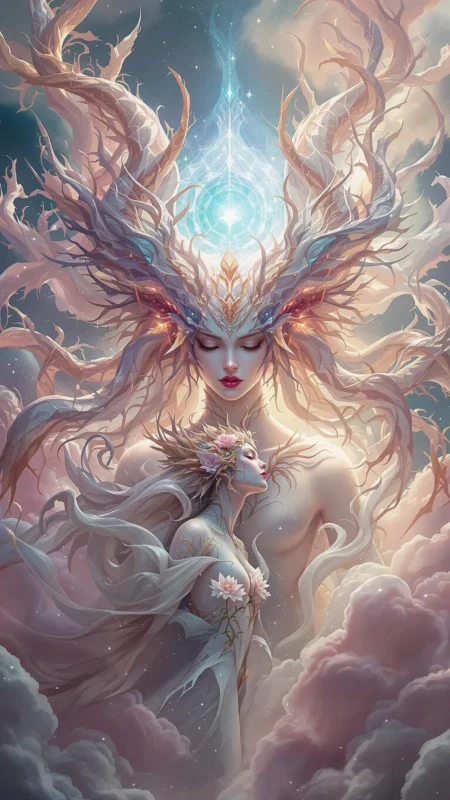
In a personal mythology, Lofn represents the sacred permission slip. She is the patron goddess of the loves we are told we cannot have: the love for a person deemed unsuitable by our tribe, the love for a way of life that our family rejects, or the love for a part of ourselves we have been taught to hide. She does not smash the gates of convention like a berserker; she finds the key, unlocks the door with a gentle click, and holds it open with a reassuring smile. Her presence in one’s life may signal a quiet revolution, a turn toward a love that feels more authentic than obedient. She symbolizes the truth that some bonds are their own justification, existing above the laws of man or the judgment of the crowd.
The archetype of Lofn is also one of divine diplomacy. She is an intercessor, a being who moves between the rigid structures of power and the chaotic, heartfelt needs of individuals. Her symbolism is not in breaking the rules, but in understanding them so deeply that she finds the compassionate loophole. In a modern context, she is the energy that allows a conservative father to dance at his son’s same-sex wedding, or the grace that helps a family welcome a member back from addiction. She embodies the profound idea that love is not the enemy of order but is, perhaps, a higher, more complex order of its own.
Her name, meaning “praise,” points to her role as an affirmer. To have Lofn in your personal pantheon is to have a source of validation for the tender, unconventional, or fragile connections in your life. She is the whisper that says “this is good” when the world is shouting “this is wrong.” She sanctifies the secret, praises the timid, and blesses the bond that has no other blessing. She is the patron of the starting point, of the first tentative step toward a union that will redefine the map of your world, granting you the courage not of a warrior, but of the devoted heart.