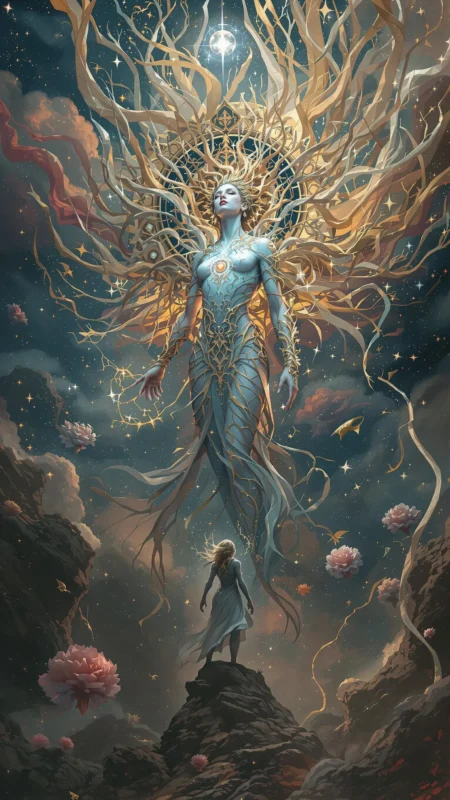


Hodr

Archetype Meaning & Symbolism

Unwitting, manipulated, shadowed, potent, underestimated, isolated, tragic, intuitive, quiescent, pivotal

  • The mistletoe felt like just a dart in my hand; I did not know it was the world's sorrow I was asked to throw.

If Hodr is part of your personal mythology, you may...

Believe

  • The most powerful truths are felt, not seen, and intuition is a more reliable guide than any map or glittering promise.
  • Every action has consequences, and one must take responsibility even for the harm they did not intend.
  • Even from the deepest tragedy, and after the longest winter, reconciliation and rebirth are possible.

Fear

  • That your trust will be betrayed and you will be manipulated into becoming an instrument of harm.
  • A deep-seated anxiety that you are fundamentally blind to some crucial aspect of reality that others perceive easily.
  • That your entire life and legacy will be defined by a single, catastrophic mistake made in ignorance.

Strength

  • A profound and highly developed intuition, allowing you to perceive hidden motives and truths that are invisible to others.
  • An immense resilience and the capacity for deep wisdom, forged by navigating tragedy and its aftermath.
  • An immunity to superficiality and glamour, which allows you to assess people and situations based on substance and integrity.

Weakness

  • A vulnerability to being deceived by those who are skilled at exploiting trust and feigning sincerity.
  • A tendency toward suspicion and isolation, which can prevent the formation of healthy, trusting relationships.
  • Becoming trapped in a cycle of guilt and self-recrimination over past mistakes, unable to forgive yourself.

The Symbolism & Meaning of Hodr

Hodr is the patron saint of the unwitting accomplice, the avatar of consequence divorced from intent. In a personal mythology, he represents those moments when your actions, guided by trust or ignorance, have an impact far beyond your imagining. He is the quiet corner of the psyche that knows the terror of being a tool. His story is not about evil, but about the terrifying architecture of fate, where one person’s blindness becomes another’s perfect weapon. To walk with Hodr is to carry the knowledge that innocence is no shield and that the most fragile-looking things, like a sprig of mistletoe, may be the most lethal.

Hodr also symbolizes a different way of knowing, a perception born of darkness. Where others are dazzled by Baldr’s light, the brilliance of charisma and apparent perfection, Hodr dwells in a world of texture, sound, and intuition. He is the part of you that navigates by feeling, that senses the hollowness in a promise or the weight of an unspoken truth. His blindness is not a deficiency but a filter, screening out the superficial glare to reveal the essential structure of things. He may be the archetype of your trust in the unseen, your faith in the felt sense of the world over its visible presentation.

Ultimately, Hodr stands for the necessary winter of the soul. He is the darkness that claims the summer sun, the silence after the revelry, the period of quiescence required for eventual rebirth. His story suggests that some forms of destruction are not endings but transitions. His fated return after Ragnarök alongside his slain brother is a profound metaphor for personal healing. It whispers that even the most tragic schisms can be mended, that the parts of ourselves we have harmed or exiled can be met again in a new world, a world built on the wisdom gained from the wreckage.


Hodr Relationships With Other Archetypes

The Trickster

The Hodr exists, perhaps, as a kind of negative space for The Trickster to inhabit. It is the still, dark water that perfectly reflects a malevolent sky, the vacant chamber waiting for a corrupting whisper. The relationship is not one of partnership but of haunting, of possession by proxy. The Trickster’s will becomes a phantom limb for The Hodr, an action without a root, for which The Hodr may bear the consequence but never the intent. He is the glove into which The Trickster’s hand is slipped, a form of innocence so pure it becomes the most pliable and devastating of vessels, a blank page on which a terrible story is written by another’s pen.

The Beloved

The relationship with The Beloved is that of the long, inevitable shadow to the brilliant noon sun. It is not a relationship of opposition, but of tragic consequence, a cosmic arrangement of terrible symmetry. The Hodr may represent the winter that does not hate the rose, but simply arrives, its cold breath a passive, fatal sentence. To The Beloved, The Hodr is the physical manifestation of a loophole in fate, the one unforeseen vulnerability. Their connection could be seen as the universe’s cruelest paradox: that the deepest darkness can be delivered by a hand that meant no harm, and that the brightest light can be extinguished by one who could not even see it.

The Innocent Weapon

With The Innocent Weapon, such as the mistletoe sprig, The Hodr shares a kind of sympathetic resonance, the hum of two objects overlooked by fate until the moment they become its fulcrum. Both are defined by what they are not—the weapon is not a mighty oak, The Hodr is not a seeing warrior. They are, together, a testament to how the universe’s greatest tragedies could be engineered not from the grand and terrible, but from the small and disregarded. Theirs is a quiet kinship of instrumentalism, a shared, hollow identity as the means to a terrible end; a forgotten plant, a sightless brother, each waiting in the quiet dark for a purpose they never sought.

Using Hodr in Every Day Life

Navigating Unwitting Complicity

When you find you have been a pawn in an office power play or a family drama, the Hodr mythos offers a map. It is not a map of exoneration, but of reckoning. It suggests a period of retreat, a personal winter, to process not guilt in the conventional sense, but the startling reality of your own instrumentalization. The path forward involves confronting the manipulator, not necessarily with rage, but with the quiet, devastating power of acknowledged truth, and then turning inward to understand the blind spot that allowed the mistletoe to be placed in your hand.

Finding Strength in Limitation

If you feel defined by what you lack: a particular skill, a type of knowledge, a social grace: the Hodr archetype reframes this. Your 'blindness' may be the very thing that attunes your other senses. You may not see the glittering surface, but you feel the tremor of a lie through the floorboards. This archetype encourages you to lean into your unique mode of perception. It is about discovering the formidable strength in your own quiet dark, finding a power that those who rely on sight alone can never cultivate.

Confronting Unintentional Harm

Perhaps you have hurt someone you love, not through malice, but through a staggering lack of awareness. The story of Hodr killing his own brother provides a profound framework for this pain. It sidesteps the simple binary of good and evil and asks you to sit with the unbearable weight of consequence. The journey here is not about self-flagellation but about a radical form of responsibility: one that leads to reconciliation, as Hodr and Baldr are destined to reconcile after Ragnarök. It is about understanding that even devastating mistakes can be integrated into a larger story of renewal.

Hodr is Known For

The Slaying of Baldr

Hodr is infamous for being the instrument of his brother Baldr's death. Manipulated by a disguised Loki, the blind god threw a shaft of mistletoe, the one thing that could harm the otherwise invincible Baldr, believing it to be a harmless game.

Symbolic Blindness

His physical blindness is central to his identity, representing ignorance, the unseen, the darkness of winter, and a reliance on senses other than sight. It is the core of his tragedy and the source of his unique, if dangerous, potential.

Post-Ragnarök Return

In some prophecies, Hodr is slated to return from the underworld after the world-ending battle of Ragnarök. He and the resurrected Baldr will rule over a new, reconciled world, symbolizing forgiveness and the healing of the deepest wounds.

How Hodr Might Affect Your Personal Mythology

How Hodr Might Affect Your Mythos

When Hodr is a cornerstone of your personal mythos, your life story may be punctuated by a single, seismic event that you did not author but in which you were a key player. This event, like the death of Baldr, could be a moment of profound, unintentional betrayal or destruction that re-frames everything that came before and after. Your narrative ceases to be a simple arc of progress; it becomes a tale of reckoning and recovery. The central plot is not about achieving a goal, but about understanding your role in a tragedy and then building a new life, a new world, from the ashes, a world where reconciliation with the past becomes the primary quest.

Your mythos may also be one of perpetual underestimation. It is the story of the quiet one in the corner, the one defined by a perceived lack, who is overlooked until the moment they are needed for a pivotal, often devastating, act. This narrative structure suggests your greatest impact may occur silently, without fanfare, and its true meaning may only become clear in retrospect. Your life story might be a quiet rebellion against this type ofcasting, a long, slow journey from being an object in someone else’s story to becoming the subject of your own, learning to wield your own strength with intention and sight, however limited.

How Hodr Might Affect Your Sense of Self

To see yourself through the lens of Hodr is to perhaps feel perpetually in the dark. You might wrestle with a sense of being one step behind, of missing the crucial piece of information that everyone else seems to have. This could foster a deep-seated self-doubt or a feeling of tragic uniqueness, as if you are uniquely cursed to stumble. You may carry a quiet, ambient guilt, a free-floating anxiety about the harm you might cause through simple ignorance. The question 'what did I not see?' could be a constant, haunting refrain in your inner monologue.

Conversely, this self-perception could cultivate a profound sense of inner authority. If you cannot trust the world of appearances, you must learn to trust your own internal barometer. This may forge a powerful reliance on intuition, a deep listening to the body and the subtle energies of a room. Your sense of self may be less invested in external validation, which is part of the world of light and sight, and more grounded in a private, internal integrity. You may see your 'blindness' not as a failing but as a specialized tool, granting you access to truths unavailable to the sun-dazzled masses.

How Hodr Might Affect Your Beliefs About The World

Your view of the world may be one of deep skepticism. You could see it as a stage where charismatic tricksters, the Lokis, orchestrate events from the shadows, manipulating the well-intentioned and the naive for their own ends. This worldview is not necessarily cynical, but it is cautious. It assumes that surfaces are deceptive and that the true mechanics of power are hidden. You might believe that major historical or social events are driven not by grand ideologies but by small, personal betrayals and unseen manipulations, a series of mistletoe darts thrown in the dark.

This perspective may also attune you to the cyclical nature of existence, the unavoidable rhythm of light and dark. You may not believe in linear progress but in a constant, churning cycle of growth, decay, and rebirth, a cosmic echo of the story of Baldr and Hodr. Winter is not an enemy to be defeated but a necessary partner to summer. Destruction is not the end, but a clearing of the ground for something new. Your worldview might hold that true wisdom and hope are found not in preventing tragedy, which is impossible, but in the promise of reconciliation that lies on the other side of it.

How Hodr Might Affect Your Relationships

In relationships, the Hodr archetype might manifest as a profound fear of being used. You may be intensely loyal and trusting once committed, but the path to that commitment is paved with caution. You might test potential partners and friends, not with overt games, but by observing how they handle power, truth, and your own perceived vulnerabilities. You may fear that your love or trust will be fashioned into a weapon to be used against someone else, or even against yourself. This can lead to a small, fiercely protected inner circle.

You may find yourself drawn to two opposing types of people: the brilliant, shining Baldr figures, whose light you admire but secretly distrust, and the cunning, articulate Loki figures, whose manipulations you are uniquely, if painfully, attuned to. Your most healing relationships might be with those who see beyond your 'blindness,' who neither pity nor seek to exploit it, but who simply meet you in the quiet dark. These relationships are not about being guided or protected, but about being witnessed for who you are, a complex being of light and shadow, capable of both terrible mistakes and profound wisdom.

How Hodr Might Affect Your Role in Life

You may feel that your role in life is to be the catalyst you never intended to be. You are not the hero or the villain, but the pivot upon which the story turns. This can feel deeply disempowering, as if you are a supporting character in your own life, your destiny shaped by the needs and schemes of others. You might gravitate toward roles that are essential but invisible: the technician in the wings, the researcher in the lab, the quiet administrator who keeps the whole system running, your strength lying in your silent, steady competence.

However, a mature Hodr mythos can inspire a reclamation of your role. After the initial tragic event, your life's work may become about integrating that darkness and transforming your role from pawn to sage. You might become a mediator, a counselor, or an artist whose work explores themes of forgiveness, consequence, and unseen truths. Your purpose is not found in avoiding the darkness but in having journeyed through it and returned with a hard-won map. Your role becomes that of the guide for others who find themselves lost in a similar twilight, showing them that winter is not the end of the story.

Dream Interpretation of Hodr

To dream of Hodr in a positive light is to be visited by a guide for the underworld of your own psyche. His appearance may signal a time to stop relying on external data and bright, clear answers, and to instead trust your intuition. He may appear when you are facing a confusing situation, his blindness a symbolic instruction to close your eyes and feel your way forward. He could represent a latent strength you are unaware of, a power that resides in what you perceive as a limitation. His presence might be a comfort, a quiet affirmation that it is safe to be in the dark, to not know, to simply wait and listen.

In a negative context, dreaming of Hodr could be a potent warning. It may symbolize a profound blind spot in your waking life, an area where you are being manipulated or are refusing to see a difficult truth. You might be the dreamer who holds the mistletoe, unaware of the damage you are about to cause. This dream could be an urgent message from your subconscious to question who you are trusting and why. It might also represent a deep fear of your own capacity for destruction, or a powerful guilt over a past action that you have not yet integrated or made peace with.

How Hodr Archetype Might Affect Your Needs

How Hodr Might Affect Your Physiological Needs

The Hodr archetype might deeply influence your relationship with your own senses. Your body's physiological needs could extend beyond mere sustenance to include a need for sensory quiet. You may feel physically drained or agitated by bright lights, loud noises, and chaotic environments, as your system is wired for a more subtle, intuitive intake of information. Your sense of physical well-being might be directly tied to having access to spaces of darkness and silence, places where your overwrought sensorium can rest and recalibrate. This is not about deprivation, but about creating the necessary conditions for your true perceptions to arise.

Furthermore, you might experience your own body as an untrustworthy instrument. There could be a slight disconnect, a feeling that your physical actions do not always align with your intentions, leading to a kind of clumsiness or a distrust of your own physical impulses. This could foster a meticulous, deliberate way of moving through the world, a carefulness born from the knowledge that your body can be an unwitting agent. The need is to feel at home in your skin, not as a perfect vessel, but as a familiar, flawed companion whose language of sensation you must learn to interpret with patience.

How Hodr Might Affect Your Ideas of Belonging

The need for love and belonging, when seen through Hodr’s eyes, is fraught with the peril of betrayal. Hodr belonged to the most exclusive club in the cosmos, the Aesir, yet this belonging was the very mechanism of his downfall and their sorrow. You may, therefore, feel like a perpetual outsider even when you are on the inside, constantly scanning for the subtle signs that your position is conditional. You might fear that your acceptance into a group is predicated on your usefulness, and that your welcome will be rescinded the moment you are no longer a valuable or pliable asset.

This can create a powerful drive to find a different kind of belonging. You might reject larger, established groups in favor of deep, one-on-one connections where trust can be built slowly and meticulously. Or you may find your tribe among other outcasts, those who also understand the feeling of being misunderstood or instrumentalized. True belonging, for you, may not be about being liked or included in the party. It is about being seen, truly seen, in all your complexity, darkness, and flawed humanity, and being loved not in spite of it, but because of it.

How Hodr Might Affect Your Feelings of Safety

For one who identifies with Hodr, the need for safety is paramount precisely because the world feels inherently unsafe. The primary threat is not overt violence, but deception. Safety is compromised by the hidden clause in the contract, the friend with a hidden agenda, the seemingly innocent request that is actually a trap. Consequently, you may build elaborate systems to ensure your safety: vetting people rigorously, avoiding situations where you lack full information, or retreating from the world altogether. Safety is not a given; it is a fortress to be constructed and vigilantly maintained.

The search for safety might also lead you down a different path: radical acceptance. If the world is truly filled with invisible threats and the potential for unwitting error, then perhaps true safety cannot be found in external controls. Instead, it may be located in internal resilience. It becomes the ability to survive the inevitable blow, to navigate the darkness when it comes, and to trust in your capacity to heal and rebuild after a catastrophe. Safety, in this view, is not the absence of danger, but the profound, unshakable knowledge that you can endure the winter.

How Hodr Might Affect Your Views of Esteem

Esteem needs within a Hodr mythos are complex; they are not satisfied by public acclaim or visible success, the currency of Baldr's world. In fact, you may be deeply suspicious of praise, viewing it as a potential tool of manipulation. Your self-esteem might have been shattered by a past event where you were made to feel foolish or monstrous, and rebuilding it is a quiet, internal process. Esteem is earned not through accomplishment, but through the grueling work of self-forgiveness.

True self-worth, then, may be built on a foundation of self-knowledge and integrity. It is the esteem that comes from having faced your own shadow, from taking responsibility for your actions without being consumed by guilt, and from developing a powerful, independent moral compass. It is the quiet pride of the survivor, the confidence of one who no longer needs the world's light to see their own value. Your esteem is the hard, dense, and unshakeable core that has been forged in the dark.

Shadow of Hodr

The shadow of Hodr is a profound and weaponized passivity. It is not the tragedy of unwitting complicity but the cynical comfort of chosen ignorance. In this shadow aspect, you may actively cultivate your 'blindness,' refusing to ask questions, to look deeper, or to connect the dots, because to do so would be to become responsible. 'I didn't know' ceases to be a statement of fact and becomes a mantra of abdication. This shadow figure allows harm to unfold, offering their own helplessness as their alibi, thereby becoming the perfect, perpetually deniable accomplice to the machinations of the world's Lokis. They are not a victim of the dark; they are a collaborator with it.

An overabundance of the Hodr archetype, on the other hand, can curdle into a state of deep, paranoid isolation. Wounded by a past manipulation, this person concludes that all guidance is a trick and all connection is a potential trap. They retreat into a self-imposed winter, trusting no one. Every outstretched hand is seen as holding mistletoe. This isn't wisdom; it's a prison of suspicion. They may strike out pre-emptively, causing harm out of the fear of being harmed, ironically becoming the agent of destruction they so desperately sought to avoid. The tragedy here is not being deceived by another, but of sacrificing all possibility of warmth and love on the cold altar of fear.

Pros & Cons of Hodr in Your Mythology

Pros

  • You may develop a powerful inner world and a rich intuitive sense, navigating life by feeling and essence rather than by superficial appearance.
  • Your experiences may grant you a unique perspective on tragedy, forgiveness, and the complex nature of intent versus impact.
  • You are often underestimated, which can become a strategic advantage, allowing you to act and observe without the scrutiny others face.

Cons

  • You may be uniquely vulnerable to manipulation and deception, especially from those who exploit your trust or your perceived limitations.
  • A life-altering mistake, committed in ignorance, could define your personal narrative and be a source of lifelong guilt and shame.
  • You may struggle with feelings of isolation and paranoia, finding it difficult to form trusting relationships or feel truly part of a community.