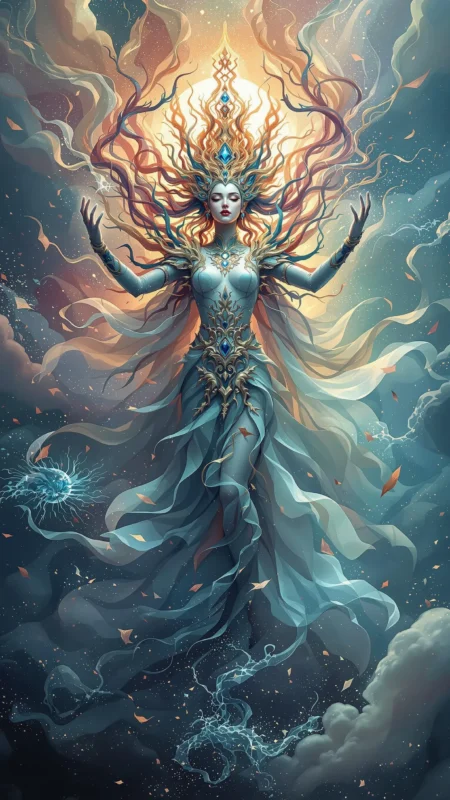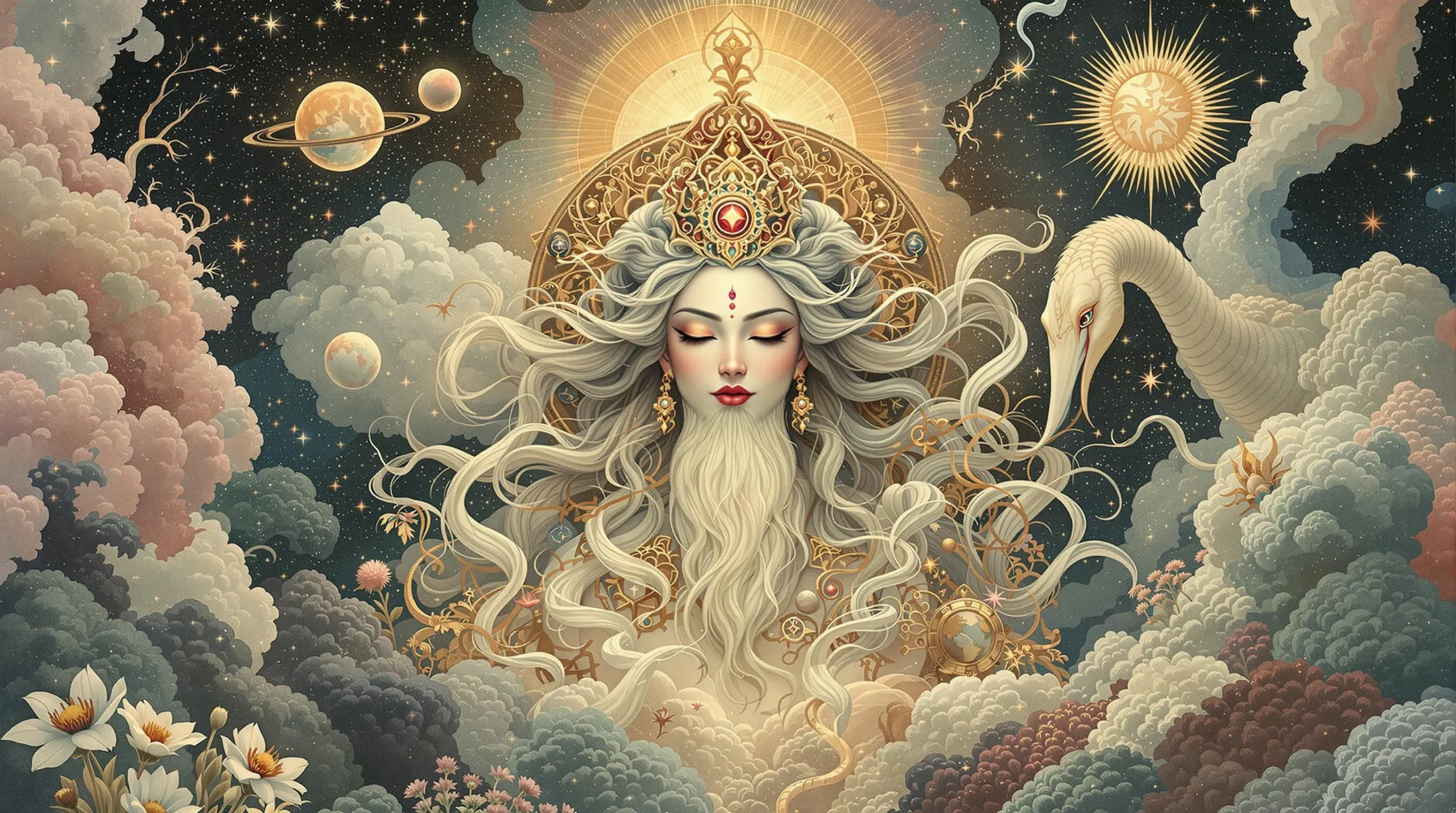


Mazu

Archetype Meaning & Symbolism

Compassionate, protective, serene, guiding, miraculous, silent, powerful, steadfast, observant, intuitive

  • If you do not call upon me, how can I manifest my divine power?

If Mazu is part of your personal mythology, you may...

Believe

  • You may believe that the greatest strength is revealed in stillness, not in action, and that true power is the ability to calm a storm within yourself and others.
  • You may believe that intuition is the most reliable compass, a divine gift for navigating the unseen currents of life.
  • You may believe your ultimate purpose is to serve as a safe harbor, a beacon of compassion for those lost in the tempestuous seas of their own lives.

Fear

  • You may fear being utterly overwhelmed by the chaos of the world or the turbulent emotions of others, a shipwreck from which you cannot recover.
  • You may fear losing your inner connection, your intuitive guidance, leaving you feeling spiritually adrift and hopelessly lost at sea.
  • You may fear that your quiet, gentle nature will be perpetually mistaken for passivity or weakness, rendering your strength invisible and ineffective.

Strength

  • You possess an almost supernatural inner calm, an ability to be the eye of the storm when chaos erupts around you.
  • You have a profound gift for empathy and intuition, allowing you to understand and anticipate the needs of others with uncanny accuracy.
  • You are a stabilizing and protective presence, a human sanctuary to whom others instinctively turn for refuge and guidance.

Weakness

  • You may have a tendency toward emotional burnout, absorbing the anxieties and sorrows of others until you have no more capacity for your own.
  • You may demonstrate a deep reluctance to engage in direct confrontation, preferring to guide from a distance even when assertive action is required.
  • You may struggle to set healthy boundaries, feeling a crushing sense of responsibility for everyone's safety and well-being, often at your own expense.

The Symbolism & Meaning of Mazu

In the modern psyche, Mazu is the silent captain of the subconscious, the Empress of our emotional depths. The sea she rules is not the Pacific or the Atlantic, but the vast, unpredictable ocean of human feeling: the sudden swells of grief, the treacherous currents of ambition, the disorienting fogs of uncertainty. To have Mazu as a guide is to accept that life is not a solid landmass to be conquered and mapped, but a fluid element to be navigated with intuition and respect. She embodies a power that is profoundly feminine, yet not in the archetypal modes of seduction or fierce motherhood. Hers is the power of quiet presence, of knowing without speaking, of saving without fighting. She is the part of us that can sit in the heart of chaos and find a point of stillness, a personal eye of the storm.

The Mazu archetype suggests a mythology where salvation comes not from a roaring hero but from a quiet watcher. She represents the apotheosis of empathy: a human girl whose compassion was so immense it became a divine force. In your own story, she may symbolize the transformation of your personal sensitivity from a perceived weakness into a formidable strength. Your ability to feel deeply, to sense the emotional weather of a room or a relationship, becomes your superpower. Mazu does not offer a promise of placid waters or storm-free skies. Instead, she offers the assurance that you carry the divine spark needed to survive the storm, and perhaps, to become a beacon for others lost in their own.

Her presence also speaks to a different kind of authority. It is not the authority of the throne or the sword, but the authority of serene competence. She wears the robes of an empress but her work is done on the dangerous fringes, among the common and the desperate. This may resonate with a personal sense of purpose found not in overt leadership but in quiet, indispensable support. You may be the person who stabilizes the group, the one whose calm demeanor prevents panic, the trusted confidant whose advice is sought like a clear channel in a storm. Mazu's symbolism is a profound testament to the idea that the greatest power resides not in controlling the world, but in mastering the art of moving within it gracefully.


Mazu Relationships With Other Archetypes

The Lighthouse

The Mazu and the Lighthouse may be seen as sharing a single, solemn purpose, though one is born of divine compassion and the other of mortal ingenuity. Where the Lighthouse offers a predictable, almost Newtonian promise—a blade of light cutting the same arc, night after night—Mazu’s guidance could be something more akin to a quantum intuition, a subtle current felt rather than seen. The Lighthouse is a declaration against the dark, a stoic monk whose prayer is a ceaseless, mechanical rotation. Mazu, perhaps, is the answered prayer itself, the unmappable eddy that nudges a hull away from a reef the Lighthouse can only reveal. One is the geometry of salvation; the other, its poetry.

The Storm

To suggest the Storm is Mazu’s enemy is to misunderstand the nature of their dialogue. The Storm might be better understood as a form of primordial, amoral expression, a planetary grief that speaks in wind and wave. Mazu does not seek to silence its chorus of chaos. Instead, she could be viewed as the ultimate navigator of its violent symphony, finding the one quiet passage, the momentary caesura in the rhythm of destruction. Her relationship with the Storm is not a war, but a kind of tense, intimate waltz on the edge of oblivion, where her role is not to tame the beast but to guide the vulnerable through its magnificent, terrible heart.

The Harbor

If Mazu is the harrowing journey, the Harbor is the quiet benediction at its end. It is the terrestrial punctuation to her fluid, maritime grammar. Mazu’s protection is a thing of the liminal, of the churning space between what is lost and what is safe. The Harbor, in contrast, is a solid state of being, a place of slackened ropes and silent anchors. She may be the patron of the passage, the whisper that counsels the sailor through the long, uncertain night, but the Harbor is the quiet, physical manifestation of that promise fulfilled. It is the exhale to her held breath, a stillness she shepherds souls toward but may never, herself, entirely possess.

Using Mazu in Every Day Life

Navigating a Professional Crossroads

When faced with the turbulent waters of career change, where the old maps no longer serve, the Mazu archetype offers a different kind of navigation. It is not about frantic action but about stillness. You might find yourself sitting quietly, observing the currents of the industry, listening to the subtle whispers of opportunity that others, in their noisy striving, might miss. Your strength becomes your ability to wait for the right tide, to trust the journey even without a visible harbor, and to make your move with a calm certainty that feels less like a choice and more like a destined current carrying you forward.

Healing from Emotional Upheaval

After the shipwreck of a significant relationship or the onslaught of a personal loss, the world can feel like a churning, indifferent sea. Invoking Mazu here is to find the eye of your own storm. It could manifest as a sudden capacity for profound self-compassion, a quiet space you create for yourself that is impervious to the crashing waves of grief or anger. You may not stop the storm, but you learn to be a sanctuary within it, offering yourself the same protective grace that Mazu extends to her sailors: a silent, unwavering presence that promises, simply, survival and eventual calm.

Protecting a Fragile Endeavor

Shepherding a creative project, a new business, or even a fledgling idea through its vulnerable early stages is a voyage fraught with peril. The Mazu within you acts as a celestial guardian for this venture. This may translate into an intuitive sense of whom to trust, a prescient awareness of hidden dangers, and the quiet fortitude to protect your creation from cynicism or premature exposure. You become the lighthouse and the seawall, your steady belief a beacon that guides your fragile ship through the treacherous shoals of doubt and competition, ensuring it reaches the open sea.

Mazu is Known For

Guardian of the Seas

Her most prominent role is the compassionate protector of sailors, fishermen, and all who travel by water. She is believed to appear as a silent, glowing figure in the heart of tempests to guide ships to safety.

Miraculous Interventions

Legends are filled with tales of her supernatural abilities, from calming storms with a glance to traversing the ocean on a prayer mat to rescue her drowning father and brothers. These miracles underscore her power born of devotion and love.

Deified Shamaness

Before her ascension to godhood, Mazu was the mortal woman Lin Moniang, a shamaness who could predict the weather and travel in spirit. Her divinity is rooted in her human empathy and innate spiritual gifts, a reminder that extraordinary grace can arise from a mortal heart.

How Mazu Might Affect Your Personal Mythology

How Mazu Might Affect Your Mythos

When Mazu enters your personal mythos, your life story may cease to be a linear path and instead become a series of voyages across vast, symbolic seas. Chapters of your life might be framed as passages: the calm, exploratory journey of your youth, the harrowing storm of a first heartbreak, the long, patient expedition toward a professional dream. Your narrative is less about destinations reached and more about the quality of the navigation. The key dramatic moments are not battles won, but tempests survived. You may see yourself as a vessel, sometimes sturdy, sometimes battered, but always afloat, always guided by an inner, benevolent light.

Furthermore, your mythos may be populated by those you have offered safe harbor. Your story becomes intertwined with the stories of those you’ve guided through their own storms. You might be the quiet supporting character in many epics: the friend who was a rock during a divorce, the mentor who provided clarity during a crisis. Your own legend is written not in a single, heroic narrative, but in the footnotes and acknowledgements of countless others. Your legacy is not a monument but a network of lighthouses, a constellation of people you have helped to find their way back to shore, reflecting your own quiet, persistent light.

How Mazu Might Affect Your Sense of Self

To see yourself through the lens of Mazu is to recognize a deep, indwelling calm as your core identity. You may perceive your own sensitivity not as a liability but as a sophisticated spiritual instrument, like a compass needle that quivers with the invisible magnetic forces of the world. There could be a quiet confidence that settles within you, a belief in your own resilience that is not boastful but deeply rooted. You might understand your quietness as a form of power, your stillness as a source of strength, and your compassion as your most sacred gift. You are the calm at the center of the spinning world.

This self-perception may also come with a sense of profound responsibility. If you contain this protective, guiding spirit, you may feel an innate pull to use it. This can shape a self-concept built around service and empathy. You are the watcher on the shore, the keeper of the light. This identity is not defined by what you acquire or achieve in a material sense, but by the quality of your presence and the sanctuary you provide. The risk, of course, is that the self can become diffused in this service, your own needs lost in the vast ocean of others' suffering. The challenge is to be the lighthouse: firmly planted on your own ground, shining your light for all, but not sailing every ship into port yourself.

How Mazu Might Affect Your Beliefs About The World

With Mazu as a guiding archetype, you may view the world not as a solid, predictable machine, but as a living, breathing, and often tempestuous ocean. It’s a reality governed by currents, tides, and sudden storms, where logic and planning can only take one so far. This worldview fosters a deep respect for mystery and the unknown. You may believe that the most important forces in life are invisible: intuition, compassion, faith, and the subtle shifts in emotional energy between people. It’s a perspective that prioritizes adaptation and resilience over control and domination.

The world, in this light, is also imbued with a subtle, benevolent magic. It suggests that even in the most terrifying chaos, a guiding, protective intelligence is at work. This doesn't make the world safe, but it makes it meaningful. Every storm becomes a test of faith and intuition, every period of calm a gift of grace. You may find yourself looking for the miracles in the mundane, the silent interventions of grace that save us from our own folly. Your worldview becomes one of wary wonder, a deep understanding of the world's dangers, coupled with an unshakeable faith in a quiet, saving grace.

How Mazu Might Affect Your Relationships

In relationships, you may unconsciously assume the role of the safe harbor. Friends, family, and partners are likely drawn to your serene presence, especially when they are experiencing their own internal tempests. You are the listener, the calm advisor, the one who can absorb emotional chaos without being capsized by it. Your way of showing love might be less about grand romantic gestures and more about steadfast, quiet presence: being the one who sits with them in the dark, the one who brings soup, the one whose silence is more comforting than a thousand empty platitudes. You build bonds based on mutual protection and deep, intuitive understanding.

This role, however, shapes the dynamics of your connections in specific ways. You might find yourself in relationships with people who are perpetually 'at sea,' drawn to the drama of their storms and your role as their savior. The challenge presented by the Mazu archetype is to learn the difference between being a lighthouse and being a rescue boat. A lighthouse guides; it doesn't tow. You may have to learn to let others navigate their own vessels, trusting that your light is enough, and that their journey is ultimately their own. True intimacy, for you, is found not in codependent rescue missions, but with a fellow captain who respects the sea and knows how to navigate their own ship alongside yours.

How Mazu Might Affect Your Role in Life

Your perceived role in life, under Mazu's influence, may crystallize into that of the Guardian or the Sentinel. This is not the role of a soldier on the front lines, but of the watcher on the tower, the keeper of the flame. You may feel your purpose is to maintain a space of calm and clarity so that others can do their work. In a family, you are the emotional anchor. In a workplace, you are the voice of reason during a crisis. In your community, you are the quiet organizer who ensures the foundations are solid. Your power is subtle, foundational, and often invisible to those who only notice the storm, not the seawall that holds it back.

This can be a deeply fulfilling role, but it is often a thankless one. The Mazu archetype does not seek applause; her miracles are silent, her presence often felt rather than seen. You may struggle with feeling overlooked or undervalued, as your greatest contributions are preventative: the crises averted, the panics soothed, the breakdowns that never happened because of your steadying influence. Embracing this role means finding satisfaction in the act of service itself, and in the quiet knowledge of your own indispensable, invisible strength. Your reward is the continued safety of the fleet, not the adoration of the sailors.

Dream Interpretation of Mazu

To dream of Mazu in a positive context, perhaps seeing her serene face in the clouds or feeling her presence guide your boat through choppy waters, is a profound message of reassurance from your subconscious. It could signify that you possess the inner resources and intuitive wisdom to navigate a current life challenge. The dream affirms that your quiet, compassionate nature is your greatest asset right now. It may be a call to trust your gut feelings, to listen to the subtle whispers of your inner voice. Her appearance is a blessing: a promise of safe passage through emotional or situational turmoil. You are being watched over, primarily by the best parts of yourself.

Conversely, a negative dream involving Mazu could be deeply unsettling. You might dream of calling for her in a storm and receiving no answer, or seeing her turn her back on a sinking ship. This could symbolize a terrifying feeling of being spiritually or emotionally adrift, cut off from your own intuition and protective instincts. It may reflect a fear that you are unequal to the challenges you face, that your compassion has run dry, or that you have ignored your inner compass for too long. Such a dream is not a curse, but a warning: a desperate call from your own psyche to find your way back to your core, to rediscover your inner sanctuary before you are completely overwhelmed by the waves.

How Mazu Archetype Might Affect Your Needs

How Mazu Might Affect Your Physiological Needs

The Mazu archetype may foster a deep connection to the body's rhythms of calm and release, mirroring the ebb and flow of the tide. Your primary physiological need, beyond basic sustenance, becomes sanctuary. You may find yourself instinctively creating environments that soothe the nervous system: quiet rooms, spaces with natural light, the calming sound of water. There may be a subconscious pull towards rhythmic, meditative breathing, a way of regulating your own internal ocean. When out of alignment, the body might feel perpetually 'at sea,' leading to feelings of nausea, dizziness, or a profound weariness, as if you have been fighting a storm for too long.

This connection prioritizes rest not as a luxury, but as a sacred necessity. Just as sailors need a port to repair their ships, you may feel an absolute need for periods of deep, restorative stillness to mend the psychic wear and tear of daily life. Your well-being could be intrinsically linked to your ability to access this state of calm. Stress may manifest as a feeling of being 'drowned' or 'overwhelmed,' a physiological response to having taken on too much emotional water. Health, for you, is a state of being in balance with the currents, not fighting against them.

How Mazu Might Affect Your Ideas of Belonging

With Mazu in your mythos, belonging is found in the quiet camaraderie of the harbor, not the noise of the marketplace. You may seek out or create small, tight-knit communities, or 'crews,' bound by mutual trust and the unspoken understanding of shared voyages. Love and connection are expressed through acts of service and protection. To love someone is to be a vigilant watcher for their well-being, to offer them shelter from their personal storms. You may feel you belong with those who appreciate stillness, who understand the power of a comforting presence over empty words.

This need for deep, protective bonds can also make you wary of shallow connections. You might feel like an outsider in large, boisterous groups, preferring the deep currents of one-on-one interaction. The challenge is to avoid creating co-dependent relationships where your role is solely that of the protector. True belonging, for you, is found when you are with fellow captains: people who can offer you safe harbor just as you offer it to them, creating a fleet where each ship is strong on its own, but stronger together.

How Mazu Might Affect Your Feelings of Safety

Safety, through the Mazu lens, is less about physical walls and more about navigational skill. It is the deep-seated belief that while the world is inherently unpredictable and dangerous, you possess an inner compass that can guide you through peril. This fosters a sense of ontological security, a trust in your ability to survive not by avoiding storms, but by knowing how to sail in them. Your safety needs may be met by cultivating your intuition, by learning to read the 'weather' of social situations, and by trusting the quiet voice that warns of hidden rocks beneath the surface.

This may also mean that you create safety for yourself by becoming a source of safety for others. In ensuring the well-being of your 'crew'—your family, your close friends—you reinforce your own sense of stability and purpose. However, the shadow of this is feeling that your safety is entirely dependent on the safety of others, leading to hyper-vigilance and a crushing sense of responsibility. True safety is found in building your own lighthouse on solid ground, a beacon of inner strength that is not dependent on the fate of any single ship you are trying to guide.

How Mazu Might Affect Your Views of Esteem

Self-esteem, for one guided by Mazu, is not derived from accolades or external validation, but from the quiet, internal knowledge of your own resilience and compassionate strength. Your worth is measured by the storms you have weathered and the shelter you have provided. Each time you guide yourself or another through a crisis using your intuition and calm, your esteem solidifies. It is the esteem of the master artisan, the quiet confidence of someone who knows their craft intimately. You feel good about yourself when you are a force for stability and grace in a world of chaos.

This can also mean your esteem is vulnerable to feelings of failure when you cannot 'save' someone, or when your quiet efforts go unnoticed and unappreciated. A core challenge is to detach your self-worth from the outcomes of your protective efforts. Your esteem must be rooted in the act of shining the light, not in whether the ships choose to follow it. It is the deep, personal pride of knowing that, no matter the weather, your lamp is lit and your watch is kept. It is the self-respect of the sentinel.

Shadow of Mazu

The shadow of Mazu emerges when the gentle guardian becomes the smothering matriarch. In this guise, your protection becomes a gilded cage. You don't just guide ships through the storm; you forbid them from leaving the harbor at all, convinced only you can keep them safe. Your compassion curdles into control, your guidance into a crippling dependency. You create followers who cannot navigate for themselves, their skills atrophied under your constant vigilance. This shadow fears abandonment above all else and ensures it by making itself indispensable, a 'loving' act that is, at its root, a profound expression of fear and a desperate need to be needed.

Conversely, the shadow can manifest as a cold, divine detachment. The Mazu archetype, wounded or exhausted, may retreat to her celestial palace and simply watch the ships sink. It is a protective gesture turned inward, a self-preservation that becomes absolute indifference. You may see the suffering of others but feel nothing, your empathy burned away by past traumas or betrayals. You become the lighthouse whose lamp has gone out, a silent monument on the shore, a symbol of a salvation that is no longer offered. This is the Mazu who has concluded the world is beyond saving, and that her only remaining duty is to herself.

Pros & Cons of Mazu in Your Mythology

Pros

  • You possess a profound and authentic inner peace, which you can project to bring calm and stability to the most chaotic of situations.
  • You are a deeply trusted confidant and a source of refuge for your loved ones, building relationships of immense loyalty and depth.
  • Your highly developed intuition serves as an unerring life-navigation system, allowing you to move through complexity with grace and foresight.

Cons

  • Your quiet, observant nature may be misread as detachment or passivity, causing others to overlook your strength or misunderstand your intentions.
  • You are at high risk for emotional burnout and compassion fatigue, as your porous boundaries can lead you to take on the emotional weight of the world.
  • Your aversion to direct conflict, while preserving harmony, can allow critical problems to fester and grow, ultimately causing a more significant crisis down the line.