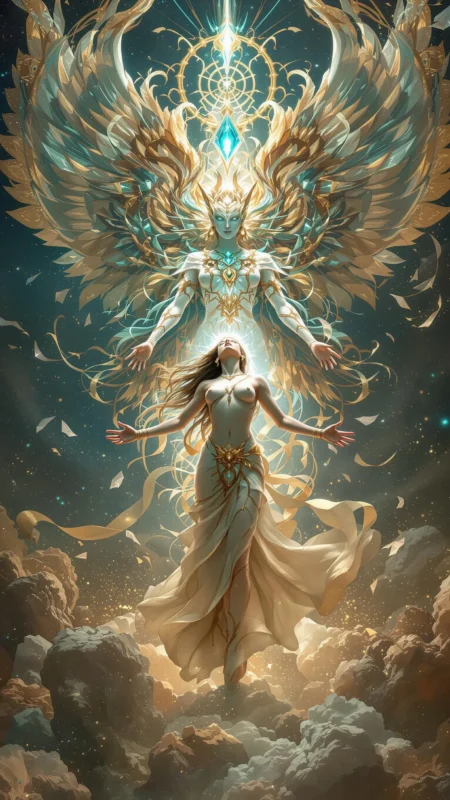
Ixchel

Archetype Meaning & Symbolism

Weaver, Healer, Crone, Maiden, Destructive, Fertile, Lunar, Tidal, Midwife, Sorceress, Paradoxical

  • The same hands that weave the infant’s first blanket will unravel the shroud. Do not fear the thread, only a life unwoven.

If Ixchel is part of your personal mythology, you may...

Believe

  • You may believe that destruction is a sacred and necessary act of clearing the way for new life.
  • You may believe that true healing requires one to descend into the wound, not just bypass it.
  • You may believe that wisdom is not found in books or doctrines, but is held in the body and the rhythms of the natural world.

Fear

  • You may fear stagnation above all else, mistaking peace for a terrifying, life-denying stillness.
  • You may fear that your destructive, cleansing impulses will rage out of control, leaving nothing but ruin in their wake.
  • You may fear being profoundly misunderstood, seen only as an agent of chaos by those who cannot perceive the healing that follows the storm.

Strength

  • You possess an almost supernatural resilience, an ability to find your footing and begin again after any crisis.
  • You have a profound capacity for empathy and healing, able to sit with others in their darkest moments without flinching.
  • You can hold contradictory truths and complex emotions with ease, navigating the gray areas of life where others see only black and white.

Weakness

  • You may have a tendency to provoke chaos or drama when life becomes too peaceful, mistaking stability for stagnation.
  • You may struggle to appreciate simple contentment, always feeling the pull toward the next great transformation.
  • Your intensity can be overwhelming to others, and you may unintentionally disrupt the lives of those who require more stability and predictability.

The Symbolism & Meaning of Ixchel

To find the Ixchel archetype within your personal mythology is to claim the storm as your own. She is the patron saint of the beautiful mess, the goddess of the life that is not linear but tidal. Her symbolism speaks to a profound acceptance of paradox: that healing can look like destruction, that growth requires decay, and that the most potent creativity is often born from the depths of sorrow. In a modern context, Ixchel is the force that allows you to quit the stable job to pursue a wild dream, to end the comfortable relationship that is slowly suffocating your spirit, or to sit with grief until it transforms into a source of wisdom. She is the permission slip to be both nurturing and fierce, generative and finite.

The loom is her central metaphor. Your life is a tapestry, and the threads are not just the bright silks of joy and success but also the coarse, dark yarns of failure and loss. Ixchel’s wisdom is that a tapestry woven only of light has no depth, no story. She asks you to honor every thread. This might manifest as a practice of journaling that doesn't shy away from the ugly parts, a creative process that embraces imperfection, or a way of being in the world that values authenticity over curated perfection. She represents the courage to look at the whole of your life, the snarls and the elegant patterns, and call it sacred.

Her connection to water is not gentle. It is the power of the flood, the hurricane, the relentless tide. To carry Ixchel in your mythos is to understand that sometimes a life must be washed clean. This could be a dramatic, external event, or it may be an internal process of letting tears flow until the emotional landscape is cleared. It is the recognition that emotional release, however messy, is a form of medicine. She symbolizes the power that comes from surviving the deluge, standing on the newly fertile ground, and beginning again, wiser from the storm.


Ixchel Relationships With Other Archetypes

The Weaver's Loom

The relationship between Ixchel and the Weaver’s Loom may be that of a musician to her instrument, if the instrument were also the score. The Loom is perhaps the rigid skeleton of possibility, the taut, unyielding warp threads representing the fixed laws of time and consequence. Upon this framework, Ixchel does not merely work; she converses. Her shuttle, a flash of insight or a sudden grief, flies through the silent strings, weaving the weft of lived experience—its color, texture, and unexpected knots. The pattern that emerges could be seen as destiny, but a destiny that is only given shape and meaning through her creative, and sometimes destructive, touch. The Loom, then, is not her servant, but her silent collaborator, the stoic grammar through which she speaks the poetry of existence.

The Storm

The Storm could be understood not as Ixchel's weapon, but as her voice given atmospheric form, the raw, untempered expression of a power that both creates and obliterates. A gathering of storm clouds on the horizon might be the knitting of her brow; a sudden drop in pressure, a divine sigh. Where the Weaver works with patient intention, the Storm is a release of cosmic tension, a fever breaking. In this, Ixchel’s rapport with the Storm is one of profound, terrifying intimacy. The lashing rain and wind are not chaos, but a kind of violent clarity, washing the world clean with an indifferent love. It is the necessary deluge that scours the riverbed, the flood that makes the soil startlingly fertile once it recedes, a reminder that new life is often conceived in turmoil.

The Midwife

The Midwife is perhaps Ixchel’s most intimate human agent, a custodian of the threshold where the goddess holds sway. Theirs is a relationship of shared, sacred knowledge, spoken not in prayers but in the quiet language of touch and water and blood. The Midwife’s hands, steeped in the amniotic sea, may be guided by an ancient, lunar gravity, coaxing a soul from one realm to the next. While Ixchel represents the vast, impersonal cycle of birth and dissolution, the Midwife is its tender, terrestrial witness, operating in the small, lamp-lit room where the grand drama becomes breathtakingly personal. She understands, as her patron does, that creation is a perilous passage, a beautiful wound, and that her role is not to prevent the pain but to hold the space for the transformation it entails.

Using Ixchel in Every Day Life

Navigating Creative Blocks

When the well of inspiration runs dry, the Ixchel archetype may suggest that this fallow period is not an absence but a different kind of presence. Instead of forcing creation, one might tend to the ground: read voraciously, walk in the rain, listen to stories, engage in the medicine of quiet. The archetype teaches that the most vibrant creations are often born from the compost of what has been dormant, a creative flood following a necessary drought.

Healing from Loss

In the face of grief, Ixchel does not offer simple platitudes. She hands you a spindle and thread. Her presence in your personal mythology could mean you approach mourning as an act of weaving. You might actively gather the threads of memory, pain, and love, and begin to weave them into a new pattern in your life story. It is not about forgetting but about integrating the loss into the tapestry, making it a source of texture, depth, and somber beauty.

Embracing Profound Life Change

Faced with a career shift, a move, or the end of a relationship, the Ixchel archetype provides a mythic framework. It encourages you to see yourself as the Crone who must pour the water jug, consciously washing away the structures that no longer serve. This act of intentional destruction, while painful, is understood as a sacred clearing. It is the brave choice to stand in the wreckage, trusting your capacity to midwife a new reality from the fertile mud left behind.

Ixchel is Known For

Weaving of Fate

She is the cosmic weaver, her spindle turning with the cycles of the moon, her loom holding the threads of all life. She may weave intricate patterns of destiny, but is also known to cut threads or snarl the weave, introducing chaos and change.

Duality of Maiden and Crone

Ixchel embodies the full spectrum of feminine power. She appears as the young, fertile Maiden, goddess of childbirth and sexuality, and as the aged, formidable Crone, a harbinger of floods and destruction. She holds both creation and dissolution in her hands.

Medicine and Water

As a patron of healers and midwives, her power is tied to the curative properties of water and herbs. She is the keeper of sacred wells and cenotes, places of transition and healing, but her power over water is also absolute: she can unleash catastrophic floods to cleanse and renew the world.

How Ixchel Might Affect Your Personal Mythology

How Ixchel Might Affect Your Mythos

When Ixchel becomes a figure in your personal mythos, your life story ceases to be a straightforward quest for a single treasure and becomes a cyclical epic of creation and dissolution. The narrative arc is no longer a ladder to be climbed but a loom upon which a complex pattern is woven. Setbacks are not plot holes; they are dramatic shifts in the weave, moments where the Crone’s hand cuts a thread to begin a new, more interesting design. Your mythos might be defined by moments of profound renewal that were preceded by periods of intense chaos or loss, what others might call breakdowns, you perhaps see as breakthroughs, a sacred clearing of the slate.

You may frame your history as a series of tides. There were the high tides of love and creativity, and the low tides of grief and stillness, each with its own purpose and beauty. The antagonist in your story is not an external villain but the force of stagnation. Your great journeys are not to faraway lands, but into the depths of your own emotional waters, navigating the storms to find the pearls of wisdom within. Your personal myth is a testament to resilience, a story that proves the most fertile ground is often found in the wake of the flood.

How Ixchel Might Affect Your Sense of Self

With Ixchel as a guide, your self-concept may become a vessel for contradictions. You might see yourself as both the healer and the one who carries deep wounds, the nurturing midwife and the formidable agent of chaotic change. This removes the pressure to be consistent or polished. You may accept your own cyclical nature, honoring days of high energy and creativity as much as days that demand quiet retreat and introspection. This perspective allows for a radical form of self-compassion, where even your most destructive impulses can be viewed not as personal failings, but as the rumblings of a necessary storm, a sign that something in your life needs to be washed away.

You may cease to identify with a single state of being. You are not just the Maiden of your youth or the Crone of your future; you are both, simultaneously. You might feel an ancient wisdom in your bones even in moments of childlike joy, and a youthful spark even in times of somber reflection. This integrated self is powerful because it is whole. It does not deny the shadow, the anger, the grief. Instead, it invites these aspects to the table, listens to their wisdom, and allows them to inform a self-portrait that is terrifying, beautiful, and utterly authentic.

How Ixchel Might Affect Your Beliefs About The World

An Ixchel-informed worldview is one that sees the sacred in the cycles of rise and fall, not just in the peaks. You may look upon a forest fire, a stock market crash, or a political upheaval and see not just an end, but a violent, necessary turning of the soil. This is not a detached or cold perspective; rather, it is one that holds a deep, almost painful empathy for the process of transformation. It is the understanding that new growth cannot occur on crowded ground. This worldview finds beauty in the abandoned building being reclaimed by vines, in the scar tissue that tells a story of survival, in the rain that ruins the picnic but nourishes the earth.

The world is not a problem to be solved but a great, unfolding mystery to be witnessed. You might lose faith in permanent solutions and instead place your trust in the process of adaptation and renewal. This could lead to a political or social perspective that favors grassroots, adaptive change over rigid, top-down ideologies. You may believe that the health of any system, be it an ecosystem or a society, depends on its ability to embrace cycles of death and rebirth. The world is a cosmic loom, and its most breathtaking patterns are woven with threads of both light and darkness.

How Ixchel Might Affect Your Relationships

In relationships, you may operate as an agent of profound truth and transformation, which can be both a gift and a challenge. You might have an intuitive knack for seeing what needs to be healed, but also what needs to end. Friendships and partnerships are seen as living things, subject to their own seasons. You are not afraid of the winter of a relationship, the period of quiet or distance, trusting that it may be a necessary dormancy before a new spring. You may value intensity and authenticity over placid comfort, drawn to people who are willing to navigate the depths with you.

This can make you an incredibly loyal and powerful ally in times of crisis, the friend who shows up for the messy aftermath of a divorce or loss, unafraid of the raw emotion. However, your presence might also be unsettling for those who prefer to keep things on the surface. You may have a tendency to be the unintentional catalyst for change in others’ lives, simply by holding a mirror to the truths they are avoiding. Love, for you, is not a safe harbor from the storms of life; it is a worthy vessel, built to sail through them.

How Ixchel Might Affect Your Role in Life

Your perceived role in life might shift from that of a builder to that of a weaver or a midwife. You may see your purpose as connecting disparate people, ideas, or communities, weaving them into a stronger, more resilient whole. In a group, you might be the one who senses the underlying emotional currents, the person who can articulate the unspoken tension and guide the group through a necessary conflict. You are not creating something from nothing; you are midwifing what is already waiting to be born, whether it is a new project, a new way of thinking, or a new community.

This role also carries the weight of the Crone. You may feel a responsibility to be the truth-teller, the one who points out that the old way is no longer working. It could be your role to initiate a necessary ending, to perform the organizational equivalent of pouring the water jug to cleanse a toxic system. This is a difficult and often thankless role, as it can be perceived as merely destructive. Yet, from your perspective, it is a sacred duty: clearing the ground so that something new and healthier can grow in its place. Your role is to tend to the full, messy, beautiful cycle of life.

Dream Interpretation of Ixchel

To dream of Ixchel in her benevolent forms, perhaps as a focused weaver at her loom or a gentle midwife with healing herbs, may signal a profound integration is occurring in your psyche. It could suggest that you are successfully weaving disparate parts of your life into a coherent and meaningful whole. Such a dream might arise during a period of intense creativity, personal growth, or healing, affirming that your path is blessed with the forces of creation and renewal. It may be an invitation from your unconscious to trust your intuitive and healing capacities, to take up the spindle and actively shape your own destiny.

Conversely, to dream of Ixchel as the terrifying Crone, upending her water jug to unleash a world-drowning flood, or with her jaguar claws and skirt of serpents, could point to a fear of being overwhelmed. This dream might surface when you are facing a massive, seemingly destructive change in your life. It could represent a feeling that your emotions are out of control, flooding your conscious mind. However, even in this frightening aspect, the dream holds a seed of hope. It may be a necessary message from the deep self: a warning that a significant, cleansing emotional release is imminent and that you must surrender to a process of dissolution before you can be reborn.

How Ixchel Archetype Might Affect Your Needs

How Ixchel Might Affect Your Physiological Needs

When Ixchel infuses your mythos, your relationship with your body's basic needs becomes deeply cyclical and intuitive. You may find that your physiological well-being is intrinsically tied to the rhythms of the moon, the seasons, and your own internal cycles of energy and rest. The need for sleep is not a mere inconvenience but a sacred descent into the underworld of consciousness, a time for healing and receiving wisdom. Hunger and thirst are not just signals for fuel but calls to nourish the body as a temple, perhaps leading to an interest in herbal remedies, whole foods, and the medicinal properties of water.

You may feel an almost primal need to be near water, not just for drinking, but for emotional and spiritual cleansing. A long bath, a walk by the ocean, or simply listening to the sound of rain can feel like a necessary recalibration of your entire system. Illness might be perceived not as an enemy to be vanquished, but as a messenger from the body, a sign that a deeper imbalance in your life, your work, or your spirit needs to be addressed. Your body is not a machine; it is a microcosm of the natural world, demanding attention to its tides of wellness and dis-ease.

How Ixchel Might Affect Your Ideas of Belonging

The need for love and belonging, when seen through the lens of Ixchel, is a quest for a tribe that is not afraid of the dark. You may seek out companions who can hold space for the full spectrum of your being: the maiden and the crone, the creator and the destroyer. Belonging is not about fitting in or smoothing over your rough edges; it is about being seen and loved for your complexity. You might feel a kinship with other weavers, healers, and truth-tellers, those who understand that intimacy is forged in the fires of crisis and transformation, not just in the calm harbors of comfort.

Love itself is perceived as a force of nature: powerful, life-giving, and sometimes destructive. A relationship is not a static state but a dynamic process of co-creation and, at times, co-destruction. You may find belonging not in traditional institutions, but in self-created communities where authenticity is the highest value. This could be a circle of friends, a creative collective, or a family of choice, a place where the messy, tidal nature of love and connection is not just tolerated, but celebrated as sacred.

How Ixchel Might Affect Your Feelings of Safety

Safety, in an Ixchel-informed world, is not found in the stability of a fortress but in the resilience of a reed that bends in the wind. You may fundamentally distrust rigid structures, knowing that what does not bend will eventually break. True security, therefore, comes from within. It is the deep, cellular knowledge that you possess the capacity to survive the flood, to heal from the wound, to rebuild from the wreckage. Your safety needs are met not by avoiding danger, but by cultivating an unshakeable faith in your own resourcefulness and capacity for renewal.

This might manifest as a life that appears risky to others. You may be more willing to change careers, move to a new city, or leave a secure but stagnant situation, trusting that you can navigate the ensuing chaos. Safety is the confidence that you are your own midwife, capable of birthing a new reality for yourself when the old one is washed away. It is an understanding that the ultimate security lies not in preventing the storm, but in learning how to weave a sturdy boat.

How Ixchel Might Affect Your Views of Esteem

Self-esteem, for one who carries the Ixchel archetype, is forged in the crucible of transformation. Your sense of worth is not tied to a list of achievements or external validation but to your own resilience. You may derive profound pride from the scars you carry, seeing them as proof of your ability to survive and heal. Esteem is the quiet confidence that comes from having walked through the flood and emerged on the other side, not unscathed, but wiser and stronger. It is the self-respect earned by consciously choosing to dismantle a part of your life that was no longer true in order to build something more authentic.

You might value your creative power and your healing intuition above all else. Your accomplishment is not the finished product but the act of weaving itself, the process of bringing something new into the world from the raw materials of your experience. Esteem is rooted in the knowledge that you are a vessel for both light and dark, and that this wholeness is the source of your unique power. You respect yourself not for being perfect, but for being a courageous participant in the messy, terrifying, and beautiful cycle of life.

Shadow of Ixchel

The shadow of Ixchel is the storm without purpose, the flood that only drowns. When this archetype becomes distorted, the sacred act of clearing becomes mere destruction for its own sake. It may manifest as a person who creates chaos in their relationships not to prompt growth but to feed on the ensuing drama. They might wield their intuitive insights as weapons, exposing the vulnerabilities of others not to heal but to control. This shadow weaver doesn't create a new tapestry from the cut threads; they simply delight in the tangle, finding a perverse sense of power in the snarls.

In its shadow form, the midwife becomes a saboteur. This is the artist who tears up the canvas just before the final stroke out of a deep-seated fear of completion, the leader who scuttles a project just as it nears success. The cyclical nature of Ixchel, when imbalanced, becomes a self-defeating loop. It is the constant churn of starting over without ever learning, a life of perpetual crisis that is mistaken for a life of passion. The shadow is the refusal to ever build on the fertile ground left by the flood, choosing instead to endlessly call down the rain.

Pros & Cons of Ixchel in Your Mythology

Pros

  • You become a source of profound strength and wisdom for yourself and your community during times of crisis.
  • You possess a deep, intuitive understanding of life's cycles, which fosters immense patience and an unshakeable sense of hope.
  • Your creativity is often boundless and deeply authentic, as it draws from the full, complex spectrum of human experience.

Cons

  • You may struggle with periods of peace and stability, creating unnecessary turmoil to feel alive.
  • Your presence can be intense or unsettling for those who prefer a more predictable and placid existence.
  • You may be prone to bouts of melancholy, feeling the weight of the world's cycles of suffering more acutely than others.