Believe
 Fear
Fear Strength
 Weakness
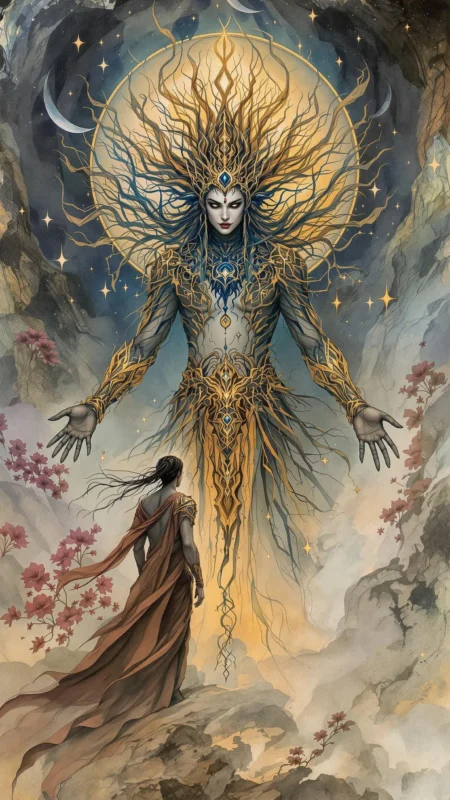
In a modern psychological landscape, the Angra Mainyu archetype sheds its ancient skin of pure evil and emerges as a necessary psychological force: the spirit of entropy, of deconstruction, of the shadow that gives the light its form. To have Angra Mainyu in your personal mythos is to acknowledge that the universe does not operate solely on principles of growth, light, and harmony. It is to understand that demolition is a vital part of construction, that silence is what gives music its rhythm, and that the void is not an absence but a presence. This archetype represents a deep comfort with the uncomfortable truths of existence: that all things decay, that chaos is a constant companion to order, and that our most profound growth often comes directly from our deepest wounds. It is the grit in the oyster, the irritant that forces the creation of a pearl.
This archetype may also symbolize the voice of radical dissent, the holy “No” against a tide of complacent “Yes.” It is the part of the psyche that challenges authority, not out of petulance, but from a fundamental drive to test the integrity of all structures, be they social, political, or personal. In a world saturated with curated positivity and manufactured consensus, the Angra Mainyu figure is the one who points out the rot beneath the floorboards, the crack in the foundation. It could represent the courage to be the bringer of bad news if that news is the truth, to choose a painful reality over a pleasant fiction. It is the patron saint of the whistleblower, the iconoclast, and the revolutionary artist who must tear down a genre to invent a new one.
Ultimately, the meaning of Angra Mainyu in a personal mythos may be about integration. It is the profound recognition that what we call “evil” or “darkness” is often just an unintegrated aspect of ourselves and the world. It’s the energy of ambition that, unacknowledged, becomes ruthless greed; the energy of critical thought that, unharnessed, becomes sour cynicism. To welcome Angra Mainyu is not to become evil, but to become whole. It is to stop fighting the tide of your own shadow and instead learn to surf, to harness the immense power of deconstruction and chaos for the purpose of creating a life that is more resilient, more authentic, and more deeply, terrifyingly alive.