Believe
 Fear
Fear Strength
 Weakness
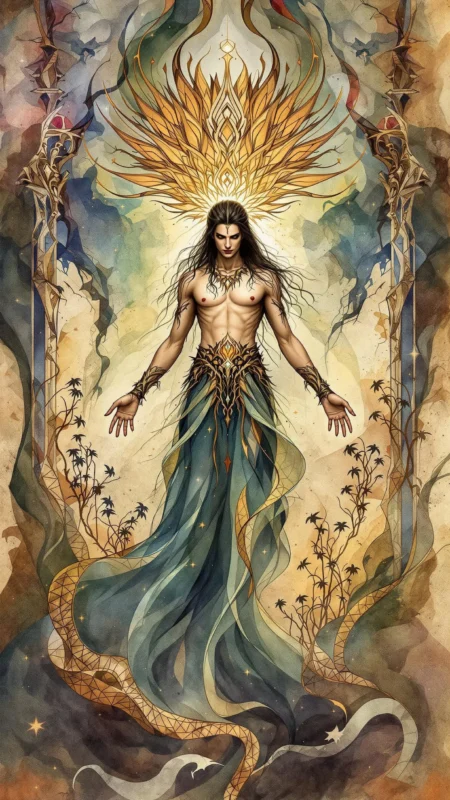
In the modern psyche, Nephthys represents the archetype of the essential shadow, the necessary darkness that gives shape to light. She is the patron saint of the B-side, the understudy, the chief of staff: the role whose power is invisible but utterly indispensable. To have Nephthys in your personal mythology is to understand that not all strength is declarative. Some strength is absorptive, a quiet capacity to hold grief, to keep secrets, to midwife transitions without needing applause. She is the sacred dignity of the supportive role, the recognition that the person holding the ladder is just as vital as the one reaching for the star.
She is also the goddess of the liminal. Nephthys resides at the threshold between worlds: life and death, night and day, conscious and subconscious. Her presence in one’s life may signal a deep comfort with ambiguity and a knack for navigating periods of intense change. She is the one who knows the way through the twilight, when the path is no longer clear. This archetype bestows a kind of psychic resourcefulness, an ability to find meaning not in the destination but in the murky, uncertain, and ultimately fertile process of the journey itself. She is the ferrywoman for the soul’s most difficult crossings.
Furthermore, Nephthys embodies a form of compassionate mourning that is active, not passive. Her grief is not despair: it is a potent magical act, a lament that is also a spell of regeneration. She teaches that honoring an ending fully is what allows a new beginning to take root. For the individual, this may manifest as an ability to process loss without becoming lost, to see sorrow as a sacred rite of passage. She is the part of the self that knows how to properly say goodbye, creating the clean, hollow space into which new life, a new idea, or a new self can eventually be born.