 Believe
 Fear
Fear Strength
 Weakness
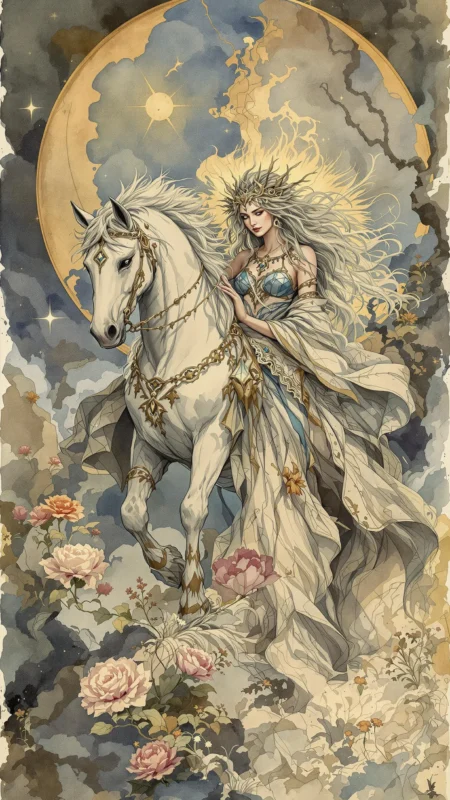
In the contemporary personal mythos, Epona is not merely a goddess of horses but a symbol of the motive force within the soul. She represents the engine of our own life's journey, that powerful, instinctual energy that carries us through triumph and ordeal. To claim her as part of your story is to acknowledge a deep, almost feral, connection to your own endurance. She is the quiet strength that surfaces on the third day of a crisis, the second wind in a marathon of grief, the inexplicable ability to place one foot in front of the other when the path ahead is obscured in fog. She is the sovereignty that comes not from a crown, but from the unshakeable knowledge that you can carry yourself.
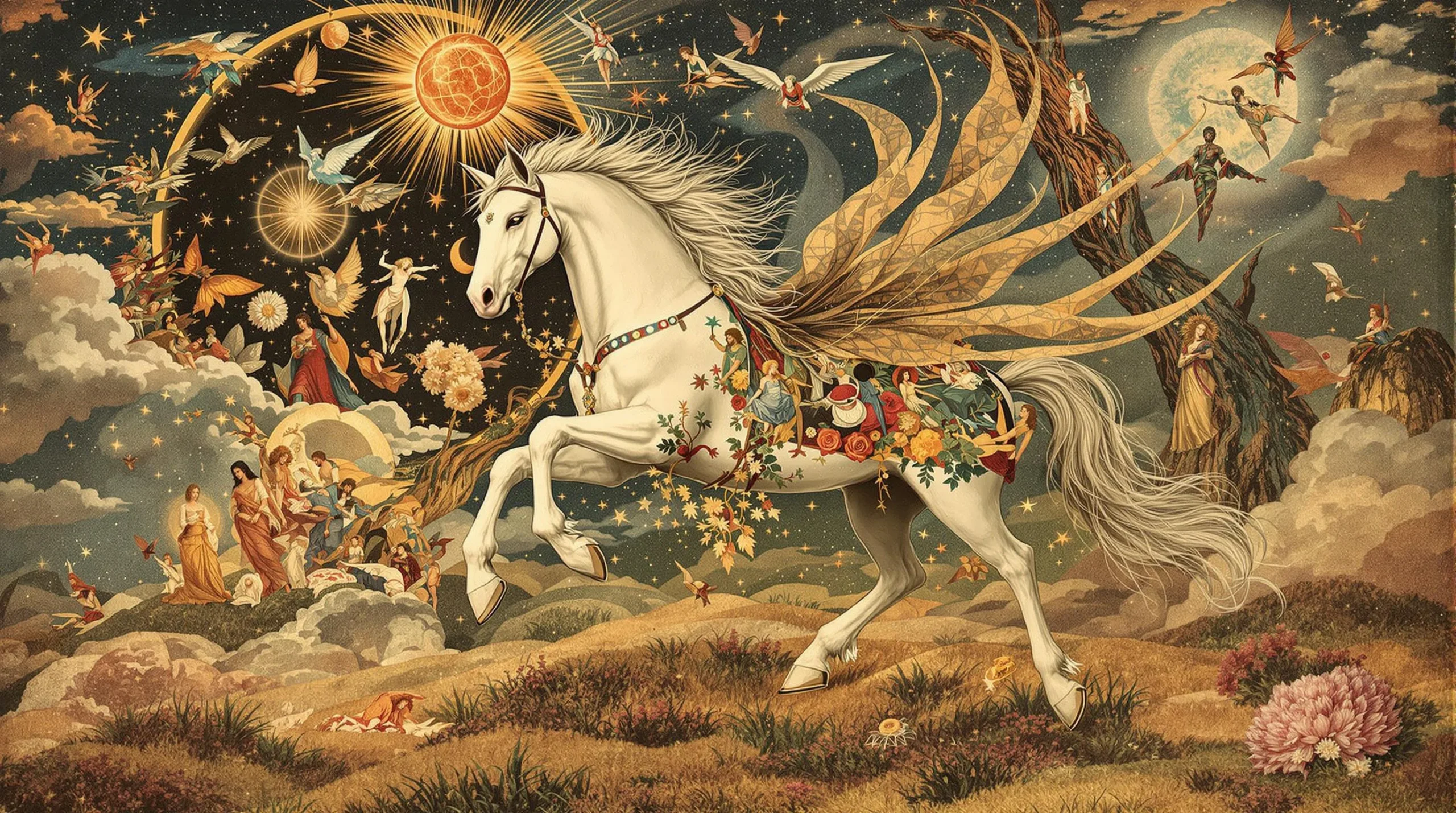
Epona’s meaning unfolds in the spaces between: between civilization and the wild, between the conscious self and the instinctual body, between this life and whatever comes next. She is the patroness of transitions. Her presence in one's mythology could signify a life defined by meaningful passages rather than static achievements. You may feel most yourself not when you have arrived, but when you are fully underway. She asks you to honor the journey as a sacred destination in itself and to find stability not in walls and fences, but in your own forward momentum. She is the grace of a powerful body in motion, a reminder that some part of us must always remain untamed and free to roam.
Her symbolism is also deeply connected to a form of nurturing that is less about comfort and more about empowerment. Like a mare teaching her foal to run with the herd, Epona’s care is about fostering resilience. In your mythos, you may find yourself drawn to relationships where you can provide this sturdy, load-bearing support. You might carry the burdens of others, not to enable weakness, but to lend them the strength to reach the next stage of their own journey. She is the patroness of loyal companionship, the silent understanding that passes between two beings who have traveled a long way together, a connection forged in the dust of a shared road.