Believe
 Fear
Fear Strength
 Weakness
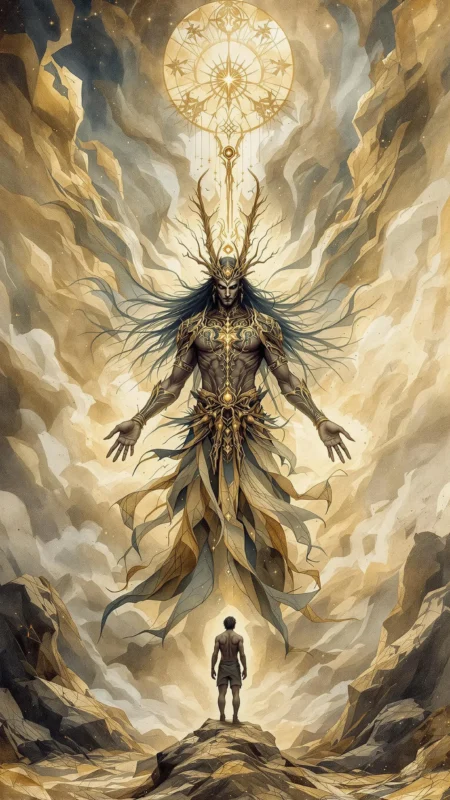
To have Marduk in your personal mythology is to feel, deep in your bones, the impulse of the civilization-builder. It is the drive to look upon the wild, untamed wilderness—whether of an unstructured company, a messy emotional life, or a chaotic society—and see not a thing to be feared but a project to be undertaken. This archetype represents the potent, perhaps quintessentially human, urge to establish systems, to draw maps, to write laws, and to build walls. It is the part of you that believes in the power of a well-designed spreadsheet, a clear constitution, or a perfectly executed plan to bring forth a better reality. You may find yourself as the designated architect in your life, the one who brings form to the formless, sense to the senseless.
The central act of the Marduk myth, the slaying of the sea dragon Tiamat, is a profound metaphor for the psyche. This is not a simple tale of good versus evil. It is the story of the ordering principle, the focused will, confronting the vast, undifferentiated, and overwhelming power of primordial chaos. In your life, Tiamat may be the crushing weight of depression, the terrifying boundlessness of freedom, or the turbulent currents of the subconscious. The Marduk within you is the part that says: this can be understood, this can be fought, and its very energy can be repurposed. You do not banish the dragon; you build your world from its corpse. This suggests a worldview where even the most terrifying aspects of existence hold the raw material for your greatest creations.
At its heart, the Marduk archetype symbolizes a revolutionary ambition. It is the desire not merely to exist within the given world, but to remake it according to a new, higher principle. This is the energy of the founder, the reformer, the visionary who believes in progress through deliberate, strategic action. This mythos whispers that the current order of things is not final, that the pantheon of gods—the ruling powers and assumptions of your life—can be rearranged. It grants you the audacity to challenge the ruling deities of your personal cosmos and, through competence and courage, to install yourself as the rightful sovereign, the one who gets to set the fifty names, the defining laws, of your own reality.