Believe
 Fear
Fear Strength
 Weakness
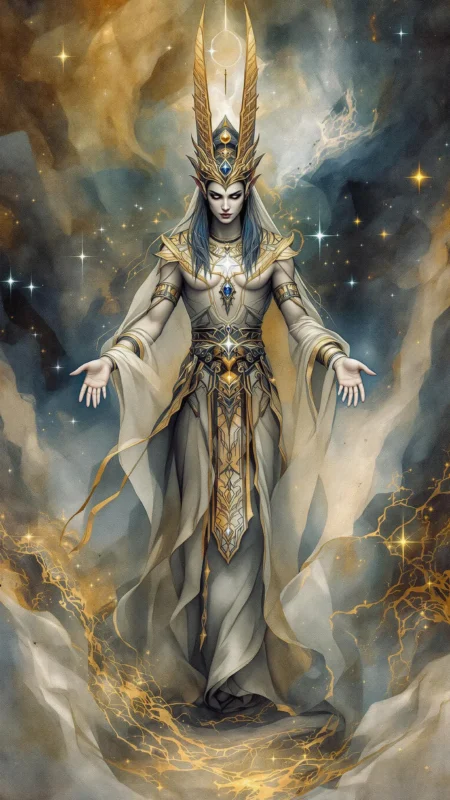
In the personal mythology of a modern life, Osiris represents the promise of integrity after fragmentation. Life itself can feel like a dismemberment: a career path ends abruptly, a relationship shatters, an old version of yourself dies. The Osiris archetype offers a profound comfort, not that you will be spared the breaking, but that the breaking is a prelude to a more potent form of wholeness. To have Osiris in your mythos is to believe that your scattered pieces can be gathered, not by frantic will, but by a patient, loving devotion—from yourself or from others. The resulting self is not a restored original, but a kintsugi masterpiece, where the repaired cracks are the source of a new, more profound beauty and strength.
The archetype also speaks to the power of productive passivity. Osiris, in his resurrected form, is largely still, enthroned, a being of endurance rather than action. This may symbolize the deep wisdom in knowing when to stop striving. It is the fallow season of the soul, the necessary descent into the quiet underworld of the self. In a culture that worships frantic activity, the Osirian way is a radical trust in cyclical processes. It is the faith that in the darkness, in the silence, in the composting of old failures and griefs, the groundwork for the most fertile growth is being laid. This stillness is not weakness; it is the deep, silent hum of regeneration.
Finally, Osiris embodies the concept of a generative legacy born from crisis. It is after his death and dismemberment that he fathers his heir, Horus, the eventual hero who restores order. This could be a powerful metaphor for how our greatest contributions may arise not from our moments of triumph, but from our experiences of being broken. A trauma overcome becomes the wisdom you share; a business failure becomes the lesson that fuels a future success; a deep loss becomes the empathy that allows you to heal others. Your legacy, in the Osirian view, is what grows from your grave. It is the life that you make possible for others through your own encounter with death.