 Believe
 Fear
Fear Strength
 Weakness
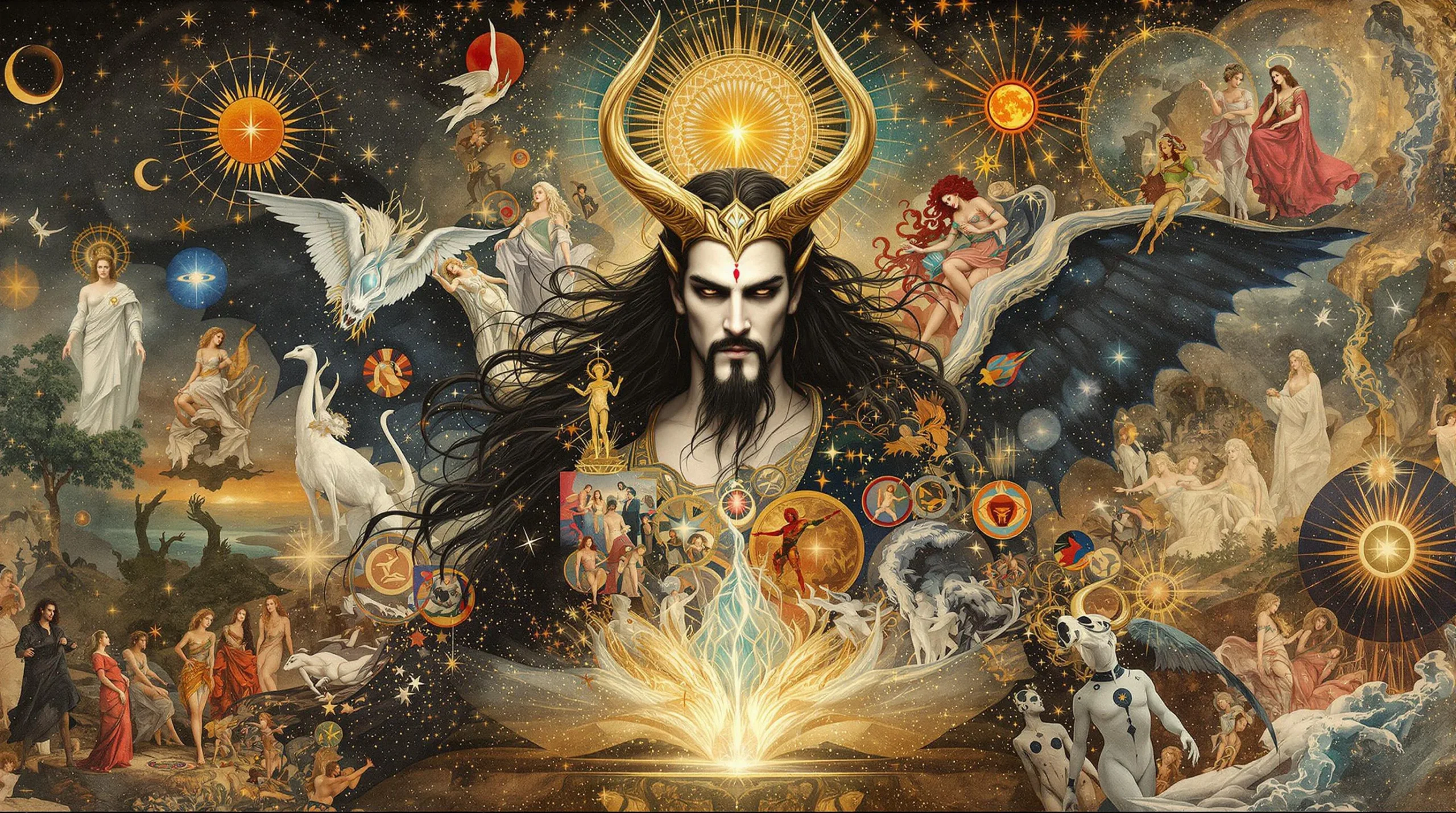
In the modern psyche, Loki is the patron saint of the glitch, the necessary error in the code that reveals the system’s fragility. He is not chaos for its own sake, but chaos with a purpose: to expose, to question, to deconstruct. He is the sacred jester whose paradoxes hold more truth than a thousand solemn proclamations. To have Loki in your personal mythology is to have an affinity for the loopholes, the margins, the places where the rules break down. You might feel that the most interesting things happen not in the center of the stage, but in the wings, where the props are revealed to be cardboard and the actors shed their roles.
The archetype of Loki is a relentless challenge to binaries. He is god and giant, male and female, savior and saboteur, hero and villain. He lives in the liminal “and,” not the declarative “or.” In a personal myth, this could manifest as a deep discomfort with being categorized, a fluid identity that resists easy labels. Your story may not be about a struggle between your good and bad sides, but about the artful, and sometimes painful, integration of all your contradictory impulses. Loki symbolizes the wisdom that comes from holding two opposing ideas at once without demanding one be victorious.
Fundamentally, Loki’s symbolism is rooted in the pain and power of the outsider. He belongs with the gods of Asgard, yet he is not one of them. He is their blood-brother, yet he orchestrates their doom. This internal division speaks to the parts of ourselves that do not fit: the aspects of our history, identity, or desire that make us feel perpetually “other” even among our own. Having Loki in your mythos may mean your life’s work is to navigate this otherness, not by seeking to erase it, but by learning to wield it as a source of unique perception, creativity, and power.