 Believe
 Fear
Fear Strength
 Weakness
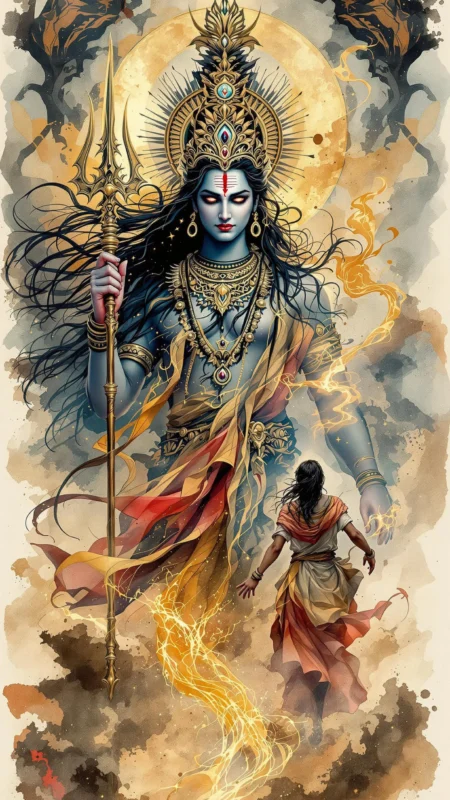
To find the Shiva archetype active in your personal mythology is to find a home in paradox. He is the destroyer who is called Śhiva, the auspicious one. He is the ultimate ascetic, detached from the world, yet also the passionate lover. This isn't a contradiction to be solved, but a mystery to be inhabited. In a modern context, Shiva represents the terrifying but necessary force of creative destruction. He is the patron saint of the startup that renders an industry obsolete, the artist who shatters convention, the individual who must tear down a comfortable life to answer a deeper calling. He symbolizes the wisdom in letting go, the recognition that all forms—careers, relationships, identities, civilizations—are temporary constructs, waves in a cosmic ocean. He is the silent witness at the heart of the storm.
The symbols that adorn him become a grammar for this personal myth. The serpent around his neck is not a threat, but a mastered primal energy: desire and fear worn as an ornament. The crescent moon in his hair is a marker of time, a reminder that he is the master of its cycles, not its victim. The river Ganga flowing from his locks could be the taming of overwhelming emotional or creative force, channeled into a life-giving stream. His drum, the damaru, beats out the rhythm of creation itself, while the fire in his other hand represents the inevitable end of all that is created. To live with this archetype is to learn how to hold both the drum and the fire in the hands of your own life.
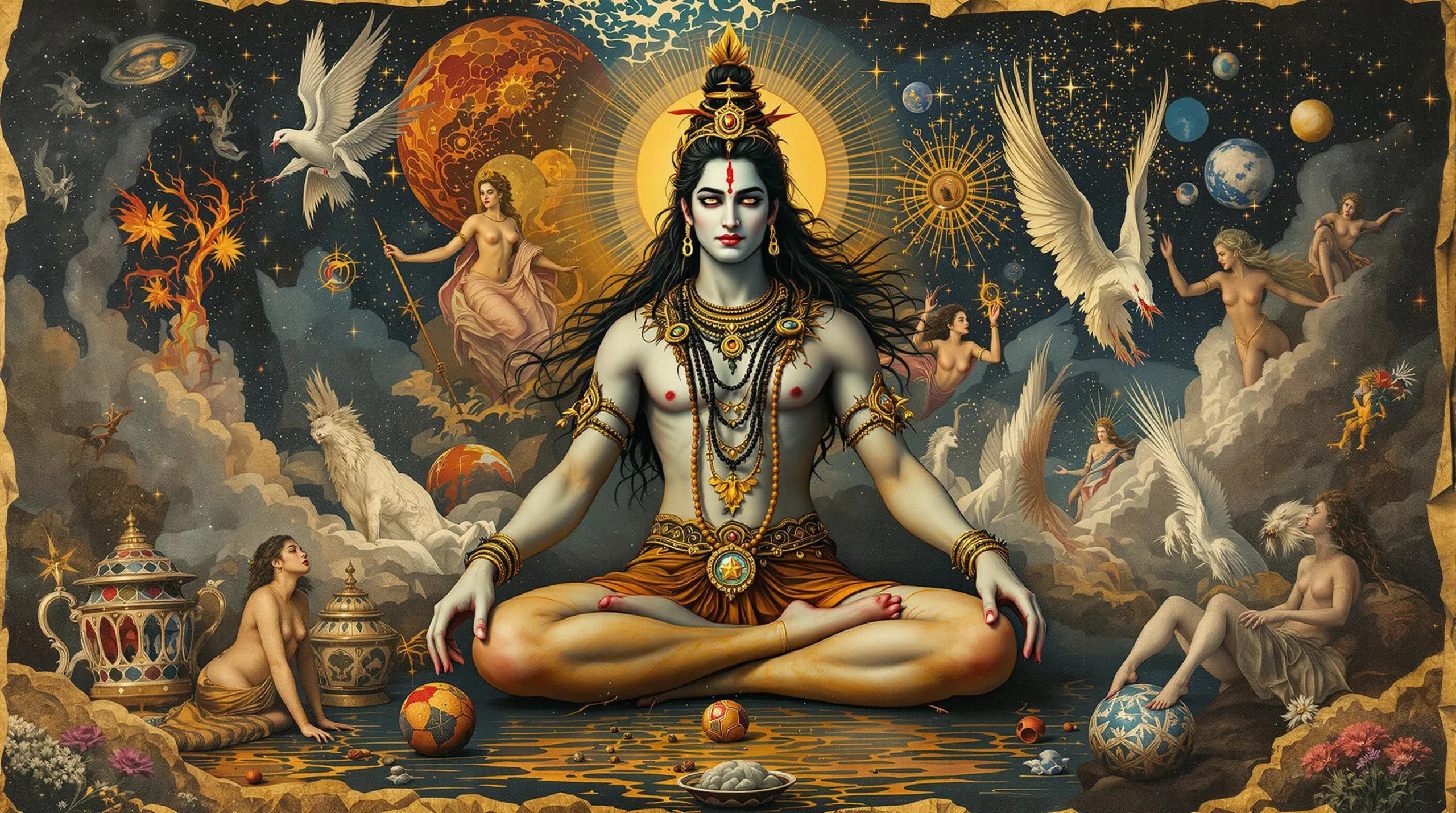
Ultimately, Shiva points to a reality beyond form. His ash-smeared body signifies the final truth of all matter: what remains after everything has been burned away. His meditative stillness is an invitation to find that which is unchanging within ourselves, the pure consciousness that observes the dance of life and death without being entangled. He suggests that true freedom isn't found in accumulating more, but in becoming so profoundly empty that the entire universe can rush in. He is the patron of the void, the god of the blank page, the silence from which the most beautiful music can be born.