Believe
 Fear
Fear Strength
 Weakness
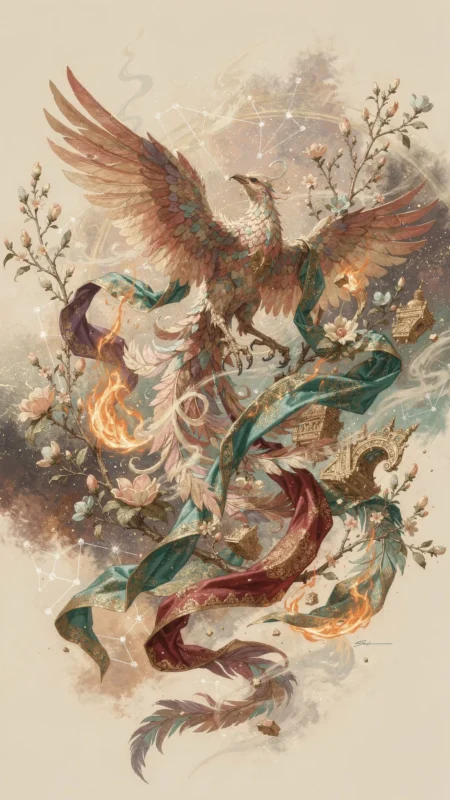
The modern symbolism of the Phoenix ventures beyond a simple cartoon of rebirth into the intricate psychology of voluntary transformation. It is not merely about surviving an end, but perhaps about choosing it. The archetype suggests a mythology where one learns to build their own pyre, to consciously place upon it the aspects of self, the beliefs, and the attachments that have ceased to serve. The fire is not a tragedy but an instrument of purification. The core meaning, then, is an embrace of radical self-alchemy: the courage to incinerate a known present for the sake of an unknown, more authentic future. It is the patron of anyone who has ever had to burn their life down to the studs to find out what was truly fireproof.
The profound solitude of the Phoenix is central to its meaning in a personal mythos. Its journey of immolation and renewal is undertaken alone. This could translate to a life path where the most significant growth occurs in periods of isolation, away from the influence, validation, or even understanding of others. For the individual aligned with this archetype, radical self-reliance is not a burden but a source of power. Their transformations are their own secret ceremonies. They do not require an audience for their death or their rising. This symbolism fosters an inner life that is rich and self-contained, finding strength not in the crowd but in the singular, searing truth of their own cyclical experience.
The healing tears of the Phoenix add a layer of profound compassion to the archetype of destruction and renewal. This suggests that the ultimate gift of surviving the fire is not just personal resilience, but a deepened capacity for empathy. Having known the deepest wounds, one earns the ability to soothe the wounds of others. In a personal mythology, this could manifest as a calling to be a healer, a therapist, a guide for others in crisis. The tears symbolize that true compassion is born of sorrow, and that the ability to mend comes from having been broken. The Phoenix spirit animal in this sense is a guide not just to personal survival, but to communal healing.