

And why rituals are so powerful.
Why Should You Create Rituals?
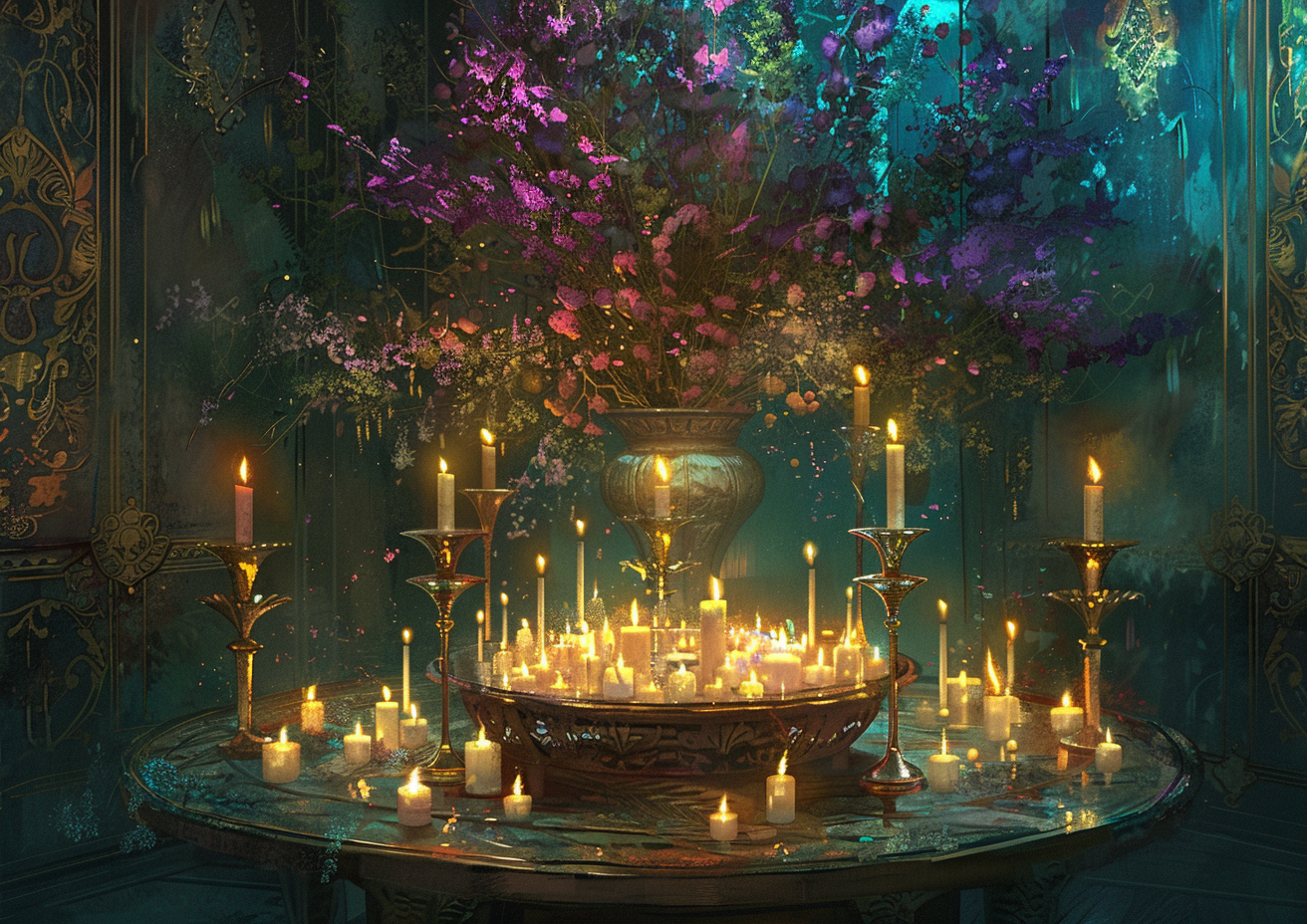
Creating a designated space or scene completely changes the psychological impact, your frame of mind, and your willingness to allow something to happen.
Think about it, why does music in a club feel so much different than playing the same music at home? It’s the environment: the music is loud enough to feel, the lights are colored and moving, there are lots of people dancing, laughing, and conversing. In other words, the music has been ritualized. Why do we give gifts and sing at birthdays?
Is a birthday just as fun sitting at home doing what you always do? No. It needs ritual. In fact it’s scientifically proven that birthday cake tastes better after singing the happy birthday song.
Ritual spaces tap into our brains' natural tendency to form associations. By consistently performing a specific activity in a designated space, that space becomes imbued with meaning and intention. Over time, simply entering the space triggers focus, readiness, thoughts and feelings for the associated ritual.
The Accidental Game of Thrones Ritual

I’ll tell you a funny story that happened to me back when Game of Thrones was THE thing to be watching.
In Game of Thrones they mention and drink a lot of mead - honey wine. Well, I was having so much fun watching the show, I would buy a bottle of mead once in a while and enjoy a small glass as I watched. I didn’t realize what a deep impact this was having on my physiology and psychology. But the season would end and I’d have a half quaffed bottle of mead left over. So eventually I poured myself a glass, took a sip, and I don’t exaggerate when I tell you it transported me back into the world of Game of Thrones. We all know feelings can be complicated and nuanced, but I had no idea that “Game of Thrones” could be a feeling. Kind of blew my mind and was an excellent reminder of the power of ritual.
That experience wasn’t exactly helpful, except in being educational, but you can be more conscientious and take advantage of your ability to ritualize parts of your life that could benefit from it.
The Benefits of Ritual
Increased Focus and Mindfulness: Ritual spaces isolate moments of our lives creating a mental and physical separation from ‘the norm’. This encourages full presence and a ‘specialness’ of the moment.
Reduced Stress and Anxiety: The predictability and sense of control in rituals soothe the nervous system.
Deeper Meaning and Connection: Rituals access our subconscious through imagery, metaphor, movement, and other input that reaches beyond cold logic and reason.
What to Include in a Ritual Space
Items, ambiance, and things you can do to create a ritualized environment.
Sensory
Sounds: Singing bowls, wind chimes, nature recordings, specific music playlists, a metronome for rhythmic focus, or even silence can contribute to a unique atmosphere.
Scents: Incense, essential oil diffusers, candles, fragrant herbs, citrus peels, or flowers engage our sense of smell.
Visuals: Candles, meaningful artwork, visually pleasing objects, photos, a nature view, or colored lights that evoke the desired mood.
Natural Elements: Crystals, plants, water features, or even an open window can incorporate nature.
Designated Area: This could be a whole room, a corner, or even just a cleared spot on a table.
Physical Actions
Movement: Yoga poses, stretches, dance, tai chi.
Crafting: Drawing, coloring, knitting, origami.
Cleansing: Smudging with sage or palo santo, a salt bath, washing hands symbolically.
Mental Focus
Altars: A small table or surface to hold meaningful objects.
Journals: For writing reflections, intentions, or gratitude.
Oracle or Tarot Cards: For prompts and insight.
Books: Associated with your ritual's purpose (spiritual texts, poetry, self-development).
Puzzles or Mindful Games: To train focus.
How to Create it
Choose Your Goal: What do you hope to achieve with your ritual (relaxation, focus, creativity, etc.)? This will guide your choice for setup of the space.
Create Your Space: Designate your chosen area, incorporating elements that fit your ritual's intention.
Establish a Routine: Regularity reinforces the power of a ritual. Even brief daily practices offer benefits.
Personalize: Let your intuition guide you. Include objects and actions that feel meaningful, even if they aren't traditional.
Examples of Ritualized Spaces
A Morning Meditation Corner: A cushion, candle, soft music, and inspiring artwork.
A Creative Workspace: An uncluttered desk, specific tools, mood lighting, and energizing scents.
A Relaxing Bath Ritual: Candles, music, essential oils, bath salts.